

Edition #158
Investing Unlocks: How to Capitalize on the Hot Topics From The Last 7 Days
We analyze recent trends and opportunities, offering strategic insights that help you manage risks and identify growth opportunities for your portfolio.
👀 AI Chips and Bond Jitters Close Out a Wild Week
Last week, US stocks managed to eke out gains despite a turbulent stretch driven by surging bond yields and Middle East uncertainty. Semiconductor and AI stocks stayed resilient after Nvidia’s strong earnings and guidance reinforced confidence in AI spending, despite post-earnings profit-taking in Nvidia shares.
This week, markets open Tuesday after Monday’s Memorial Day holiday, leaving four sessions to absorb a packed economic calendar. The standout releases are the first-quarter GDP revision and the core PCE price index. With new Fed Chair Kevin Warsh now at the helm and bond traders already pricing in a possible rate hike by year-end, a hotter-than-expected inflation number could rattle equities, especially rate-sensitive sectors like real estate and utilities. Earnings from Salesforce, Costco, and Dell will add a consumer and enterprise spending lens, giving investors a clearer picture of whether corporate America is holding up under elevated energy costs.
PRESENTED BY THE CRYPTO COMPANY

The Crypto Company (OTC: CRCW) is focused on operating businesses across crypto, blockchain infrastructure, and emerging technologies such as AI, with a goal of growing revenues and improving profitability across its portfolio.
Download the Exclusive Investor Report.
Hot Topics
Stock Markets Are Increasingly Vulnerable to Rising Bond Yields
Delivery Hero shares surge to 18-month high as Uber eyes takeover
Supply hits galvanize zinc as expected surplus fails to show
Don’t look now, Amazon. Walmart is coming for your customers
Investing Data Story
These 9 North American small- to mid-caps stand out for converting revenue into cash, earning strong returns on capital, and carrying low debt.
9 Small-Mid Caps Quietly Compounding Cash
Luxury Spend Turns Positive
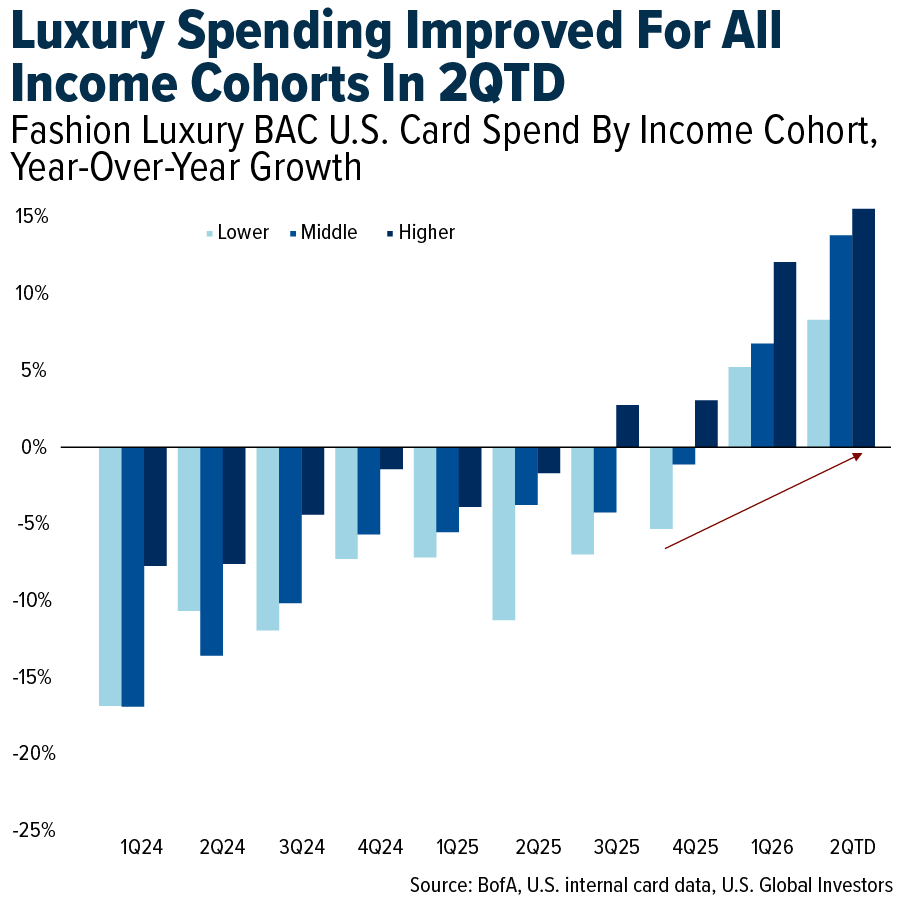
U.S. fashion luxury card spend is now growing across every income bracket simultaneously. Bank of America internal card data shows higher-income consumers up roughly 15% year-over-year so far in Q2, with middle and lower cohorts posting high single-digit and low single-digit gains, respectively.
The synchronized recovery matters. After troughing near -17% for lower-income shoppers in Q1 2024, all three cohorts are now in positive territory simultaneously, a first since before the 2024 luxury downturn. LVMH, Kering, and Richemont all flagged soft U.S. demand as a 2025 headwind; this data flips that narrative.
The risk is the gap between spending intent and actual conversion. Luxury stocks remain oversold after March’s sharp selloff on Middle East tensions and oil price spikes. Card data leads, but if Hormuz disruption persists, foot traffic and travel retail revenue will lag the signal.
Gulf Shock Splits Aluminium Market
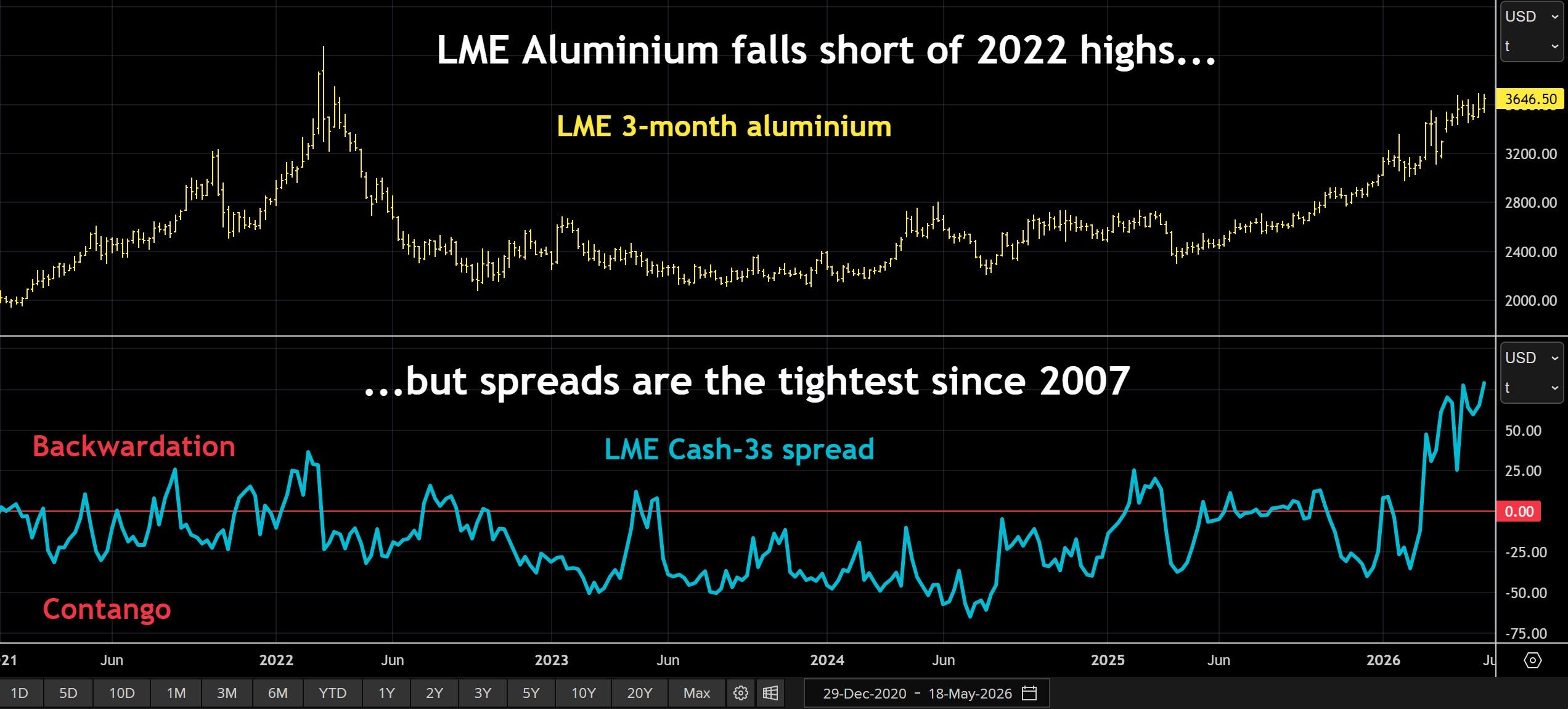
The Iran war has caused a major supply shock in the aluminium market, with missile strikes damaging Gulf smelters and the closure of the Strait of Hormuz disrupting logistics. The Gulf produces over a fifth of non-Chinese aluminium, and output has plummeted to its lowest level in over a decade. While the headline LME price is only up 14% and appears relatively calm, the real stress is showing up in physical premiums that have doubled or more in some regions, rapidly draining warehouse stocks, and tightening time spreads that signal genuine near-term scarcity.
China is producing more but is close to its government capacity cap, and exchange stockpiles can only cushion the shortfall for so long. Physical buyers are already paying significantly more to secure metal, and the longer the Strait of Hormuz stays closed, the worse the deficit is likely to get.
Earnings Performance
Frontline Plc (NYSE: FRO)
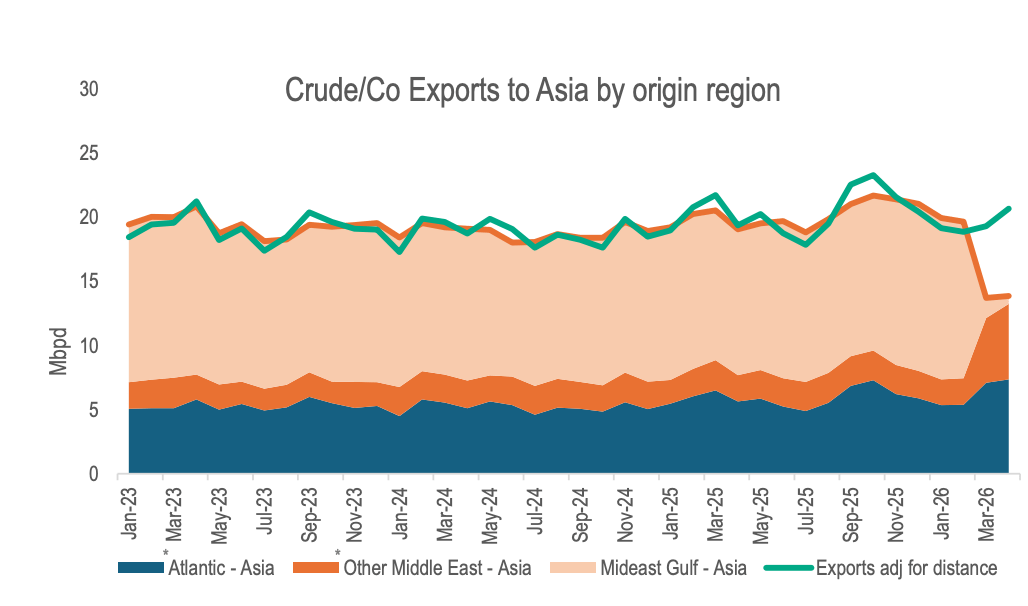
Frontline Plc (NYSE: FRO) shares slipped on Friday after the tanker operator reported Q1 adjusted earnings of $1.55 per share, missing Wall Street expectations.
However, results show tanker demand is being driven by distance, not just volume. Even with lower overall Gulf exports, vessel utilization stayed tight because ships are spending longer at sea, and more Very Large Crude Carriers (VLCCs) are tied up waiting, rerouting, or repositioning. While Arabian Gulf exports fell by roughly 13.8 million barrels per day, Asia replaced part of that supply with longer-haul barrels from the Atlantic Basin, West Africa, and the Americas.
Frontline reported Q1 2026 revenue of $714.2 million and adjusted profit of $344.9 million, or $1.55 per share, while reported EPS reached $2.51 due to vessel sale gains. Frontline’s fleet breakeven is around $24k/day, while current contracted Q2 VLCC rates are already above $180k/day.
Other Earnings Updates
TruGolf (NASDAQ: TRUG): Reports Q1 Net Loss Cut Nearly in Half
Toll Brothers (NYSE: TOL): Reports Q2 Orders Up 8%, Raises Outlook
Home Depot (NYSE: HD): Reports Q1 Sales of $41.8B
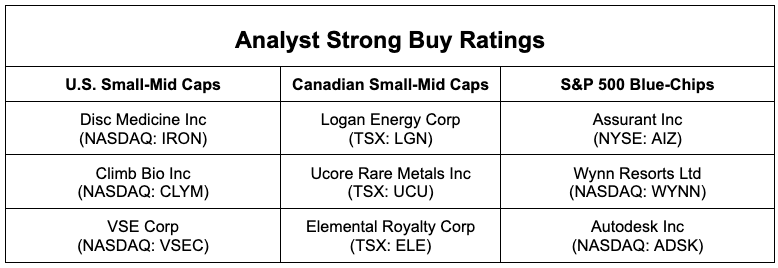
Analyst Strong Buy Ratings This Week! 📈
Looking for stocks with strong analyst backing? These companies have earned top-tier "Strong Buy" ratings from analysts, signaling potential upside for investors.
Whether you’re eyeing small-to-mid cap opportunities in the U.S. and Canada or want to stick with trusted S&P 500 blue-chip picks, this list highlights stocks that experts believe could outperform.
🔍 Do your research and see if any of these fit your portfolio!
The Gold Stocks Playbook for a New Bull Cycle

Gold has reclaimed its place in investor conversations, but the equities behind the metal rarely move as one. Senior producers, mid-tiers, juniors, royalty companies, and explorers each respond to a different mix of forces. Understanding which tier you are buying matters as much as the bullish thesis on gold itself.
This series breaks the gold mining sector into its working parts. Each piece looks at a distinct tier or category, what defines it, how the economics differ, and what investors should weigh before committing capital. The goal is not to pick winners, but to give retail investors a framework they can apply when the next gold name lands in their inbox.
From scale and predictability at the top of the market, to the asset-light royalty model, to the geographic risk embedded in every project, the series builds a complete map of how to think about gold equities.
Explore the full breakdown: