

Edition #145
Investing Unlocks: How to Capitalize on the Hot Topics From The Last 7 Days
We analyze recent trends and opportunities, offering strategic insights that help you manage risks and identify growth opportunities for your portfolio.
🧭 Markets Rebound, Trade Risks Linger
U.S. markets rebounded last week after recent weakness, and stocks climbed as the Supreme Court struck down key elements of President Trump’s tariff program, easing some near-term policy uncertainty and lifting sentiment in mega-cap tech stocks.
Markets face fresh uncertainty this week as trade policy remains in flux with news of new temporary tariffs after the court ruling and lingering geopolitical risks. Major earnings reports from Nvidia, Home Depot, Salesforce, and others will command attention and could drive sector rotation or broad market moves.
Hot Topics
Blue Owl offers a harsh lesson for semi-liquid fund investors
Big Tech gets a lift after Nvidia and Meta strike a new deal on chips
German Drone Deal Under Scrutiny Over Thiel Stake in Start-up
Cyber Stocks Slide as Anthropic Unveils Claude Security Tool
Bernie Sanders Outlines His Main Concerns With Proliferation Of AI
Investing Data Story

With 86% of exploration permits approved in 2 months or less, Newfoundland ranks as one of the fastest permitting jurisdictions surveyed globally.
Ranked: Where Exploration Approvals Move Fastest
Robinhood Opens the Velvet Rope
Robinhood’s Ventures Fund I is among the most accessible private market vehicles ever made available to retail investors, NYSE-listed, $25 per share, no accreditation requirement, no minimums.
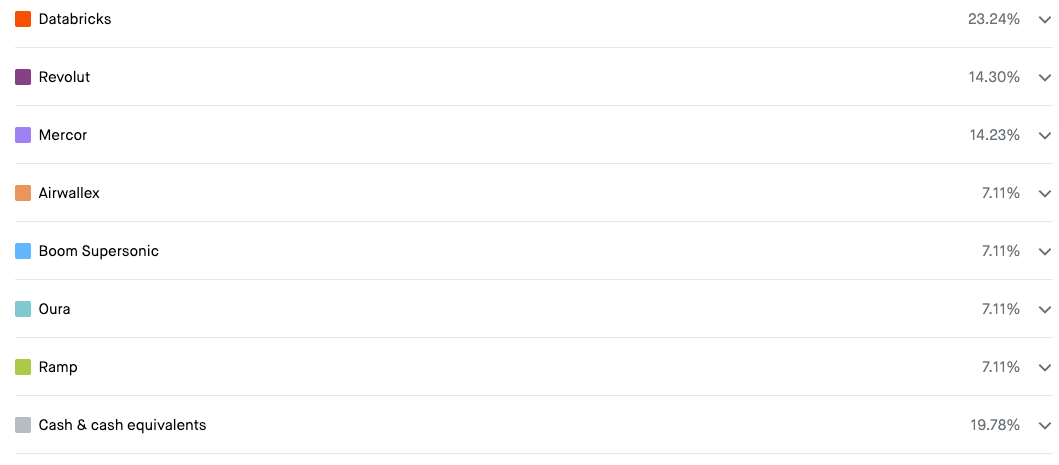
Trading under ticker RVI, the closed-end fund is scheduled to begin exchange operations on February 26, 2026. The initial portfolio includes stakes in Databricks, Revolut, Ramp, Airwallex, Boom, and Oura. The sponsor has also entered into an agreement to acquire shares in Stripe, a position expected to settle following the IPO. The fee structure includes a 1% management fee for the first six months (increasing to 2% thereafter), no performance fees, and intraday liquidity through exchange trading.
As a closed-end fund, RVI issues a fixed number of shares that trade at market-determined prices on the NYSE. The portfolio’s brand-name appeal is likely to attract interest from investors unfamiliar with private-market structures, which is both the product’s strength and its central risk. Familiarity can support early demand, but it can also lead to pricing that reflects enthusiasm more than valuation discipline.
Earnings Performance
Figma Inc (NYSE: FIG)
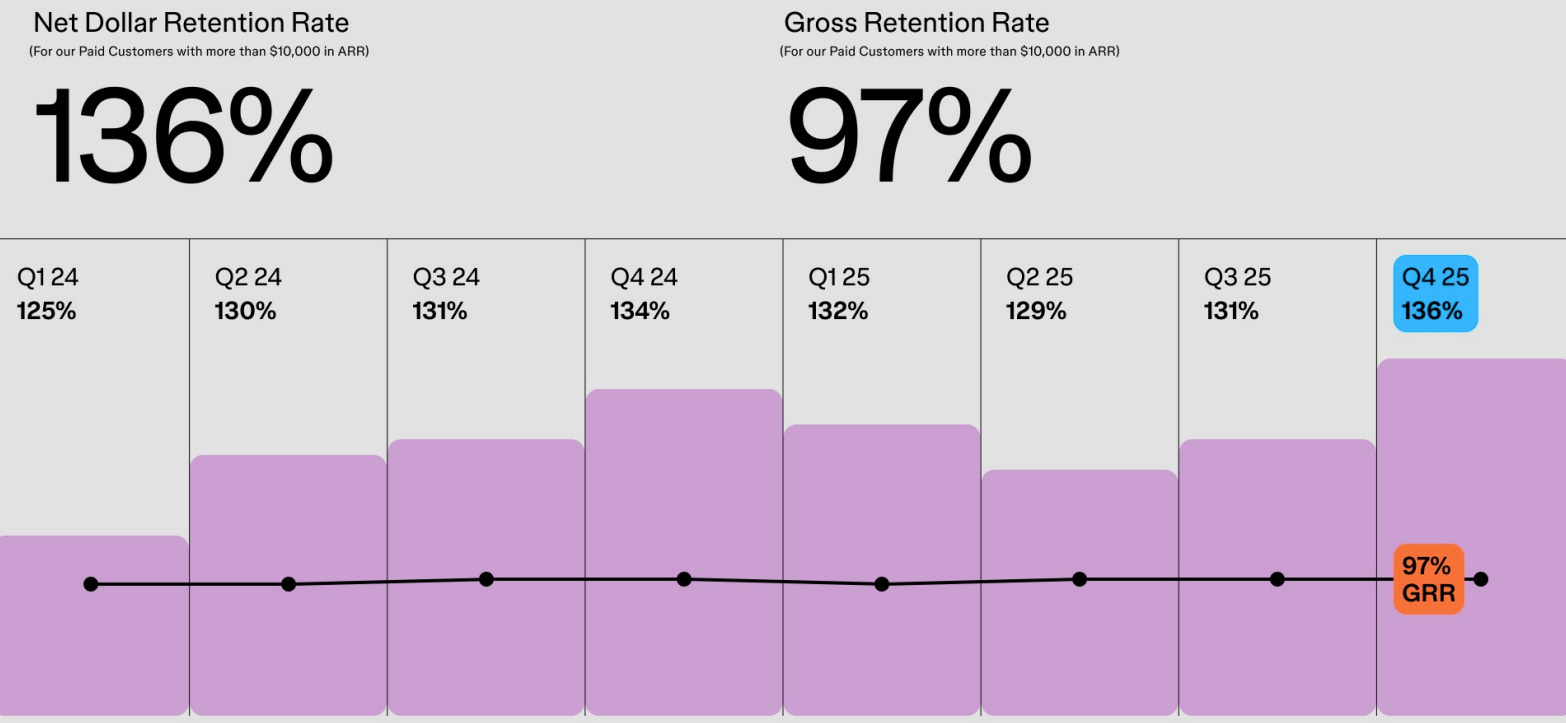
Figma (NYSE: FIG) closed out fiscal 2025 with a strong quarter, Q4 revenue hit $304M, up 40% year-over-year, pushing full-year revenue to $1.056B. The company went public in 2025, but the stock has fallen sharply since its IPO, making these results closely watched.
The standout metric is Net Dollar Retention (NDR), shown above. At 136%, it means existing customers are spending 36% more than they were a year ago, a powerful signal of product stickiness and expanding usage. After softening through early 2025, the rebound to a new high suggests Figma’s AI push, particularly Figma Make, is translating into real customer spend.
Other Earnings Updates
Lemonade (NYSE: LMND): Beats Estimates with Stronger Earnings Report
Palo Alto Networks (NASDAQ: PANW): Posts 15% Revenue Growth in Q2
Deere & Company (NYSE: DE): Beats Q1 Estimates for 2026
The Rise of Agentic Commerce
AI-powered shopping agents could capture 10 to 20% of U.S. e-commerce by 2030, according to Morgan Stanley. Yet adoption remains early, with 40 to 50% of consumers using AI tools for research, but only a mid single-digit percentage are completing purchases through them.
That gap highlights both real demand and real hurdles, though early data suggests it can close faster than aggregate numbers imply. Walmart reports that roughly half of its app users have engaged with Sparky, its AI shopping agent, with Sparky users carrying average order values approximately 35% higher than non-Sparky customers.
The bigger shift is in how people start shopping. Moving from search and click to ask and buy changes who controls product discovery, and by extension, advertising. The impact depends critically on who owns the agent. Walmart is already testing sponsored placements within Sparky, suggesting retailers that control their own agent layer can migrate their retail media businesses into it rather than lose them. The existential risk falls on platforms that cede the agent relationship to a third party.

Agentic commerce is also proving its strongest use case in grocery and consumer packaged goods. Sparky can already identify shoppers who buy the same items weekly and prompt a reorder at app open, real-world validation that the frequency and conversion benefits are achievable, not merely theoretical.
The opportunity is meaningful, but asymmetric: retailers that own their agent experience are better positioned to capture the upside, while those that don’t face a more disruptive transition over the next five years.
Analyst Strong Buy Ratings This Week! 📈
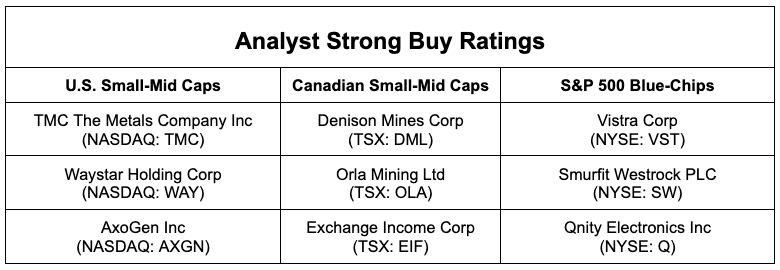
Looking for stocks with strong analyst backing? These companies have earned top-tier "Strong Buy" ratings from analysts, signaling potential upside for investors.
Whether you’re eyeing small-to-mid cap opportunities in the U.S. and Canada or want to stick with trusted S&P 500 blue-chip picks, this list highlights stocks that experts believe could outperform.
🔍 Do your research and see if any of these fit your portfolio!
More Tariff Controversy
A little-noticed Wall Street trade is drawing scrutiny after a US Supreme Court decision struck down Trump’s sweeping import taxes. As legal challenges to the tariffs wound through the courts, Cantor Fitzgerald offered to pay companies 20–30 cents on the dollar upfront in exchange for the rights to their full tariff refund once the legal process played out.
Why it’s controversial
Howard Lutnick, the Commerce Secretary who publicly championed these tariffs, ran Cantor Fitzgerald until recently, and his sons now run it. His firm was essentially betting the tariffs would be struck down, buying up these refund rights at a discount in anticipation of exactly what just happened.
The uncomfortable question: was Lutnick privately signaling to his family’s firm that the tariffs were legally shaky, while publicly defending them? Or did his firm simply have better legal instincts than most?