

Edition #160
Investing Unlocks: How to Capitalize on the Hot Topics From The Last 7 Days
We analyze recent trends and opportunities, offering strategic insights that help you manage risks and identify growth opportunities for your portfolio.
🚨 Hot Jobs Data Ends a Nine-Week Win Streak
U.S. stocks snapped a nine-week rally last week after a blowout May jobs report upended rate expectations. The economy added 172,000 positions, nearly double forecasts, while unemployment held at 4.3%. The strong data pushed the 10-year Treasury yield above 4.5% and the 30-year above 5%, raising fears the Fed will hold rates higher for longer. The Nasdaq shed roughly 4.7%, with tech and semiconductors leading the selloff, while defensive sectors held up as investors rotated to safety.
This week, May CPI takes centre stage, with core inflation expected at around 2.9% annually, a reading that could cement a Fed hold later this month. Producer prices and earnings from Oracle and Adobe will add colour on inflation and AI spending. The anticipated Nasdaq debut of SpaceX, potentially the largest IPO in history at a ~$1.78 trillion valuation, looms over markets and could pull capital from other sectors and stoke volatility.
PRESENTED BY CANCAMBRIA ENERGY CORP

CanCambria Energy Corp. (TSXV: CCEC) (OTCQB: CCEYF) (FSE: 4JH) is building a scalable tight gas development platform in Central Europe. Years of underinvestment, declining domestic production, reduced reliance on Russian imports, and persistent energy security concerns have pushed pricing well above North American benchmarks. CanCambria’s goal is to apply proven unconventional techniques and scale in this higher-priced natural gas market.
Download the Exclusive Investor Report.
Hot Topics
OpenAI’s Ambitious Transformation of ChatGPT into a Superapp
UK AI start-up PhysicsX hits $2.4bn valuation following Temasek-led deal
Investing Data Story

These 9 North American small- to mid-caps stand out for converting revenue into cash, earning strong returns on capital, and carrying low debt.
9 Small-Mid Caps Quietly Compounding Cash
El Niño’s Market Pressure Points
The World Meteorological Organization puts the probability of an El Niño event between June and August 2026 at 80%, with NOAA estimating a 96% chance it persists into early 2027. The lead time is long enough to act.
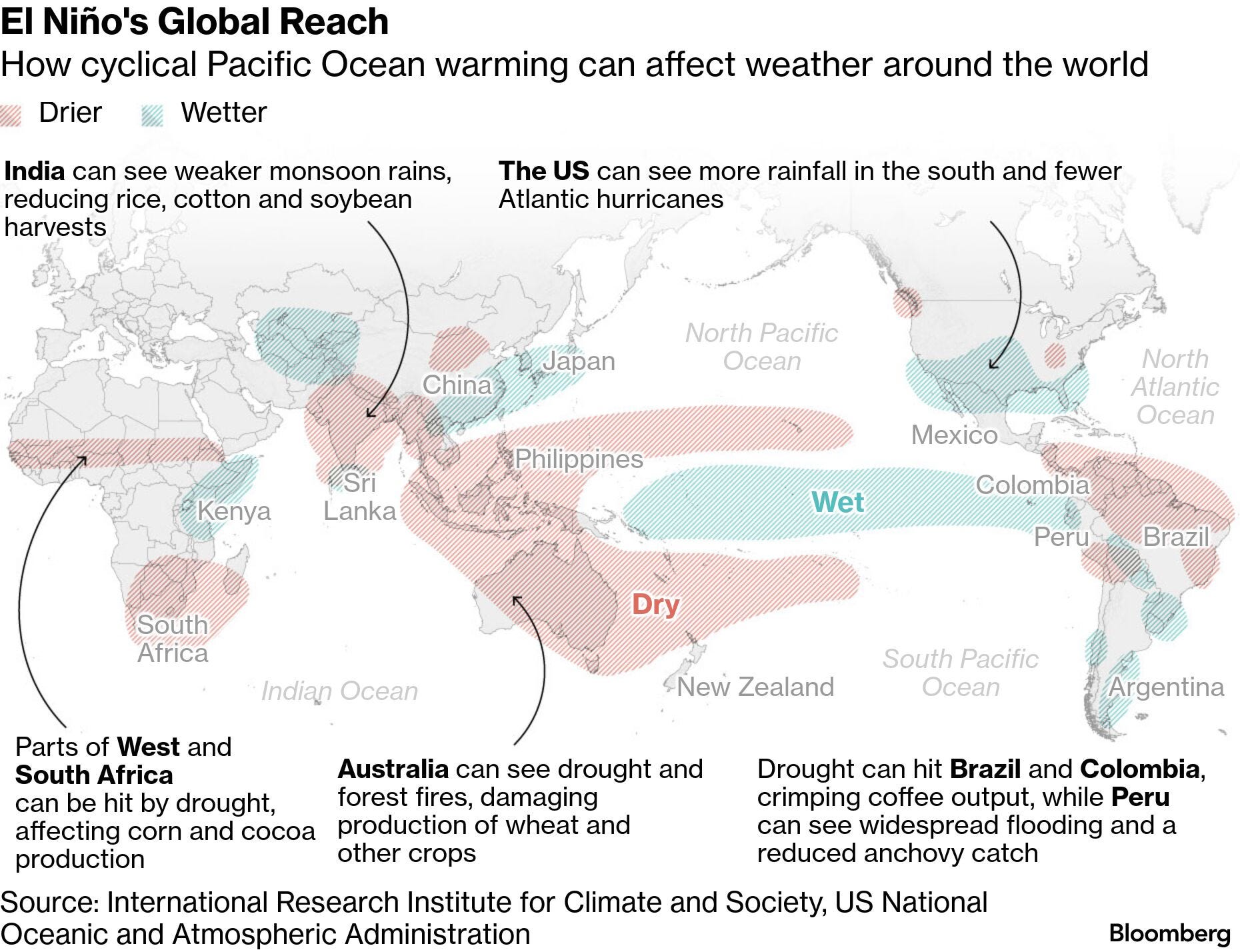
The mechanism is well understood. Warmer Pacific sea-surface temperatures dry out Southeast Asia, threatening palm oil and rice output from the world’s dominant producers. Brazil, which generates roughly 60% of its electricity from hydropower, faces reservoir depletion and expensive fossil fuel backup. Asian rice farmers already cutting planting due to elevated costs tied to Hormuz disruption, face compounding pressure.
Not all the angles are bearish. Fertilizer producers benefit as farmers under yield pressure maximize crop nutrition spend. Water infrastructure attracts defensive flows during drought cycles. Reinsurers face near-term correlated losses across drought, flood, and wildfire perils -- but premium repricing typically follows 12 to 18 months later.
The caveat: forecasts model the direction of risk, not its magnitude. A moderate event looks meaningfully different from a strong one.
Watch agricultural commodity futures as the leading signal. Equity repricing in exposed sectors typically lags by weeks to months.
Ten sectors with direct exposure, and what the risk looks like in each, are mapped out in full here → El Niño Points to 10 Sectors Worth Watching
Investing Data Story

As Europe’s reliance on imported LNG deepens and domestic output falls, the conditions favouring investment in local gas supply are becoming difficult to ignore.
Tracked: Europe’s LNG Imports Are Causing A Supply Shift
Index Rules and the IPO Queue
With SpaceX’s IPO imminent, Nasdaq has changed its rules to allow exceptionally large IPOs to join the Nasdaq 100 much sooner after listing. That means SpaceX could enter the QQQ ETF within weeks of listing, creating significant index-driven demand.
S&P Dow Jones Indices has taken the opposite approach. The S&P 500 still requires at least a year of public trading and sustained profitability. SpaceX’s S-1 shows a $4.9 billion net loss in 2025 and a further $4.3 billion loss in Q1 2026, largely reflecting the consolidation of xAI following the February 2026 acquisition. While SpaceX’s core business was reportedly profitable in 2024, the combined company is unlikely to meet S&P’s requirements anytime soon.
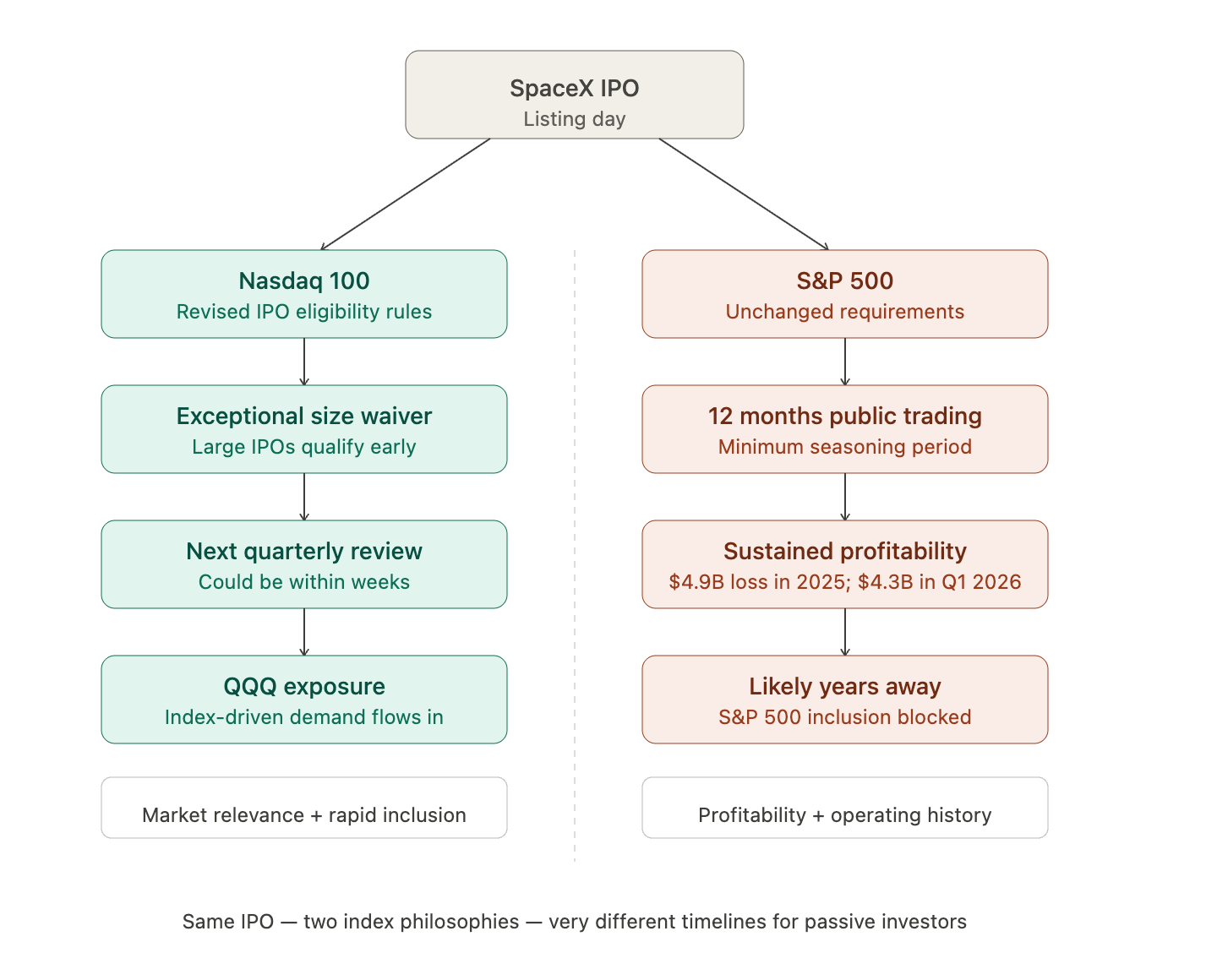
The contrast highlights two competing philosophies. Nasdaq prioritizes market relevance and rapid inclusion. S&P prioritizes profitability and operating history.
That distinction matters because index membership increasingly drives capital flows. Investors often view passive funds as neutral, but index providers make active decisions about which companies qualify and when. In SpaceX’s case, Nasdaq investors may gain exposure within weeks, while S&P 500 investors could wait years.
Watch how QQQ absorbs SpaceX. It will provide a real-world test of whether rapid index inclusion enhances market efficiency or amplifies volatility.
Earnings Performance
Broadcom (NASDAQ: AVGO)
Broadcom (NASDAQ: AVGO) posted record AI revenue in Q2, but shares fell as investors focused on the lack of an increase in full-year AI guidance and management’s revised AI systems strategy.
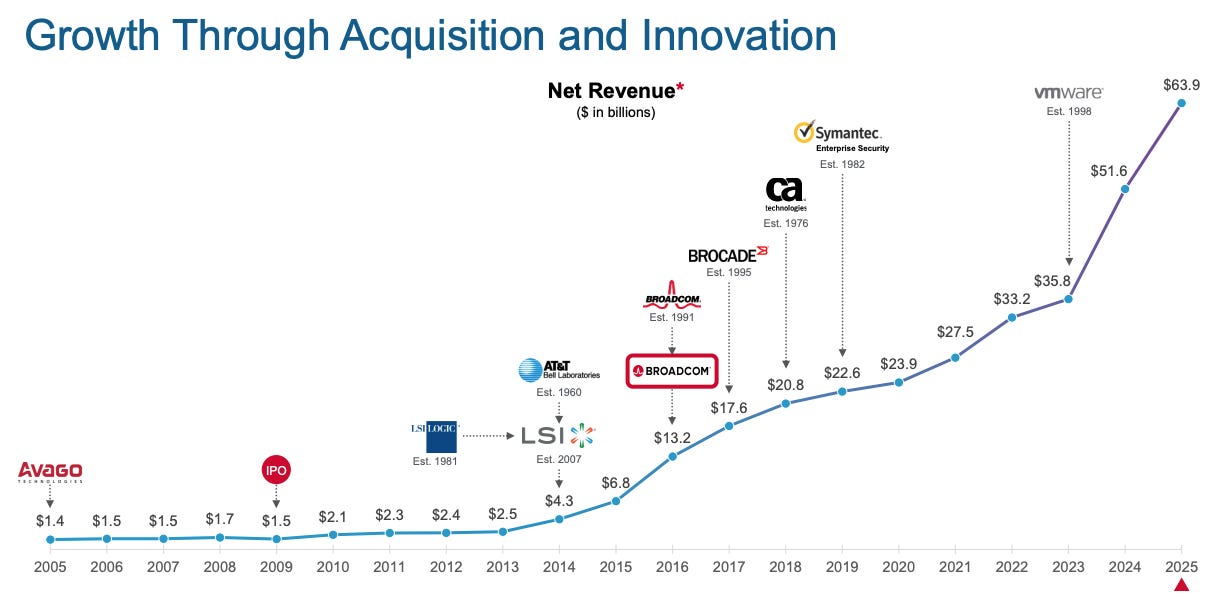
The more interesting story may be Broadcom’s long-term track record of value creation. Revenue has grown from $1.4 billion in 2005 to $63.9 billion in FY2025, not because of a single product cycle, but through a disciplined acquisition strategy that paired market-leading infrastructure assets with aggressive operational improvements. Acquisitions transformed the company from a semiconductor supplier into a diversified infrastructure technology platform.
The chart highlights why Broadcom’s competitive advantage extends beyond AI. Its ability to acquire critical technology franchises, expand margins, and convert earnings into cash flow has been the primary driver of shareholder value for two decades. VMware is now the next major test of that playbook. If management can execute as successfully as it has with prior acquisitions, the deal could become a meaningful driver of earnings and cash flow growth for years to come.
Other Earnings Updates
G-III Apparel (NASDAQ: GIII): Posts Q1 Earnings Beat, Lifts Guidance
Lululemon (NASDAQ: LULU): Cuts Full-Year Outlook as Profit Falls
Planet Labs (NYSE: PL): Posts Record Q1 Revenue of $94M
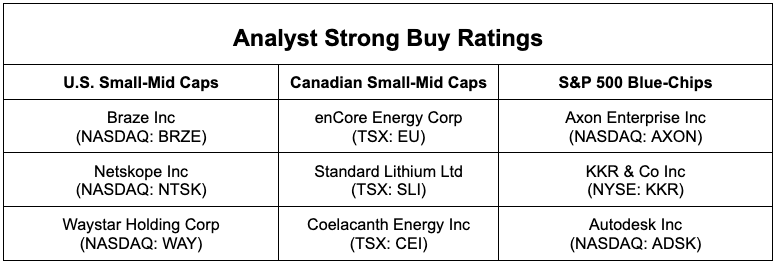
Analyst Strong Buy Ratings This Week! 📈
Looking for stocks with strong analyst backing? These companies have earned top-tier "Strong Buy" ratings from analysts, signaling potential upside for investors.
Whether you’re eyeing small-to-mid cap opportunities in the U.S. and Canada or want to stick with trusted S&P 500 blue-chip picks, this list highlights stocks that experts believe could outperform.
🔍 Do your research and see if any of these fit your portfolio!
Investor Guide: Inside the Blockchain Stack

Blockchain infrastructure is one of the most active areas of digital asset investing right now. Our guide breaks down exactly where fees accrue across the stack. Read it here.