

Edition #146
Investing Unlocks: How to Capitalize on the Hot Topics From The Last 7 Days
We analyze recent trends and opportunities, offering strategic insights that help you manage risks and identify growth opportunities for your portfolio.
📉 Hot Inflation Data Rattles Stocks
U.S. stocks finished last week mostly lower as worries around AI disruption, inflation, and renewed geopolitical risk weighed on sentiment. The S&P 500, Nasdaq, and Dow all posted weekly declines, with tech and financial names hit hardest while defensive sectors outperformed. Oil prices jumped sharply on escalating conflict in the Middle East, pushing investors into safe havens and boosting energy and defense stocks.
Markets now turn to the February jobs report on Friday, alongside ISM manufacturing and services data earlier in the week. Investors will watch for signs that growth is cooling enough to ease inflation without tipping the economy into recession. Ongoing geopolitical risks remain a wildcard. Sticky wholesale inflation could delay Fed rate cuts, which tends to pressure high-growth sectors like tech.
Hot Topics
Investing Data Story

With 86% of exploration permits approved in 2 months or less, Newfoundland ranks as one of the fastest permitting jurisdictions surveyed globally.
Ranked: Where Exploration Approvals Move Fastest
Small-Caps Stage a Comeback
After nearly three years of grinding underperformance against large-caps, U.S. small-cap stocks are finally closing the gap, and the move looks fundamental, not just a sentiment bounce.
Since late October 2025, small-caps have sharply outpaced the S&P 500, with T. Rowe Price’s analysis showing the performance gap that built up since the end of 2022 has begun to meaningfully narrow. More importantly, earnings, which had been a persistent drag, have turned a corner. Small-cap profits fell sharply for most of the past three years, then rebounded hard in the final months of 2025.
Several tailwinds are converging:
Fed rate cuts are easing pressure on smaller, more debt-heavy businesses
Trade policy uncertainty has cooled, helping domestically focused companies plan ahead
Regional banks, a critical funding source for small-caps, are in better shape
AI-related demand is starting to filter down beyond the mega-caps.
Early fiscal stimulus from recently passed legislation adds further support.
The thesis depends on rates staying accommodative and trade tensions remaining contained. Monitor small-cap earnings momentum through mid-2026 as the real test of whether this revival has legs.
Earnings Performance
Celsius Holdings Inc (NASDAQ: CELH)
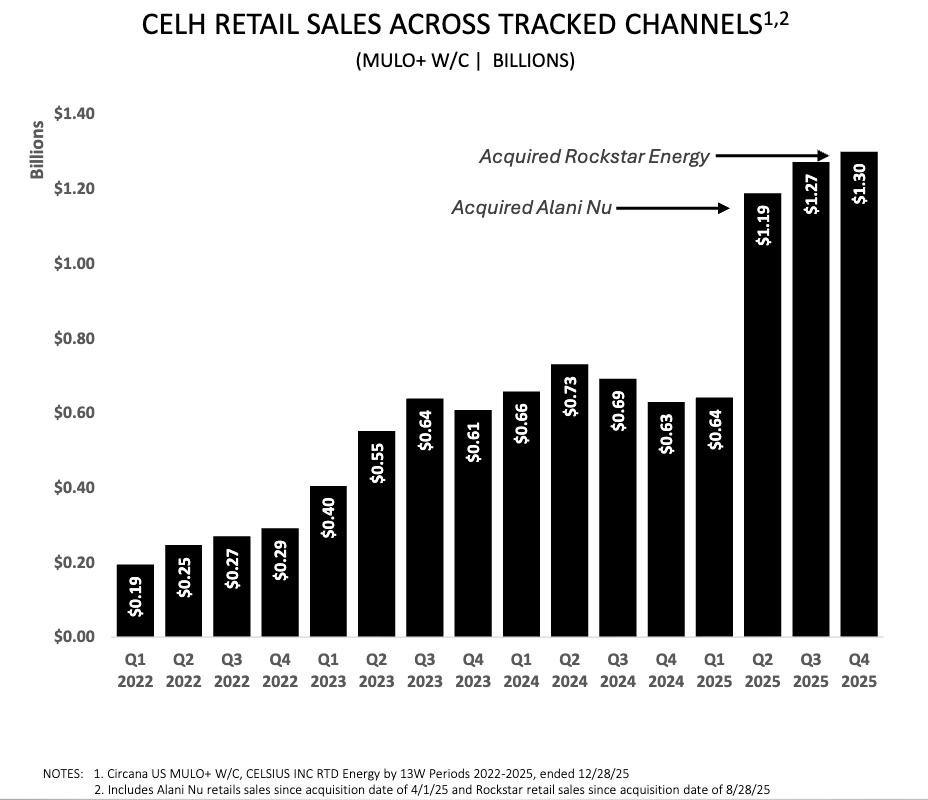
Celsius Holdings posted a decisive Q4 2025 earnings beat, reporting $721.6M in revenue, up ~117% YoY, driven largely by the Alani Nu acquisition, with adjusted EPS of $0.26 well ahead of expectations. The results reflect a clear step-change in scale, as expanded distribution materially lifted the company’s retail footprint and top-line growth. While Alani Nu is the primary driver of current results, the recently closed Rockstar Energy acquisition remains too early to meaningfully impact reported retail sales.
Other Earnings Updates
Zeta Global (NYSE: ZETA): Lifts 2026 Outlook After Q4 Beat
TJX Companies, Inc. (NYSE: TJX): Closes FY26 Above Plan, Lifts Buyback
CAVA Group (NYSE: CAVA): Tops $1B in FY25 as Expansion Accelerates
Analyst Strong Buy Ratings This Week! 📈
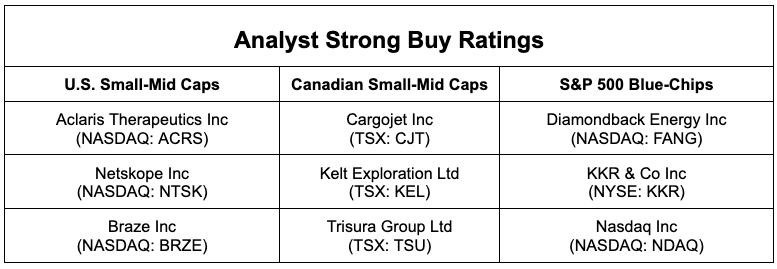
Looking for stocks with strong analyst backing? These companies have earned top-tier "Strong Buy" ratings from analysts, signaling potential upside for investors.
Whether you’re eyeing small-to-mid cap opportunities in the U.S. and Canada or want to stick with trusted S&P 500 blue-chip picks, this list highlights stocks that experts believe could outperform.
🔍 Do your research and see if any of these fit your portfolio!
China Biotech’s Leverage Shift
The days of Western pharma scooping up Chinese drug assets on the cheap are fading. Average upfront payments for licensing deals with Chinese biotechs have risen sharply since 2022, according to biopharma intelligence firm Evaluate, and 2026 is tracking even higher.
The shift reflects a structural change, not a pricing blip. Chinese biotechs have built genuine scientific depth, particularly in oncology. They now account for roughly half of all clinical-stage antibody-drug conjugates and bispecific antibodies in development globally. That kind of market share means Western companies shopping for pipeline assets, and most are, increasingly must engage Chinese counterparts at more competitive terms.
AstraZeneca’s recent collaboration with CSPC Pharmaceutical, including a $1.2 billion upfront payment and milestones that could total roughly $18.5 billion, underscores how seriously large pharma is treating Chinese-origin innovation.
Chinese firms are also less dependent on outbound licensing to survive. Hong Kong’s Hang Seng Biotech Index surged over 64% in 2025, and evolving listing rules in Hong Kong have broadened capital access. More financing options translate into greater negotiating leverage and potentially fewer distressed or discounted deals.
More financing options mean more negotiating power, and, over time, more Chinese firms may pursue full acquisitions rather than licensing at all.
Investors should expect valuation pressure on Western biotechs reliant on discounted Chinese in-licensing, as that arbitrage narrows. The pending Biosecure Act could further disrupt U.S.–China biotech deal flow, increasing repricing risk for companies with concentrated Chinese pipeline exposure.