

Edition #155
Investing Unlocks: How to Capitalize on the Hot Topics From The Last 7 Days
We analyze recent trends and opportunities, offering strategic insights that help you manage risks and identify growth opportunities for your portfolio.
💼 Jobs Week Tests Market Momentum
Stocks ended last week near record highs, but the story now shifts from earnings to the economy. Tech and communication services continue to lead, helped by strong AI spending and solid profit growth; firmer oil prices keep inflation concerns in play. The rally remains healthy, but elevated expectations leave less room for disappointment.
This week’s labor data is the main event. Economists expect payroll growth to slow from March’s 178,000 gain, with unemployment seen holding near 4.3%. If the jobs report is weak, Treasury yields could fall, lifting rate-sensitive sectors like real estate and utilities. If the report is strong, expensive growth stocks may come under pressure.
Hot Topics
Medtech’s Lost Decade
The S&P 500 compounded at 12% annually from 2017 to 2025, while medtech returned just 3%, the weakest performance among industries tracked by McKinsey & Company.

Nearly 80% of public medtech companies delivered flat or negative returns over the past four years. Yet, medtech is not a bad business. A 25% EBITDA margin ranks 5th across all ten sectors, and a 7% revenue growth outlook for 2025-27 matches the S&P 500. The problem is capital efficiency. Return on invested capital (ROIC, a measure of how efficiently a company generates profit from the money it deploys) sits at just 6% for the sector.
Intuitive Surgical (NASDAQ: ISRG) is the clearest exception, as a 19% ROIC and consistent revenue growth from its da Vinci surgical robotics platform shows what disciplined reinvestment actually looks like in this space.
More broadly, medtech companies are shifting capital toward higher-margin areas like heart valve repair and robotics, but stronger margins and better capital allocation will be needed for the sector to close the gap with the wider market. Watch for names already demonstrating measurable margin expansion and rising ROIC.
Earnings Performance
Intercontinental Exchange (NYSE: ICE)
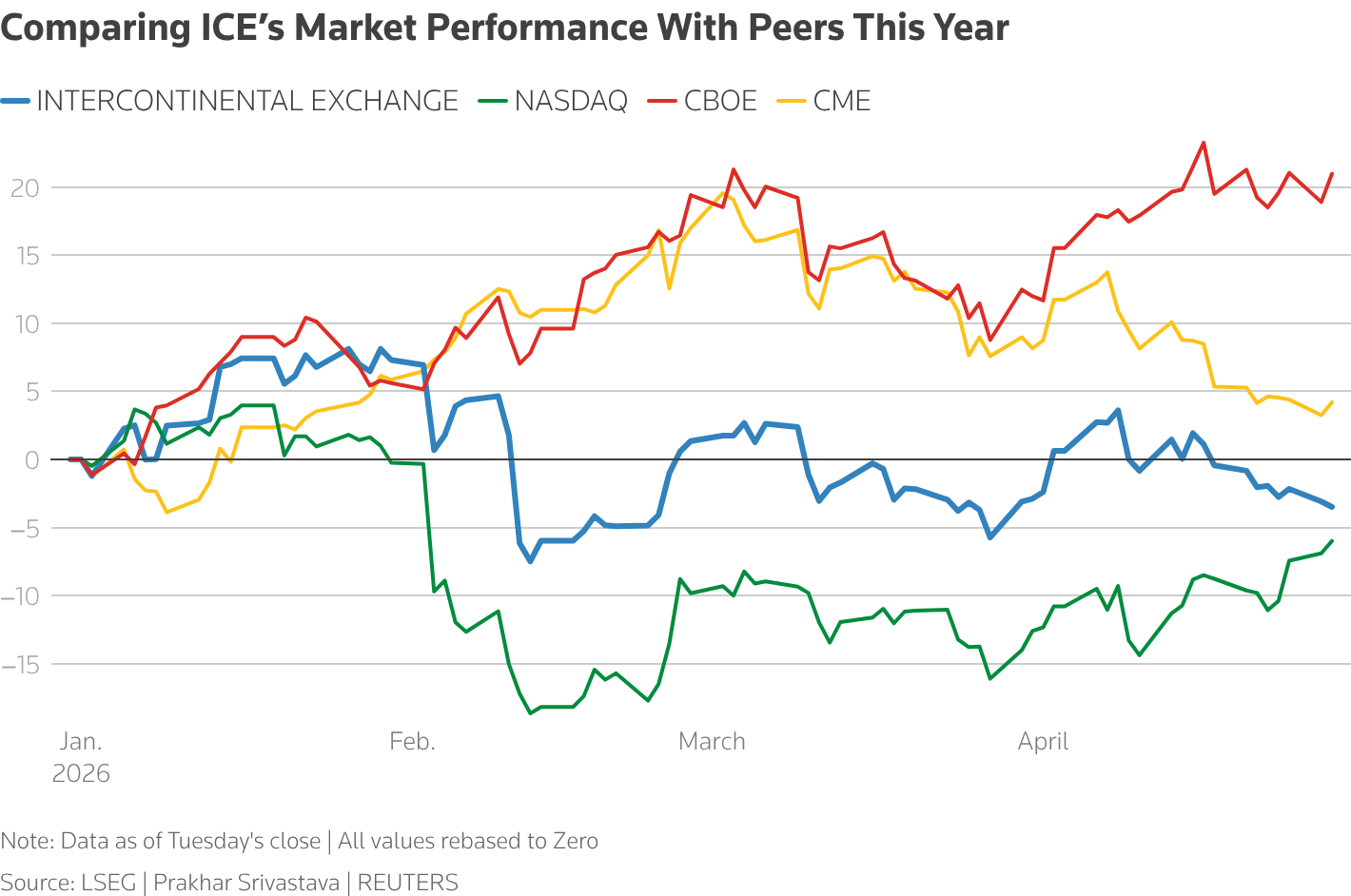
Intercontinental Exchange (NYSE: ICE) beat first-quarter profit estimates, but its stock has modestly lagged major exchange peers in 2026, while rivals such as Cboe Global Markets and CME Group have posted strong double-digit gains. While ICE has also benefited from heightened market volatility, its more diversified business mix has made it a lower-beta play on the trading surge.
Other Earnings Updates
Amazon (NASDAQ: AMZN): Posts AWS Growth at 15-Quarter High
Microsoft (NASDAQ: MSFT): Posts $37B AI Run Rate, Up 123%
Alphabet (NASDAQ: GOOGL): Posts 63% Cloud Growth as Backlog Nears $460B
Coca-Cola (NYSE: KO): Posts 18% EPS Growth in Q1 2026
Visa Inc. (NYSE: V): Q2 Earnings Surge 17% on Revenue Growth
T-Mobile (NASDAQ: TMUS): Posts 15% Postpaid Revenue Growth, Raises Guidance
Analyst Strong Buy Ratings This Week! 📈
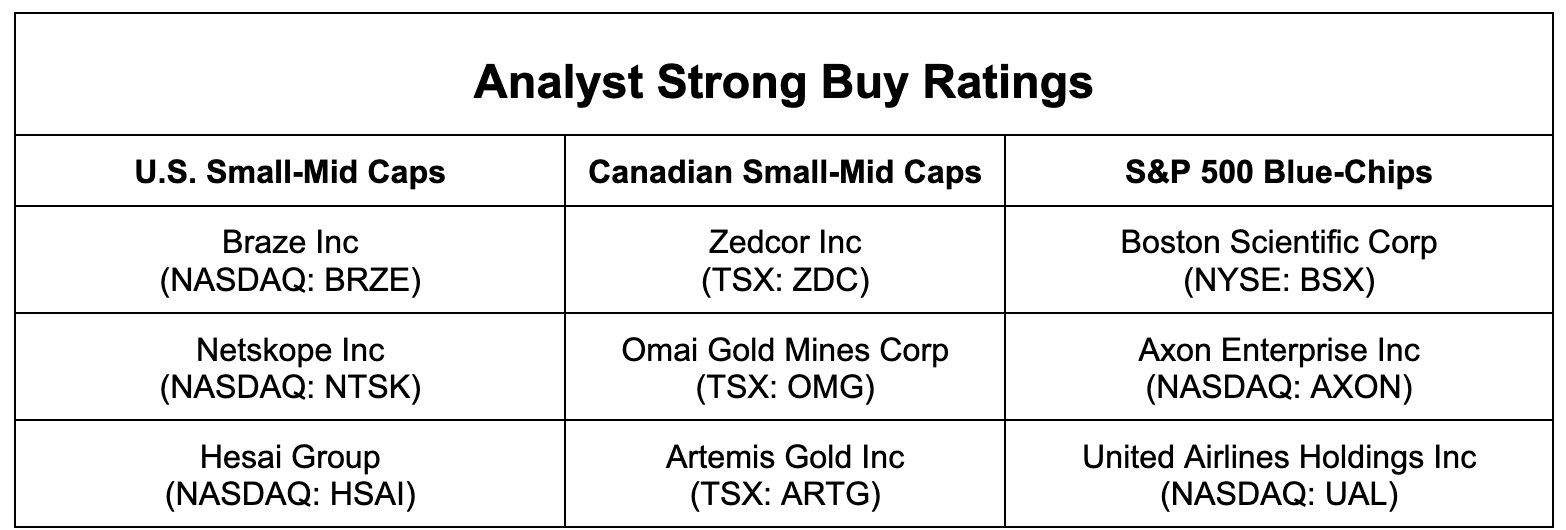
Looking for stocks with strong analyst backing? These companies have earned top-tier "Strong Buy" ratings from analysts, signaling potential upside for investors.
Whether you’re eyeing small-to-mid cap opportunities in the U.S. and Canada or want to stick with trusted S&P 500 blue-chip picks, this list highlights stocks that experts believe could outperform.
🔍 Do your research and see if any of these fit your portfolio!
Beijing Eases Yttrium Grip
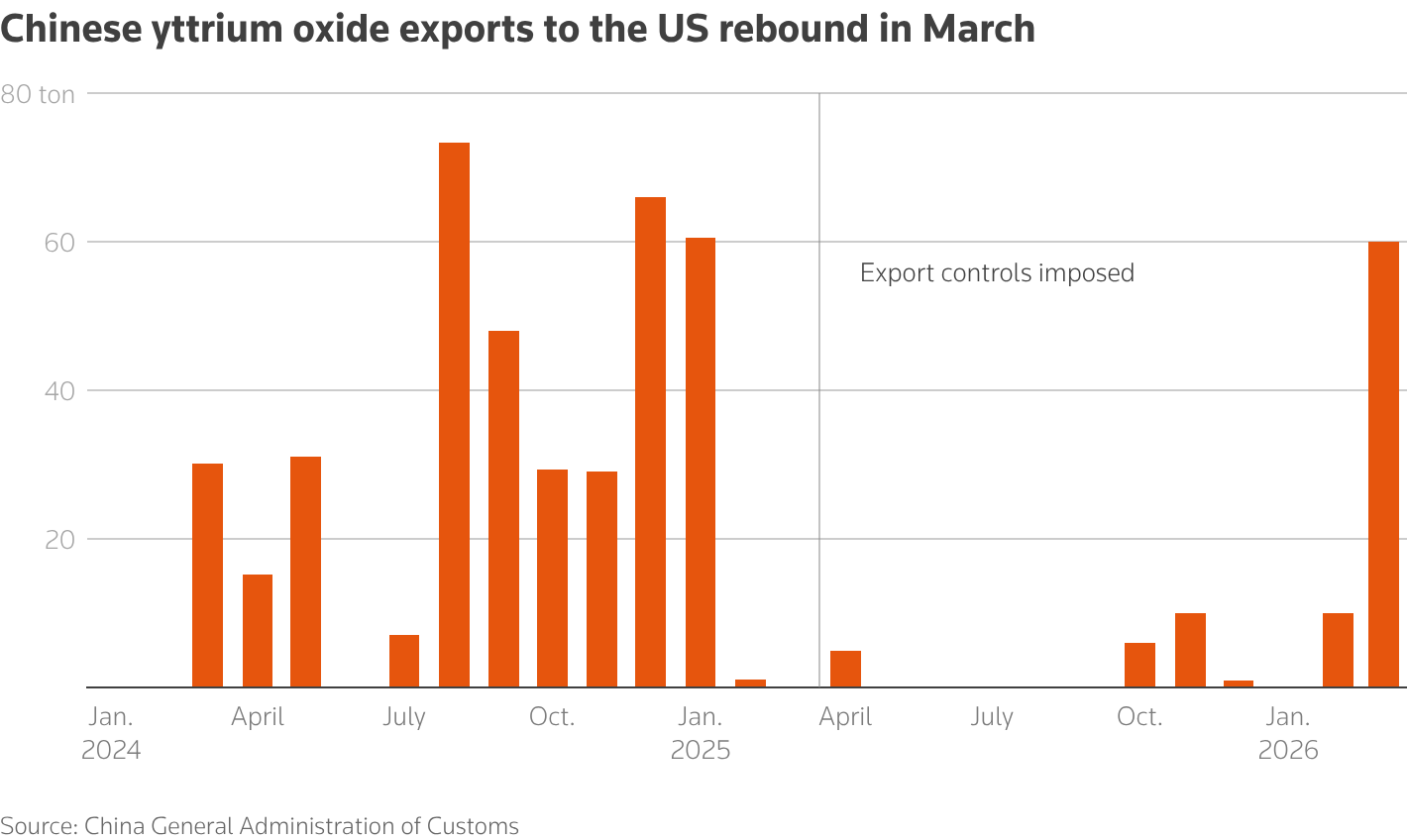
A single 60-ton shipment of yttrium oxide cleared Chinese customs in March, 50% more than all yttrium exported to the U.S. combined since Beijing imposed controls last April. Prices had surged roughly 6,900% in the 12 months to February as aerospace and semiconductor firms rationed supplies, and some coating production lines idled.
Yttrium oxide is indispensable to aerospace, forming the thermal barrier coatings that keep jet engines from overheating. When supply tightens, engine overhaul facilities and new-build programs face immediate production risk. U.S.-bound shipments collapsed from 333 tons in the eight months before controls to just 17 tons afterward, forcing North American coating suppliers to reserve material for tier-one customers such as Boeing and Airbus.
China’s export control system requires companies to apply for licenses to ship rare earths abroad, with aerospace and defense end uses facing the most scrutiny. U.S. domestic alternatives at MP Materials and Lynas Rare Earths are scaling, but a commercially viable non-Chinese supply is still years away.
The risk is that this shipment reflects tactical easing tied to trade talks, not a durable policy shift. Watch aerospace supplier margins and yttrium spot prices as leading indicators of whether this opening holds.
OPEC’s Grip Is Loosening
The UAE is leaving OPEC, a major blow to the cartel’s already-fading authority. As OPEC’s fourth-largest producer at roughly 12% of output, Abu Dhabi’s exit is driven by a desire to expand production beyond quota limits toward a 5 MMbpd target.
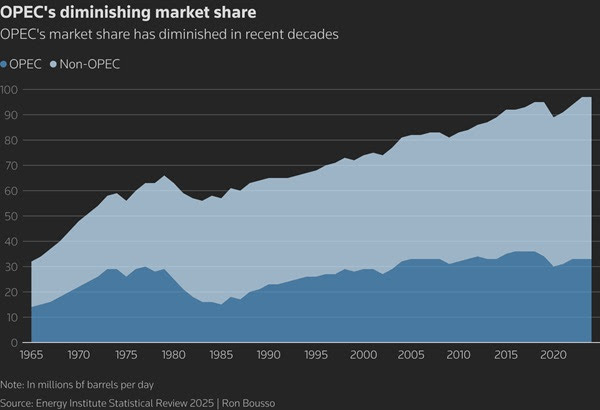
With the Strait of Hormuz blockade already paralyzing Gulf exports, the immediate market impact is muted, but the longer-term signal suggests that once the Iran conflict ends and barrels return, a multi-way market share war between OPEC remnants, the UAE, and U.S. producers could send oil prices sharply lower.