

Edition #167
Investing Unlocks: How to Capitalize on the Hot Topics From The Last 7 Days
We analyze recent trends and opportunities, offering strategic insights that help you manage risks and identify growth opportunities for your portfolio.
📉 AI Jitters Knock Tech Off Balance
Last week, markets slipped as the first wave of Big Tech earnings landed with a thud and ballooning AI spending plans spooked investors. Technology and communication services led the retreat, with all three major indexes closing lower and the Nasdaq bearing the brunt. Rising Middle East tensions pushed oil prices up sharply before they eased, adding another layer of worry.
This week, the calendar is packed, and the stakes are high. The Federal Reserve delivers its latest rate decision, and Chair Kevin Warsh’s tone will likely matter more than the widely expected hold, while fresh readings on second-quarter growth and the Fed’s preferred inflation gauge round out the macro picture. It is also the busiest stretch of earnings season, with Microsoft and Meta reporting midweek, Apple and Amazon close behind, plus Boeing, Visa, and Ford in the mix. The tape may hinge on whether those results justify all that heavy AI spending, so for investors, keeping an eye on the big picture rather than the daily swings is the smarter play here.
Hot Topics
Seven Stocks, a Third of the Index
The Magnificent 7, which are Apple, Microsoft, Nvidia, Alphabet, Amazon, Meta, and Tesla, made up 31.5% of the S&P 500’s market value as of July 24, 2026.
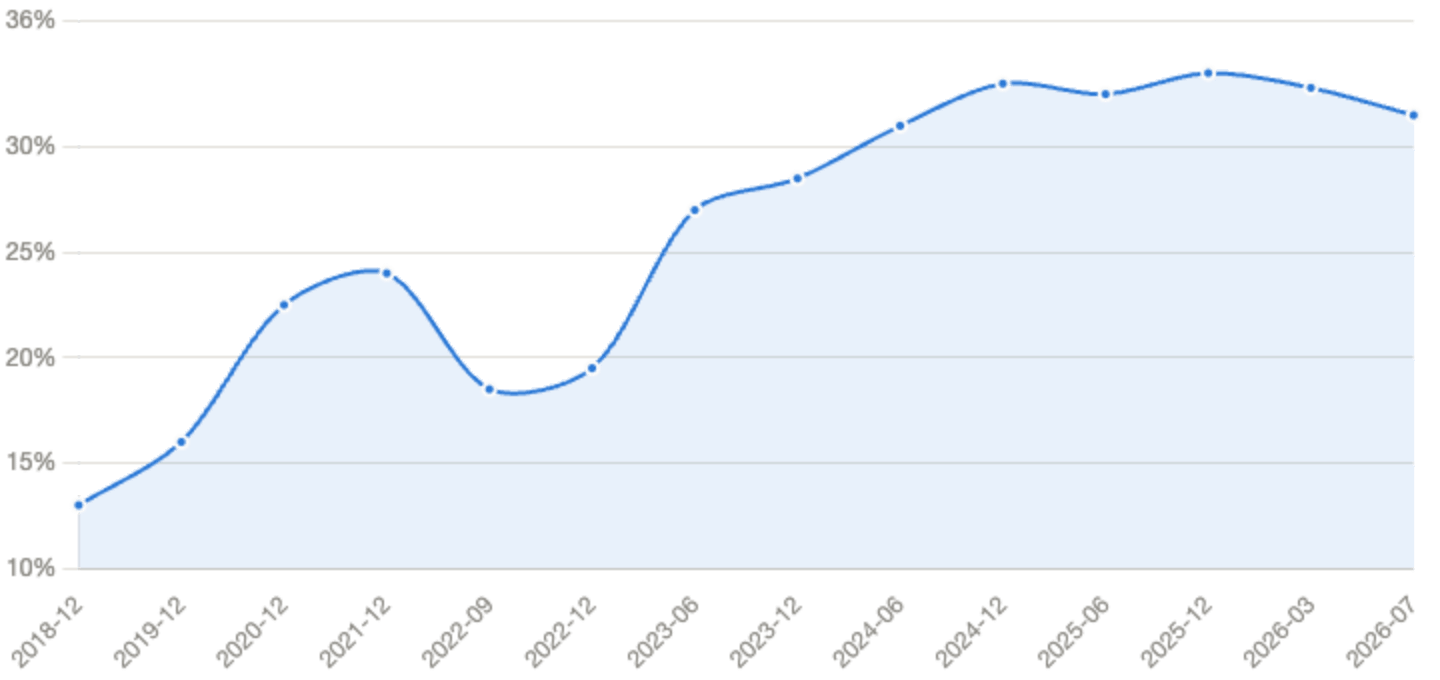
The share climbed steeply from 13% in 2018 to a 33.5% peak in late 2025, with a dip in 2022 during the tech selloff. It has eased slightly to 31.5% in the latest reading.
New US Tariffs Hit 60 Trading Partners
Sixty trading partners face new US import duties of either 10% or 12.5%, announced July 23 by the US Trade Representative. The higher 12.5% rate is the default, applied to 41 partners including China, Russia, Japan, and most of the Gulf and Latin America. A smaller group of 19, among them Canada, Mexico, India, and the UK, draws the lower 10% rate. For some partners, marked with an asterisk, the rate shown is net of the standard Most-Favored-Nation tariff they already pay, meaning the new duty sits on top of existing rates.
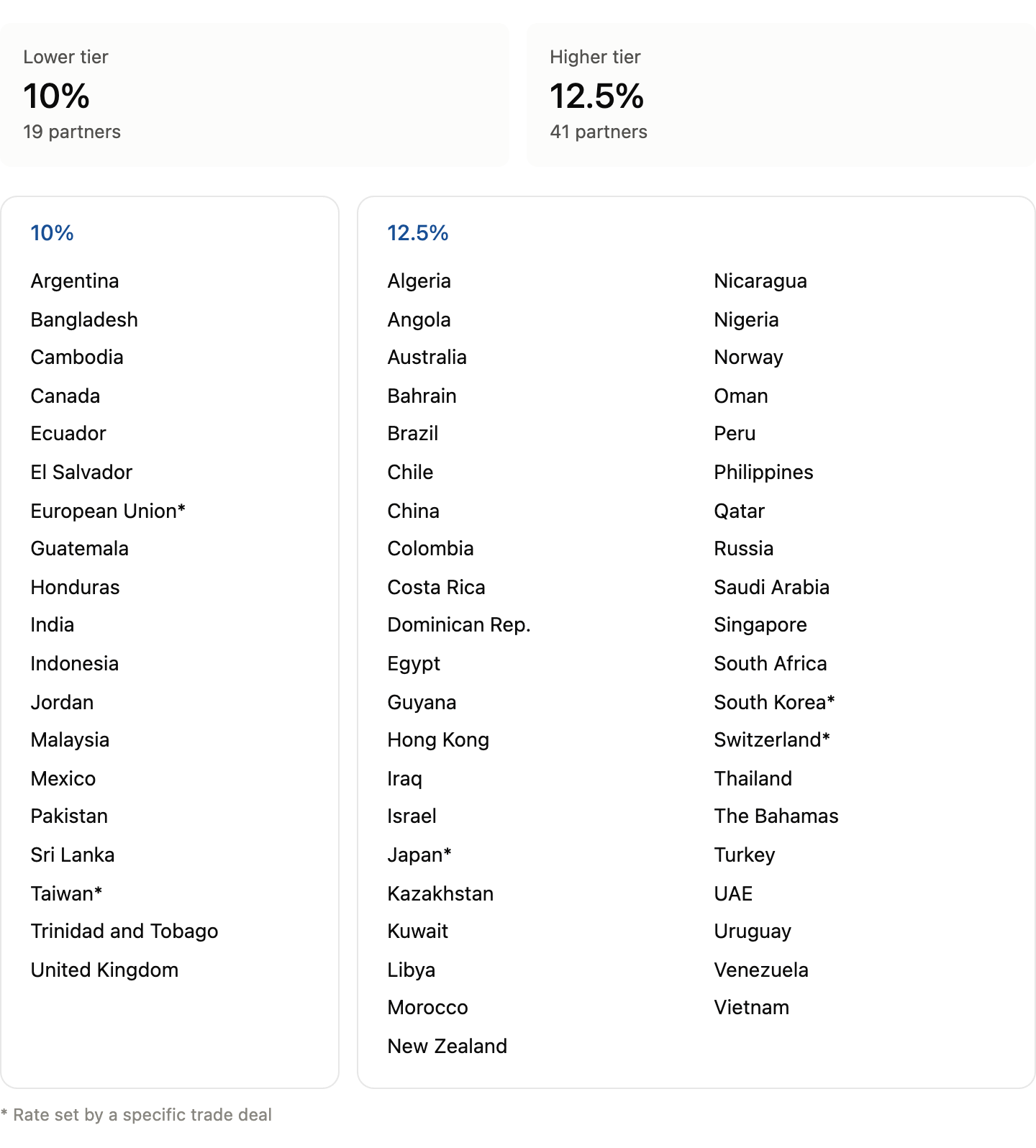
The move is the administration’s most substantial effort yet to rebuild its tariff wall after the Supreme Court struck down the earlier “Liberation Day” version in February, ruling 6-3 that Trump had no authority to impose those levies under emergency powers law.
Earnings Performance
Newmont Corporation (NYSE: NEM)
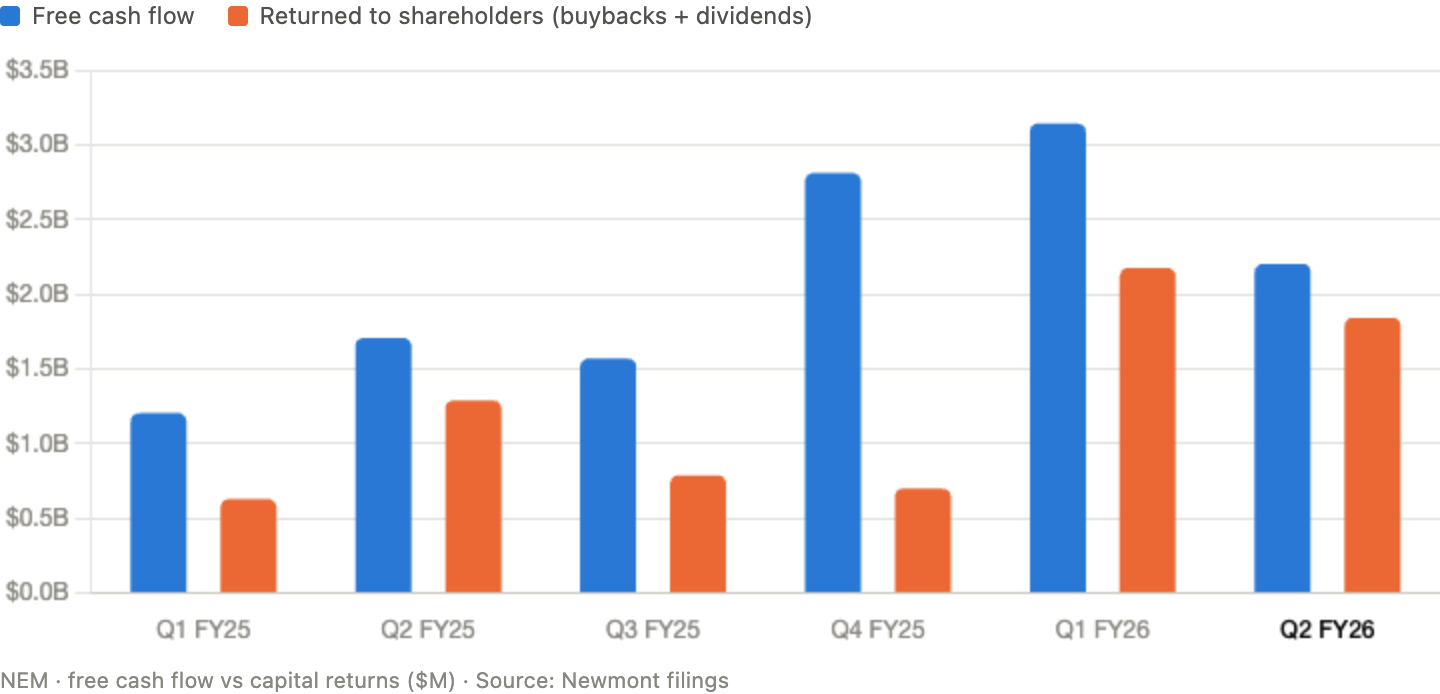
Newmont Corporation (NYSE: NEM) delivered a strong second quarter, generating free cash flow of $2.2 billion despite lower gold prices, weaker production, and earthquake-related disruption at its Australian mine. The company maintained its 2026 guidance and returned $1.9 billion to shareholders.
With $9.0 billion in cash, Newmont can fund growth and shareholder returns. Catalysts include stronger second-half production and permitting progress at a major Canadian project. However, higher costs and capital spending pose risks, while weaker gold prices would likely prompt Newmont to reduce buybacks first.
Other Earnings Updates
Southern Copper (NYSE: SCCO): Posts Record Net Income
Texas Instruments (Nasdaq: TXN): Reports 23% Sales Growth
Philip Morris (NYSE: PM): Posts First $11B Quarter
Analyst Strong Buy Ratings This Week! 📈
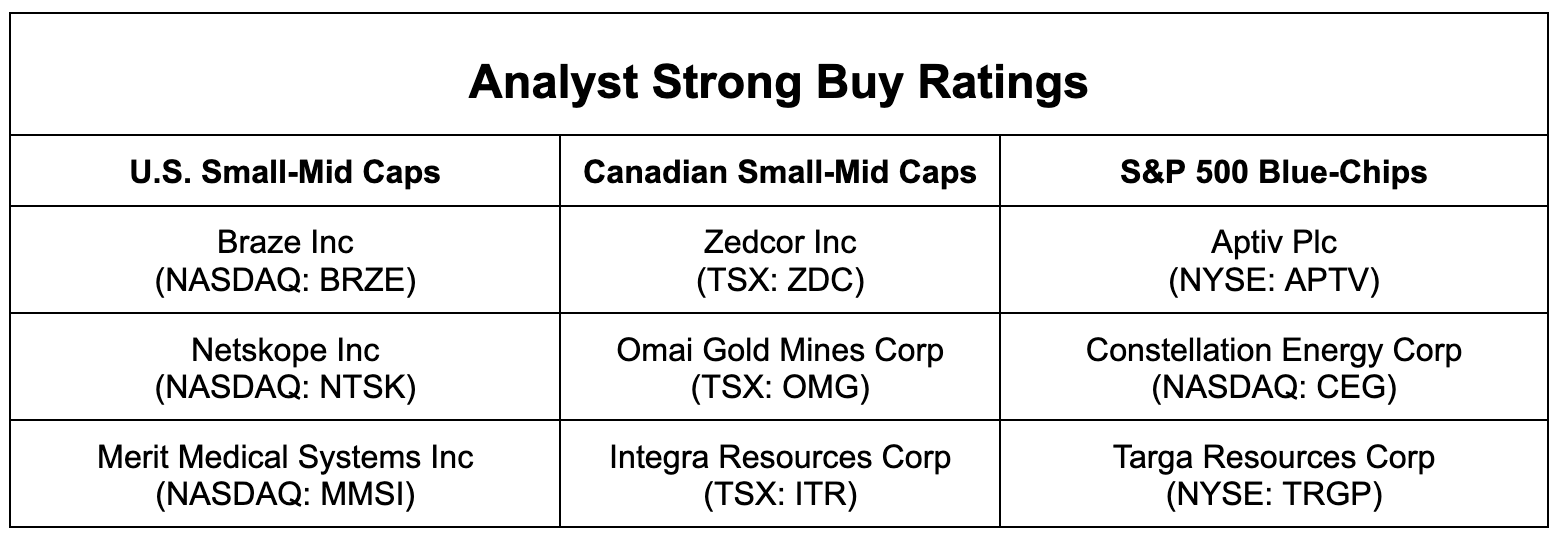
Looking for stocks with strong analyst backing? These companies have earned top-tier "Strong Buy" ratings from analysts, signaling potential upside for investors.
Whether you’re eyeing small-to-mid cap opportunities in the U.S. and Canada or want to stick with trusted S&P 500 blue-chip picks, this list highlights stocks that experts believe could outperform.
🔍 Do your research and see if any of these fit your portfolio!
Robotaxis Race Toward $415 Billion
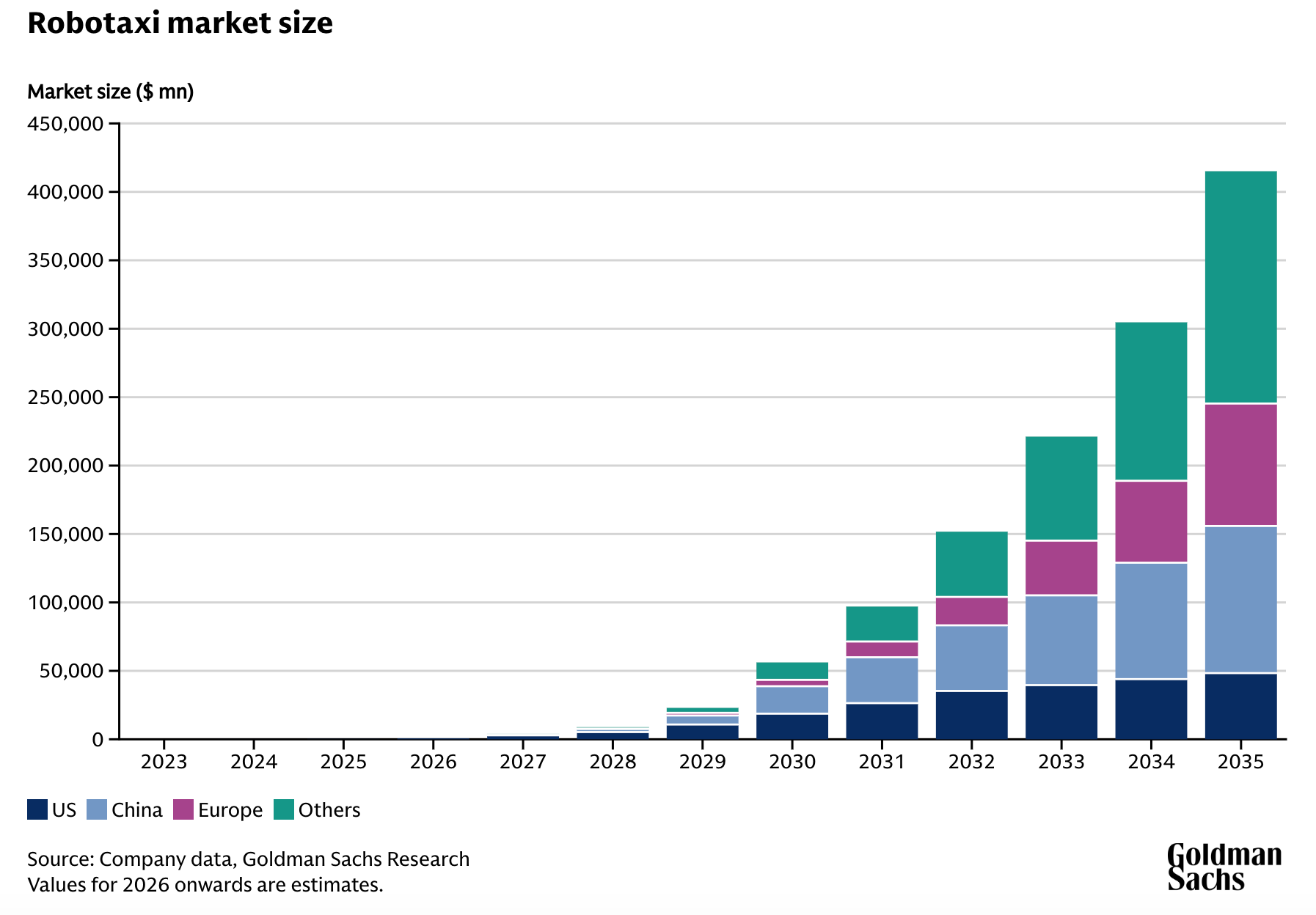
Goldman Sachs Research forecasts the global robotaxi market reaching roughly $415 billion by 2035, with the commercial fleet exploding from about 7,000 vehicles last year to some 6 million. Growth is a genuine hockey stick, close to zero until 2027 and then compounding sharply. Notably, the US is expected to be the smallest of the four regional markets by 2035 at around $48 billion, with China, Europe and the rest of the world driving the bulk of the total. The wider autonomous vehicle sector, spanning hardware, software and services, could approach $2 trillion, though much of that reflects existing activity shifting from human to autonomous rather than new spending.
Trucking may be the bigger story. The global AV trucking market is pegged at $560 billion by 2035, and autonomous trucks are expected to undercut human drivers on cost per mile in the US by 2028. On personal car ownership, Goldman’s base case is that disruption fears are overstated for the next decade, since owning a car remains cheaper than rideshare, though a full shift to shared AVs could eventually cut US annual vehicle sales from around 16 million to 10 to 13 million.