

Edition #184
Investing Unlocks: How to Read the Hot Topics From The Last 7 Days
News, earnings, analyst moves and charts worth your time.
From Correction to Comeback in Days 🔄
Last week, a sweeping AI selloff sank the S&P 500 8.6%, its worst week since April 2025, pushing it and the Dow into a correction, meaning a decline of at least 10% from a recent peak. Nvidia beat forecasts but slid on leadership worries, and Anthropic’s record IPO failed to steady the mood. Tech and chip stocks led the damage as the Nasdaq fell 10% and turned negative for the year, with all 11 sectors finishing lower. Sticky inflation kept talk of more Fed rate hikes alive, adding to the pressure.
This week, stocks opened with a powerful rebound after Nvidia brought back Jensen Huang, lifting the S&P 500 4.7% and the Nasdaq 6.5% on Monday. The big test is Wednesday’s October PCE report, the Fed’s preferred inflation gauge, as traders weigh the odds of a December rate hike. Dell’s earnings will check demand for AI hardware, while Black Friday offers a read on stretched shoppers. With markets closed Thursday and shutting early Friday, thin trading can exaggerate moves, so expect choppy days rather than a smooth recovery. US stock futures retreated on Tuesday morning, suggesting Monday’s relief rally may already be losing momentum.
Hot Topics
Anthropic’s IPO becomes the biggest ever
Anthropic priced its IPO at $83 a share, above its $70 to $78 range, for a roughly $1.5 trillion valuation. Shares opened 34% higher, climbed as much as 38.5% and closed their first trading day up 17%. It matters because this is the first major frontier AI lab to go public, and it’s now a reference point for how the market is pricing the whole AI trade.Health Insurers sink on Medicare Advantage audit crackdown
UnitedHealth fell after US regulators proposed expanding Medicare Advantage audits to recover around $9 billion a year in alleged overpayments. The proposal could put pressure on earnings at the largest Medicare Advantage insurers if implemented.
KKR closes $5.7 billion buyout of medical device maker Integer
KKR completed its acquisition of Integer Holdings, a maker of medical device components, for $5.7 billion, one of the larger private equity deals to close recently. This shows big buyout firms are still willing to pay up for healthcare manufacturing assets even with rates elevated.
Trump says he sealed the deal to bring Huang back as Nvidia CEO
Nvidia’s board reversed itself and voted unanimously to reinstate Huang as CEO on November 23, after the Trump administration assured the board that it had no national security concerns over Huang’s return, with Trump telling CNBC “I made the deal.” This raises fresh governance questions about a board that had publicly ruled out Huang’s return just six days earlier.CrowdStrike agrees to buy Zscaler for $43.9 billion in stock
It's one of the biggest cybersecurity deals ever, pairing CrowdStrike's device security with Zscaler's network security, right as a wave of major tech outages has companies rethinking how much they need to spend to stay secure.
The Oil Shipping Risk Premium Is Fading
Shipping a supertanker of crude from the Gulf of Oman to China cost 64% less on November 13 than five weeks earlier. That cost is tracked in Worldscale points. A reading of 100 means a ship is earning the standard benchmark rate for that route. A reading of 841, the record hit on October 8, means owners were charging more than eight times that benchmark. The spike reflected fears that the Middle East conflict could disrupt the Strait of Hormuz, a route carrying about a fifth of global oil consumption and a significant share of global liquefied natural gas shipments. Recovering Gulf crude exports have also reduced demand for tankers carrying replacement supplies from other regions, contributing to the decline in freight rates. By November 13 the rate had fallen to around 308, according to Baltic Exchange data. Separate tracking from Kpler and weekly tanker monitors shows the same pattern on other Gulf routes that week, with some rates down more than 60% from their October peaks as fears of a wider shipping disruption eased.
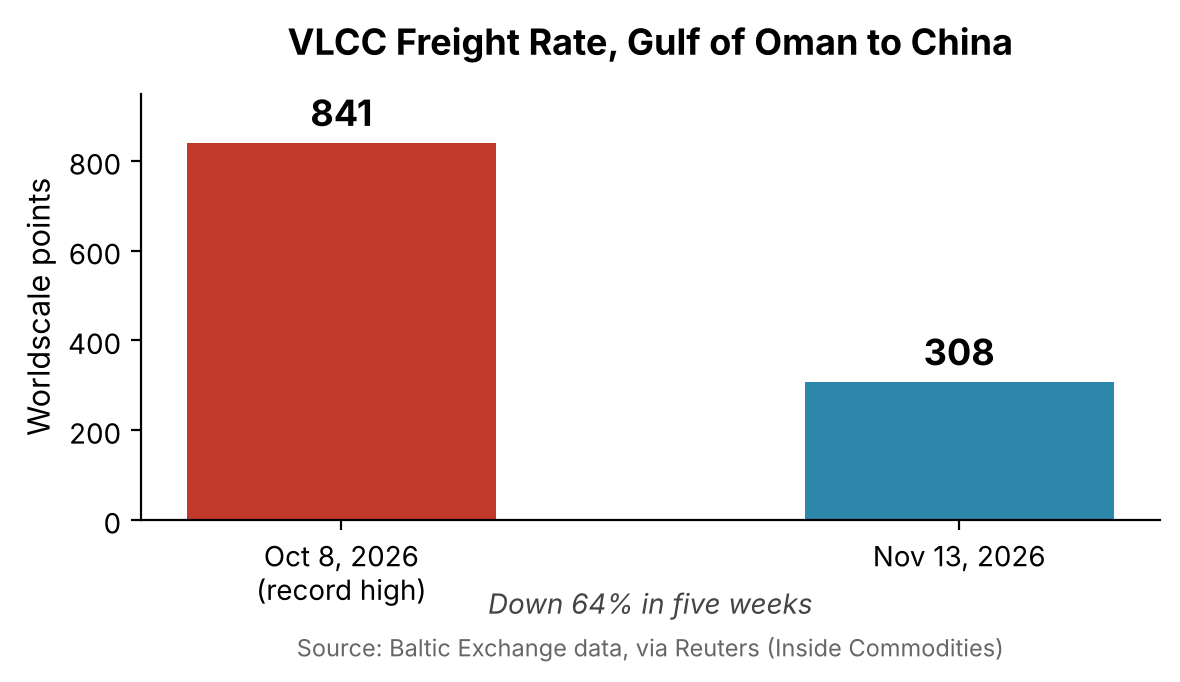
The tricky part is figuring out what this actually tells you. A falling shipping cost usually reads as good news, since it can feed through to lower fuel costs. But this move is really a bet that the worst of the Hormuz risk has passed, not confirmation that it has. Rates this volatile can snap back fast if the conflict flares again. Baltic Exchange data for November 20 showed the rate stabilizing at around 309 Worldscale points, although rates on several other major tanker routes had started rising again. Watch whether rates keep easing, or jump again on fresh Middle East news.
Earnings Performance
IES Holdings Inc (NASDAQ: IESC)
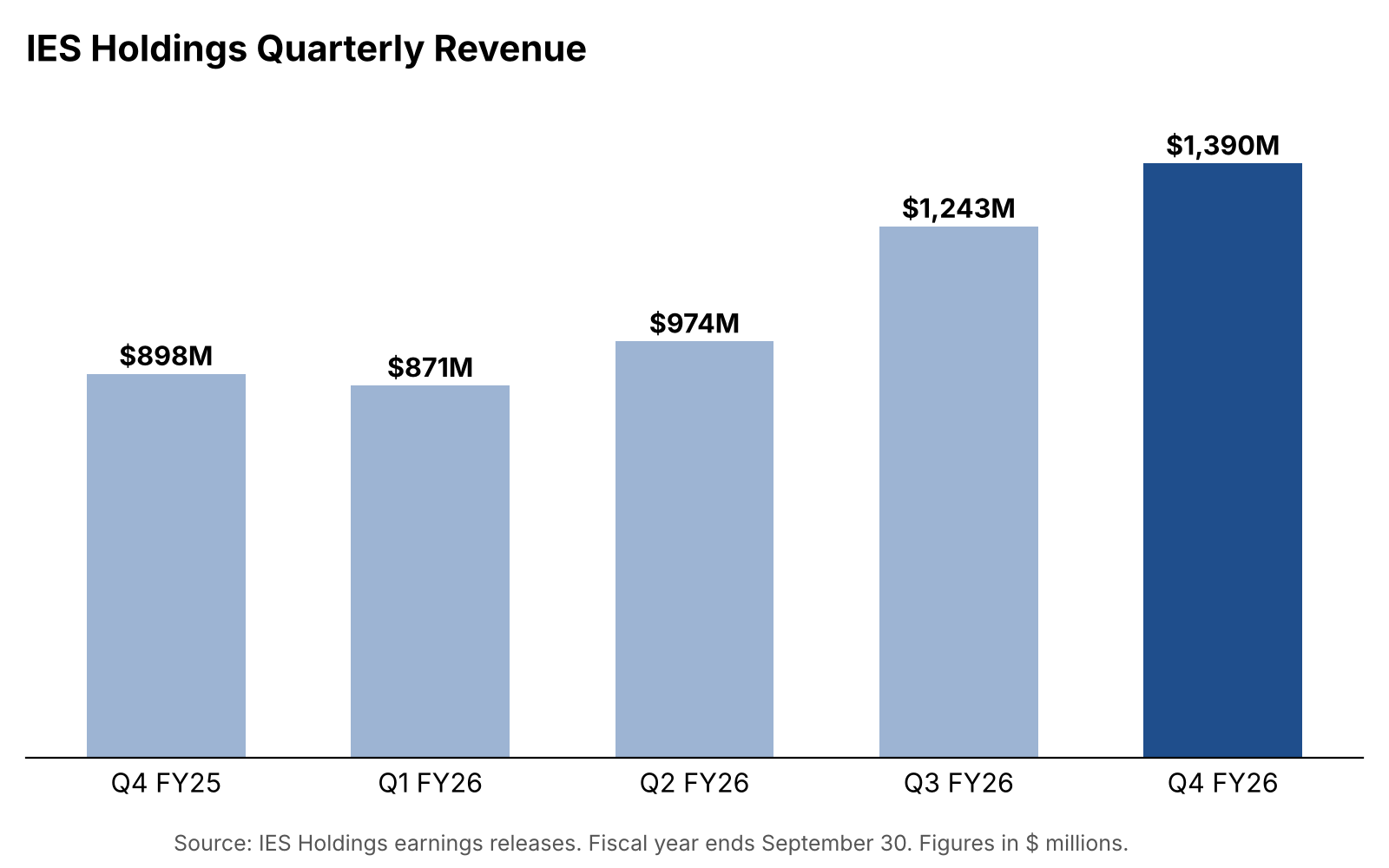
IES Holdings Inc (NASDAQ: IESC), a Texas company that installs electrical and communications systems, just posted its best quarter yet. Revenue for the three months to September jumped 55% to $1.39 billion, and adjusted earnings per share more than doubled to $4.07. Data centers are doing most of the work, as tech companies race to build space for AI computing. IES ended its fiscal year with a record $4.96 billion order backlog, and that’s before a further $2.6 billion from its newly bought steel business, DBM Global. The board also added $350 million to its share buyback plan, a strong signal of confidence.
Investors are less convinced. Even after a 9.5% jump on November 23, the stock is still roughly half its August peak. One worry is how much IES now depends on a single market. If data center spending cools, that backlog could look less secure. The $691 million DBM deal, paid mostly in cash, also adds debt and a large new business to fold in. IES borrowed $525 million to help fund the acquisition but had already repaid $125 million by November 19. Over the next few quarters, watch whether data center orders keep growing and how quickly that debt comes down.
Other Earnings Updates
Reporting this week: Dell Technologies, Workday, HP, Autodesk and more.
Upgrades and Downgrades 📈
The rating changes that caught our eye this week, and why the analysts moved.
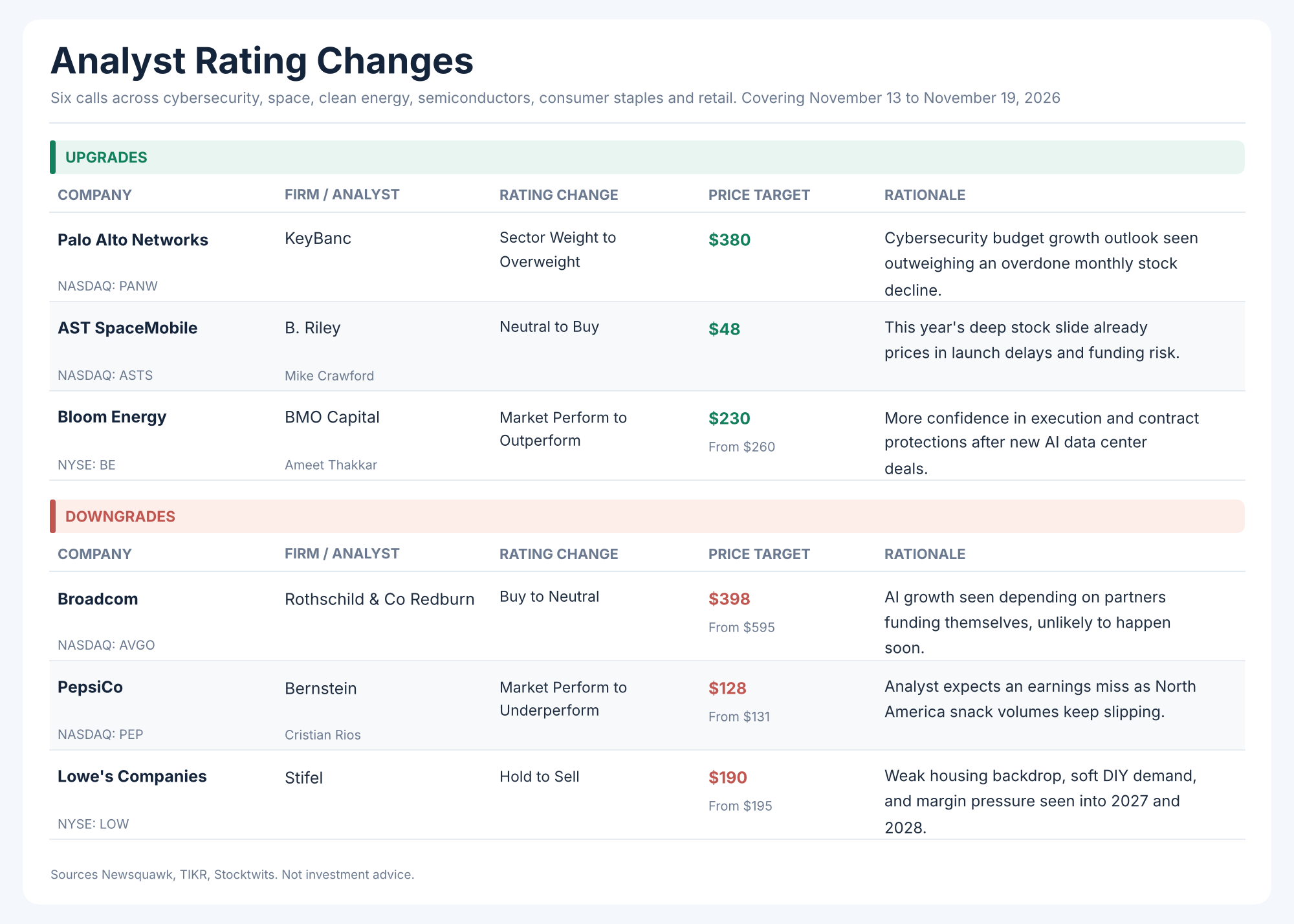
Analyst ratings are opinions, not recommendations. Always do your own research.
Aluminum’s Four-Decade Supply Squeeze
Aluminum traded for immediate delivery on the London Metal Exchange is commanding a premium of $405 a ton over the three-month forward price, up from $176.80 a ton less than two weeks earlier. The earlier figure was already a 36-year high. The new one is the widest gap since 1988. The cause is simple scarcity. Inventories in LME-approved warehouses have fallen to very low levels, and a single entity holds between 50% and 79% of LME aluminum warrants, so buyers who need metal right now are paying sharply more than those willing to wait three months.
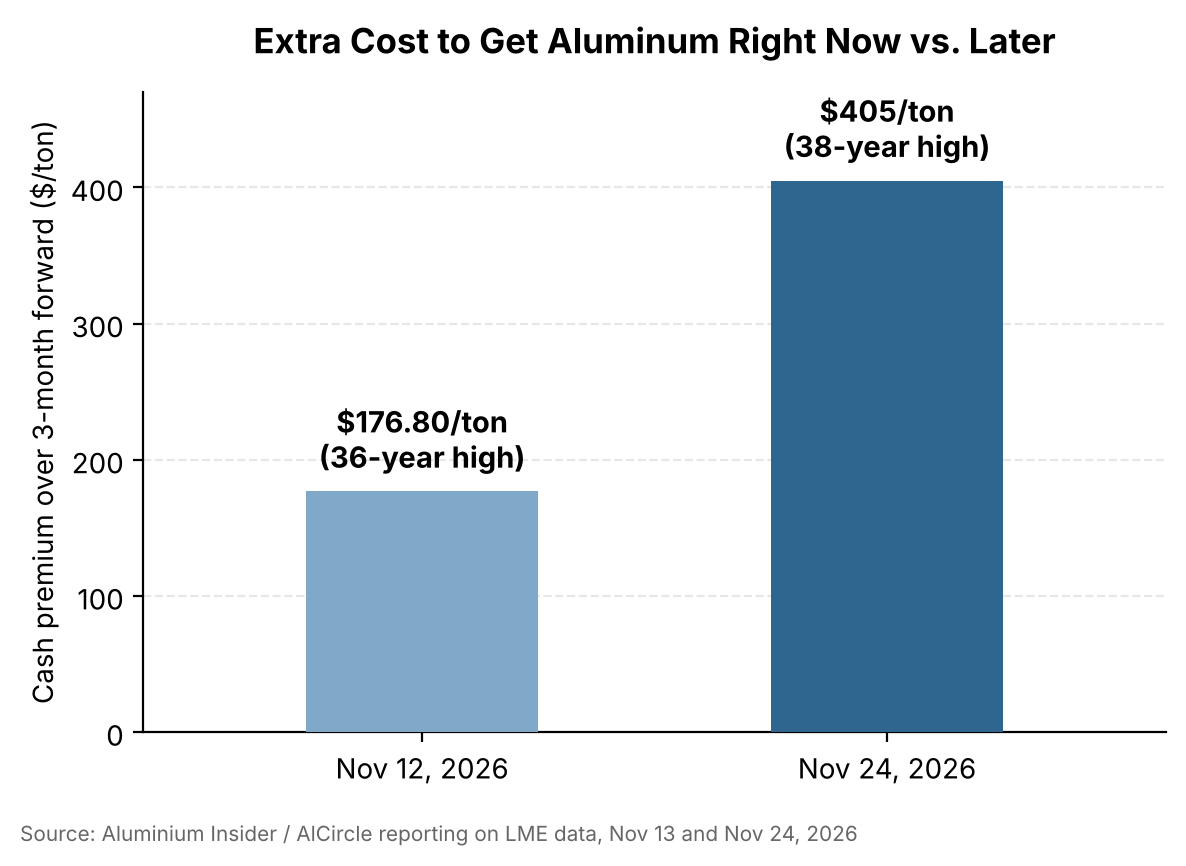
The head of metals at trading firm Oddo BHF called it a historic squeeze and said the exchange should step in, but LME intervention is rare and often slow, and this kind of gap can unwind fast once a big holder releases metal, or drag on and push up costs for carmakers, builders, and packaging firms that rely on physical aluminum. Watch for any LME rule change, and whether the premium holds or fades over the next few weeks.