

Edition #176
Investing Unlocks: How to Read the Hot Topics From The Last 7 Days
News, earnings, analyst moves and one chart worth your time.
📈 Oil Relief and Tech Lift Stocks Higher
Last week, US stocks posted their first weekly gain in three, with the Nasdaq and S&P 500 up, as oil prices slipped on hopes of reopening the Strait of Hormuz. Tech led the way, helped by a big jump in Meta after it unveiled a new AI assistant. The wild card was the bond market, where the benchmark Treasury yield, the return investors earn on government debt, hit 5.18%, a level not seen since 2007, and that made for choppy trading.
This week, investors get the Fed’s favorite inflation gauge, the PCE price index, along with the September jobs report. After the Fed’s first rate hike in nearly three years earlier this month, hotter numbers could fuel bets on more increases, which would pressure stocks and push yields higher. Micron’s earnings will also test whether the AI chip boom still has legs, while Fed speakers and Middle East headlines could keep oil and yields moving. For investors, that means expect bumpy trading, and keep an eye on bond yields for clues on where stocks go next.
Hot Topics
Oura is expected to IPO this week
It is the first real test of appetite for new listings after a sluggish September, so a strong debut could encourage other issuers, but most of the proceeds go to existing shareholders rather than the company.Is an Agentic Bank Run Coming?
If AI assistants move household cash from checking accounts paying about 0.1% into accounts paying 3.3% to 5.0%, banks could lose the cheap deposits they lend from. That makes it a longer-term risk theme for bank stocks, not a near-term trade.AMD hits $1 trillion market cap for the first time
It shows money moving back into the AI trade, as the stock is up about 185% this year and trades near 41 times forward earnings, so expectations are high and it now has little room for a miss.The West's Power Squeeze Is Just Getting Started
Low snowpack and a shrinking Lake Powell are cutting hydropower just as AI data centers pull more electricity, which puts pressure on Western utilities and could favor makers of on-site power equipmentThe Next AI Trade Shifts From Builders To Users
Morgan Stanley argues the next phase of AI investing may reward companies that use AI well rather than only those that build it, and it points to banks, insurers, health care and big retailers as the sectors to watch.
Weekly Series: The Small-Cap Advantage
Exploring why the smallest corners of the public markets can sometimes create the biggest opportunities for individual investors.
#6 When the Company Changes Before the Price Does
A small company that restructures its cost base, exits a failing division, and starts generating free cash flow for the first time does not get an instant re-rating. If no analyst covers it and no fund holds it, the market can take quarters to notice the change. The stock price can reflect the old story long after the business has moved on. For the investor who spotted the shift early, that lag between reality and perception is the opportunity.
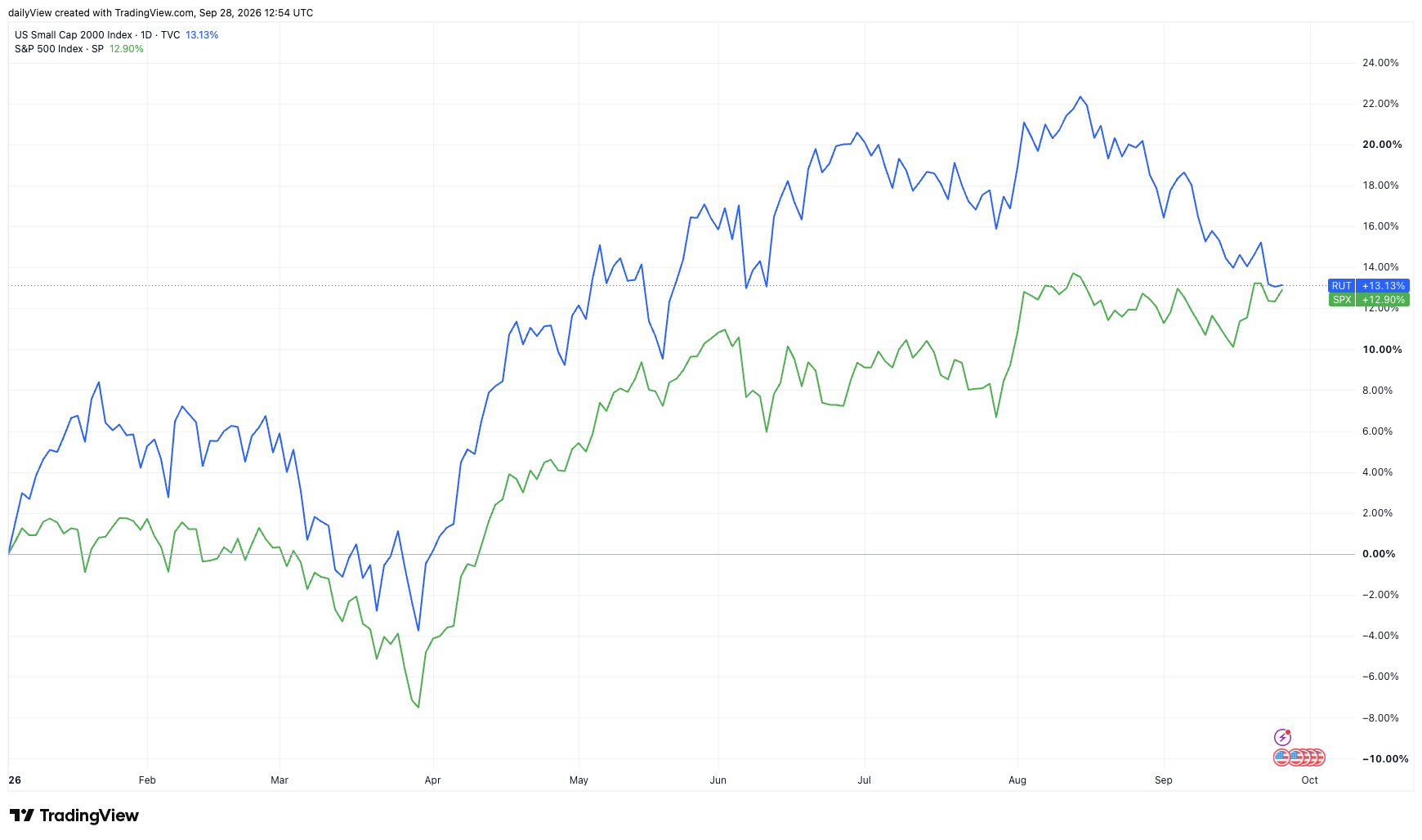
Small caps led for most of 2026. The Russell 2000 ran well ahead of the S&P 500 through spring and summer, then handed almost all of it back from August, and the two now sit within a quarter of a point of each other at 13.13% against 12.90%. That round trip is a reminder that index moves say little about individual companies. The re-rating that matters happens one business at a time, and it does not show up in a benchmark.
A company that doubles its earnings power while trading on last year’s multiple is offering a discount that won’t survive a single analyst initiation report. Once coverage arrives, the gap closes fast. The individual investor’s edge is finding these transitions before the professional market catches up. The perception gap is not a flaw. It is the mechanism that creates asymmetric returns.
This is #6 in our Small-Cap Advantage series, exploring where individual investors may still hold an edge over larger institutions. Read #5 When Doing Your Homework Still Pays, in last week’s edition.
Earnings Performance
BlackBerry Ltd (NYSE: BB) (TSX: BB)
BlackBerry Ltd (NYSE: BB) (TSX: BB) delivered a notably stronger Q2 FY27, with revenue rising 26% year over year to $163 million and adjusted EBITDA climbing 81% to $47 million, a 29% margin. QNX was the standout, posting record quarterly revenue of $80 million, up 27%, while adjusted EBITDA grew faster at 41% and gross margin expanded four percentage points to 87%. QNX is becoming more profitable as it scales.
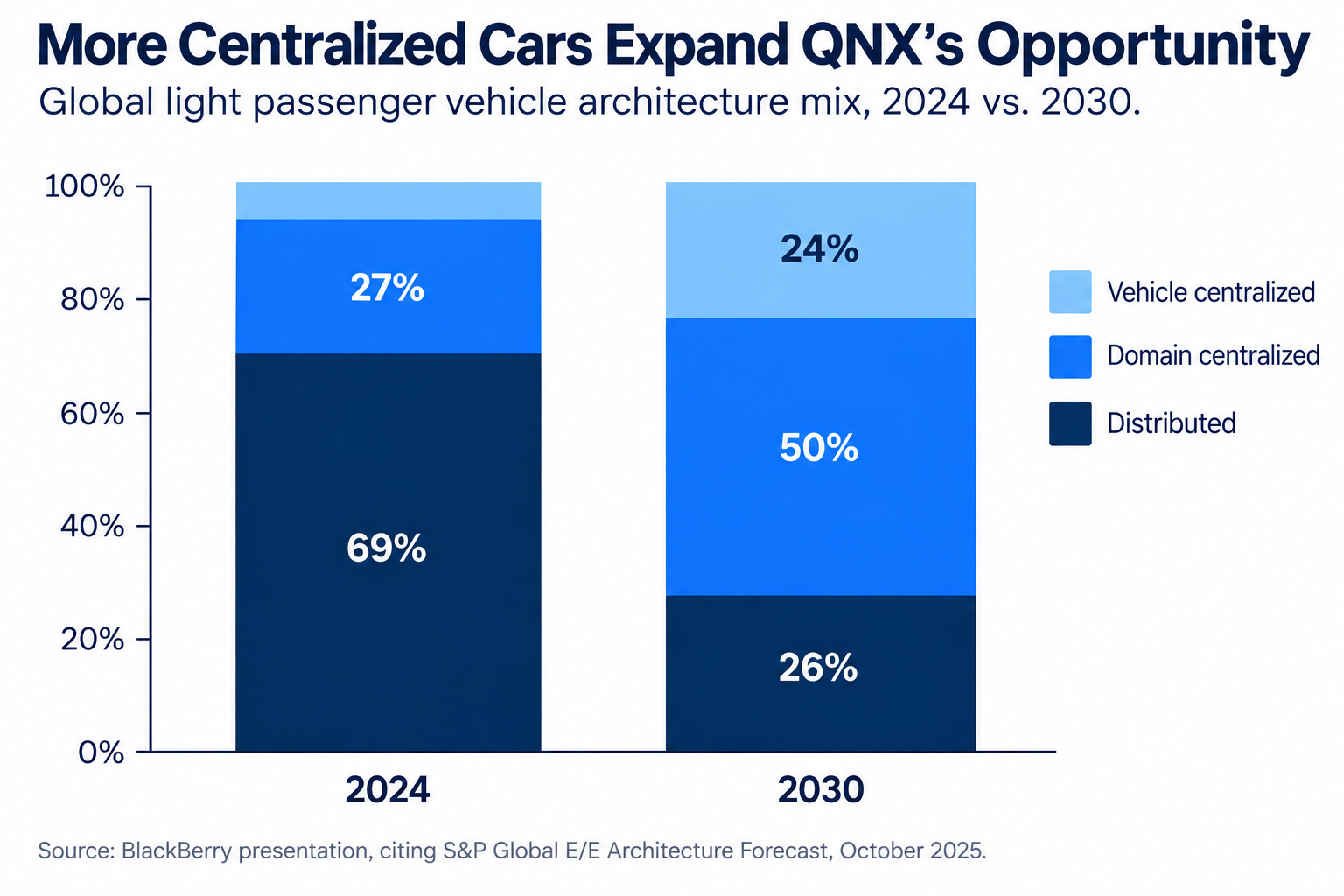
The longer-term opportunity is to capture more software value from each vehicle as automakers shift toward centralized computing. These architectures require more sophisticated software management, integration and safety certification, potentially expanding QNX’s role per vehicle. Record design-win activity strengthens that future royalty pipeline, while Q2 operating cash flow of $29 million shows improving profits are converting into cash. Investors should watch whether those design wins translate into sustained royalty growth as programs enter production.
Other Earnings Updates
Reporting this week: Carnival Corp, Micron Technology, Jefferies, Vail Resorts, CarMax, Conagra Brands, Accenture, and McCormick.
Upgrades and Downgrades 📈
The rating changes that caught our eye this week, and why the analysts moved.
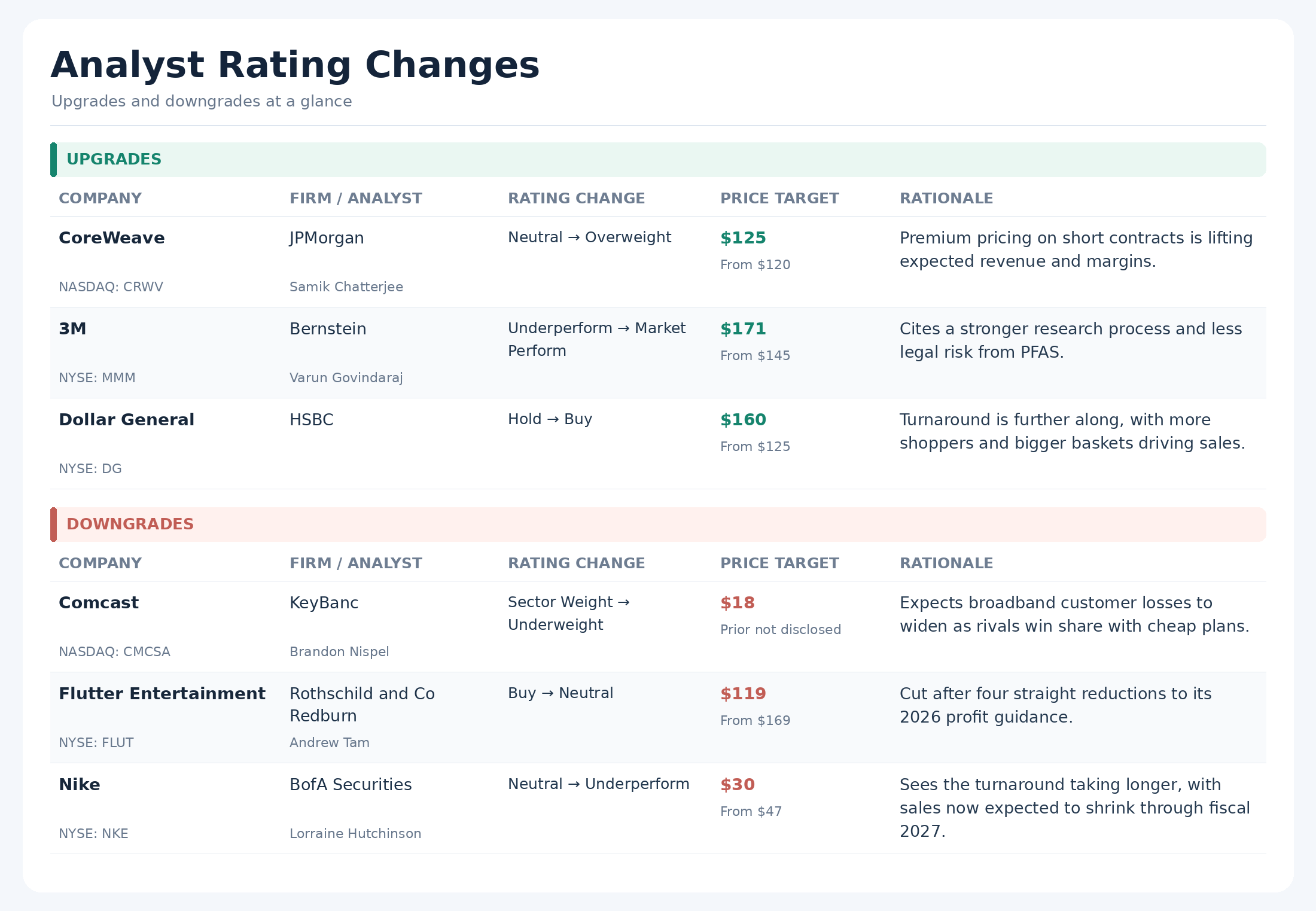
Analyst ratings are opinions, not recommendations. Always do your own research.
Households Now Hold A Record Share In Stocks
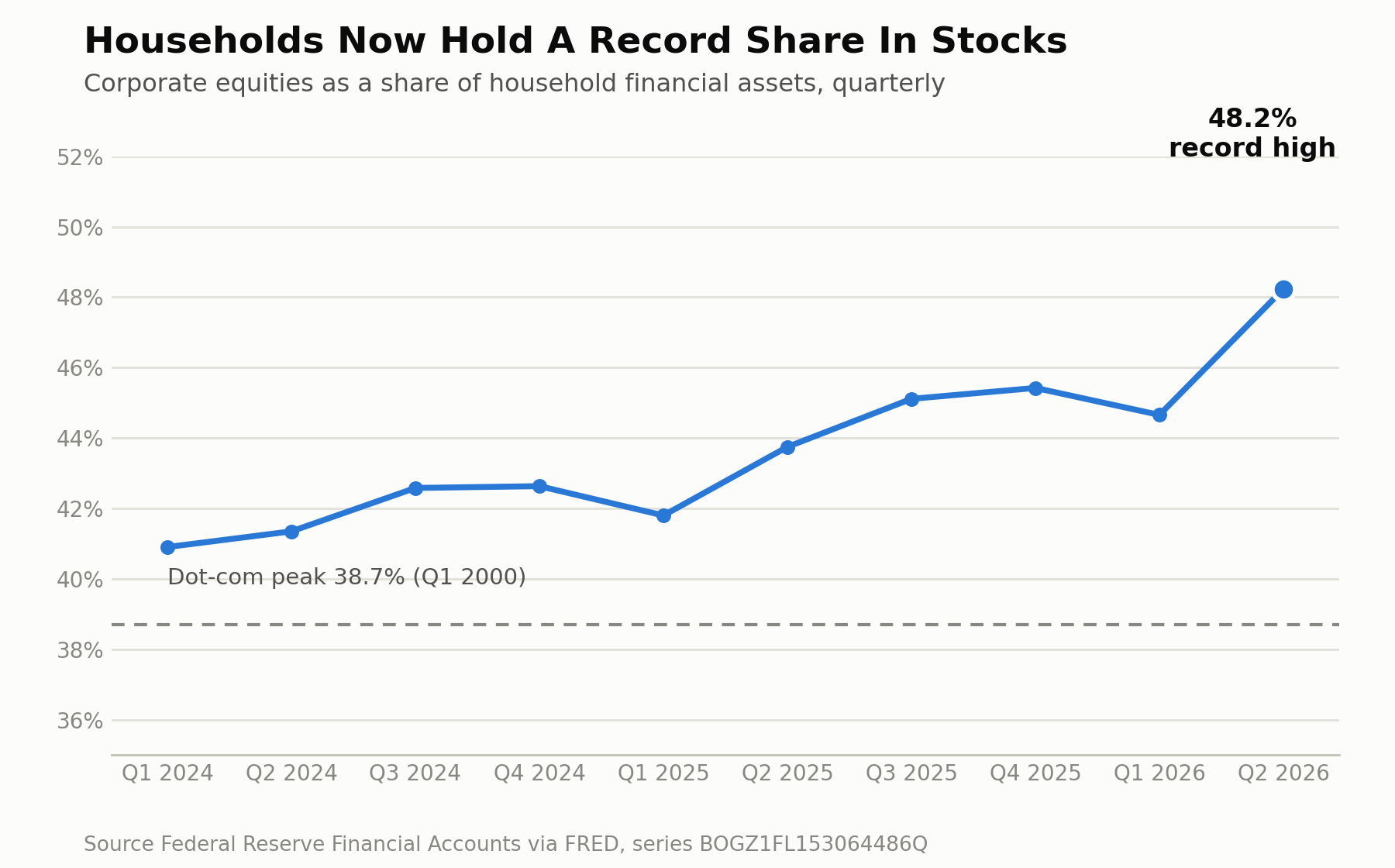
US households now hold 48.2% of their financial assets in stocks, directly or through funds, a record in Federal Reserve data back to 1945 and up from 44.7% in the first quarter. That matters because savers have never had more riding on equities, and it has happened just as cash and Treasuries started paying around 5% for the first time since 2007, so the safe alternative is the most competitive it has been in nearly twenty years. Watch the Fed's next Financial Accounts update on December 10 to see whether the share keeps climbing.