

Edition #171
Investing Unlocks: How to Capitalize on the Hot Topics From The Last 7 Days
We analyze recent trends and opportunities, offering strategic insights that help you manage risks and identify growth opportunities for your portfolio.
🧬 Rising Yields Shake Tech, Biotech Explodes
Last week, surging Treasury yields rattled growth stocks and dragged the S&P 500 down about 1.4%. Tech and semiconductors took the worst of it as higher borrowing costs pressured richly valued shares, while rising oil prices tied to Middle East tensions added to investor unease. Health care delivered a standout moment after a breakthrough mRNA cancer vaccine trial sent biotech soaring and lifted the broader sector. A rebound late in the week, helped by expanded Treasury buyback plans and solid business activity data, kept losses from snowballing.
This week, Nvidia earnings and Fed Chair Warsh’s first Jackson Hole keynote will test whether the AI trade and the bond market can stabilize. Investors also get the July core PCE reading, the Fed’s preferred inflation gauge, alongside a Q2 GDP revision.
Hot Topics
Mine Delays Can Provide an Investor Edge
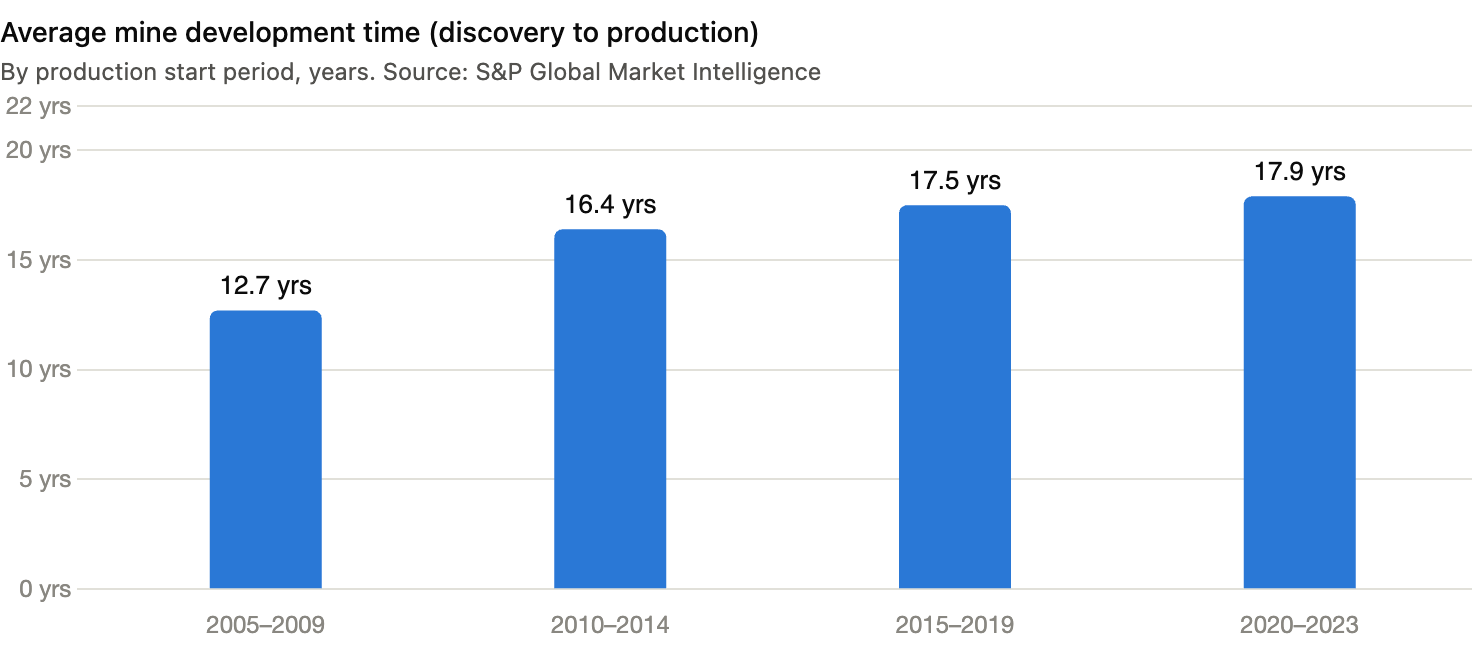
S&P Global’s July 2026 annual study of mine development timelines found that the average project takes 16 years from discovery to production. For the 29 projects still stuck in development, the wait has stretched to nearly 30 years, five times longer than in the 1990s. Unlike oil, where a shale producer can drill and deliver within months, a critical-minerals shortage today reflects investment decisions made over a decade ago. Any mine approved now will not produce meaningful tonnage until the late 2030s.
What does this mean for investors?
Companies already in production have a structural moat that new entrants cannot replicate quickly.
Sustained pricing power. When supply can’t respond for a decade, elevated prices tend to persist far longer than in commodities like oil.
Streaming and royalty companies benefit from scarcity without bearing the permitting and construction risk.
Early-stage miners can rerate sharply on positive newsflow like permits, feasibility results, or strategic investment, long before they produce an ounce.
In mine development, permitting delays are now the primary cause of postponements, with some projects pushed back by five years and others cancelled outright. The IEA’s July 2026 outlook reported that exploration spending fell about 45% for lithium and nickel in 2025, meaning fewer projects entering the pipeline. Today’s cutbacks risk constraining production in the late 2020s and early 2030s, exactly when supply deficits for copper and lithium are projected to hit. Understanding the project pipeline is where retail investors can build a genuine edge over the broader market.
Want to understand how investors can approach this part of the mining cycle? Our guide to gold explorers and developers explains the risks and potential catalysts from discovery through development.
The Small-Cap Advantage
Exploring why the smallest corners of the public markets can sometimes create the biggest opportunities for individual investors.
#1 Wall Street Doesn't Look Everywhere
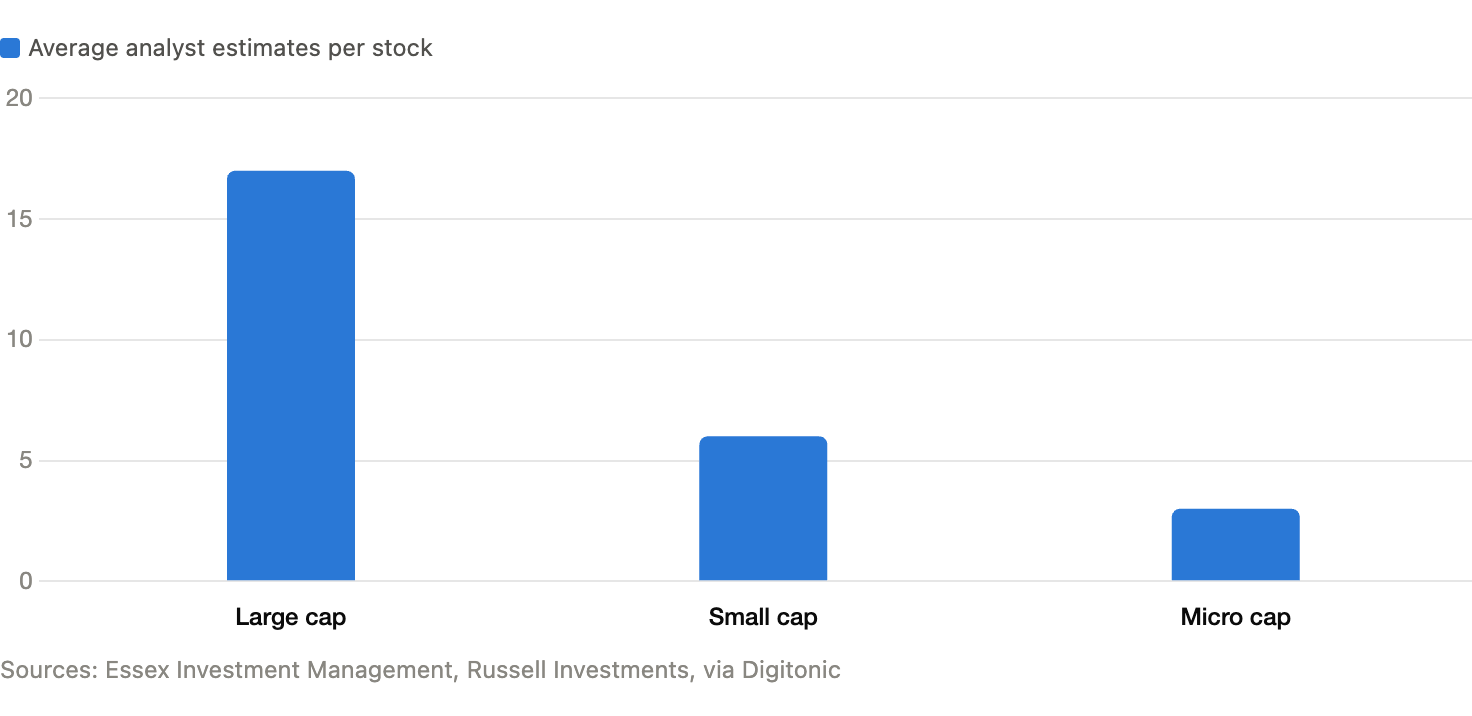
The average large-cap stock draws around 17 analyst price estimates. The average Russell 2000 company is followed by fewer than six. Drop to the micro-cap tier and the typical stock gets at most three, while more than 17% have no sell-side coverage at all. On top of that, well over 60% of daily US equity volume now comes from quant and rules-based strategies that allocate by index membership, not by conviction in any individual company. For a large and rising share of the market, small caps are not being evaluated and rejected. They are simply not being looked at.
For individual investors, though, this structural neglect is the opening. The institutions are often too large to act. The algorithms are not programmed to look. That leaves roughly 2,000 publicly traded US companies sitting in a corner of the market where doing your own homework can still surface something the crowd has not priced in. You are not bound by index rules, position minimums, or ownership caps. You can find, evaluate, and buy a stock that no analyst has written up and no fund has been able to touch. That flexibility is rare in a market where most of the volume runs on autopilot. Whether it becomes a genuine edge depends on how you use it.
This is #1 in our Small-Cap Advantage series, exploring where individual investors may still have an edge over larger institutions.
Earnings Performance
Klarna Group PLC (NYSE: KLAR)
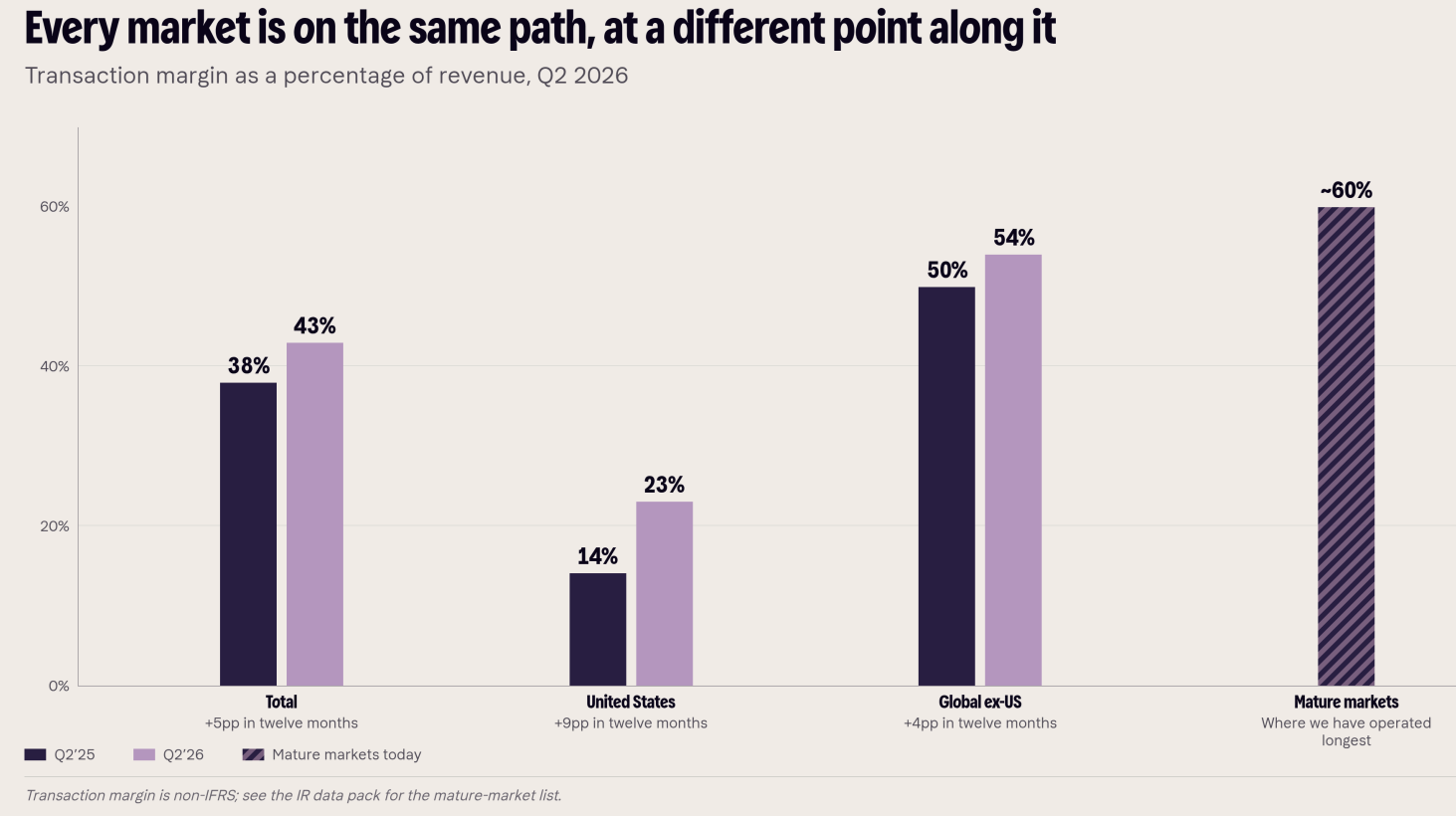
Klarna’s Q2 showed improving fundamentals, with revenue up 27% and U.S. transaction margin rising to 23% from 14% a year ago. Active consumers reached 120M, merchants surged 54% to 1.2M as J.P. Morgan Payments switched on Klarna across its network, and the Klarna Card hit 6.5M users, up from 1.3M. But the shares fell roughly 23% right after this release, contributing to a decline of about 66% since the IPO, so investors are clearly demanding more than margin improvement. The key question is whether Klarna can sustain U.S. margin expansion and convert it into durable earnings growth, especially after lowering its full-year gross merchandise volume (GMV) outlook.
Other Earnings Updates
Analyst Strong Buy Ratings This Week! 📈
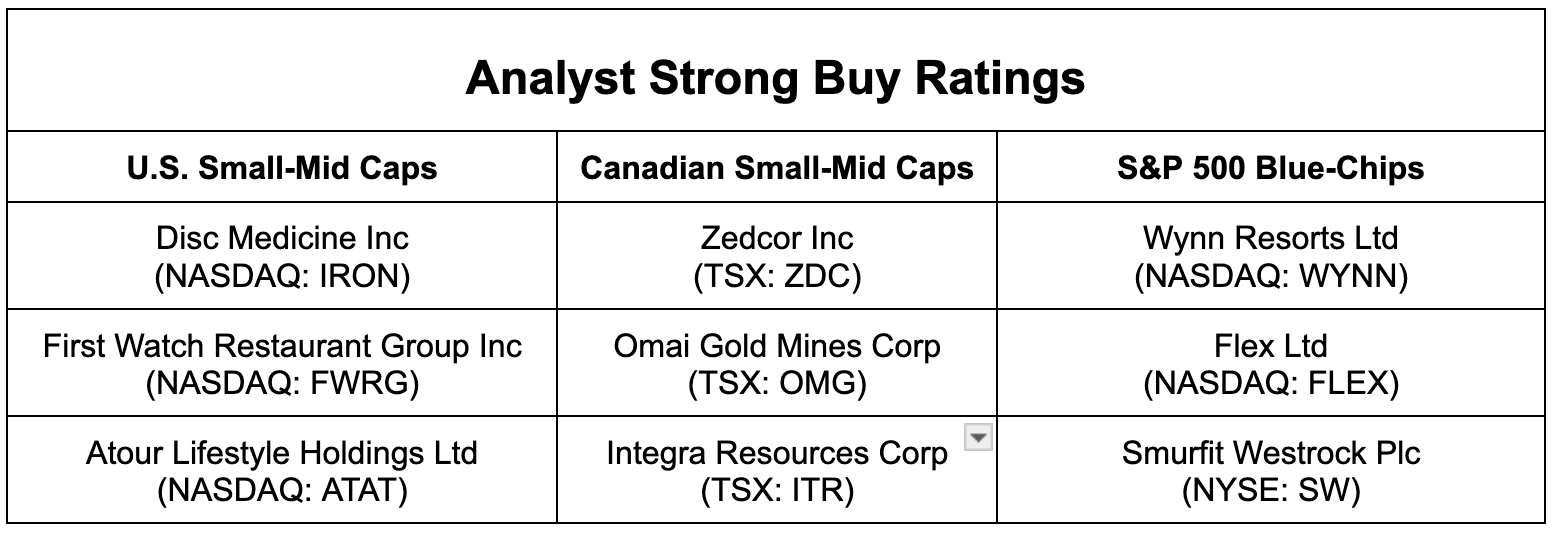
Looking for stocks with strong analyst backing? These companies have earned top-tier "Strong Buy" ratings from analysts, signaling potential upside for investors.
Whether you’re eyeing small-to-mid cap opportunities in the U.S. and Canada or want to stick with trusted S&P 500 blue-chip picks, this list highlights stocks that experts believe could outperform.
🔍 Do your research and see if any of these fit your portfolio!
Central Banks Bought the Dip
Central banks purchased a record 289 tonnes of gold in Q2 2026, a 62% jump year over year and more than five times the revised Q1 figure of just 57 tonnes. They did it while gold prices fell 16%, the steepest quarterly decline since 2013. Poland led with 51 tonnes as it moves toward a self-set 700-tonne reserve target, and China added 33 tonnes, its biggest quarterly haul since late 2023. When reserve managers accelerate purchases into a falling market, they are building structural positions, not trading around headlines.
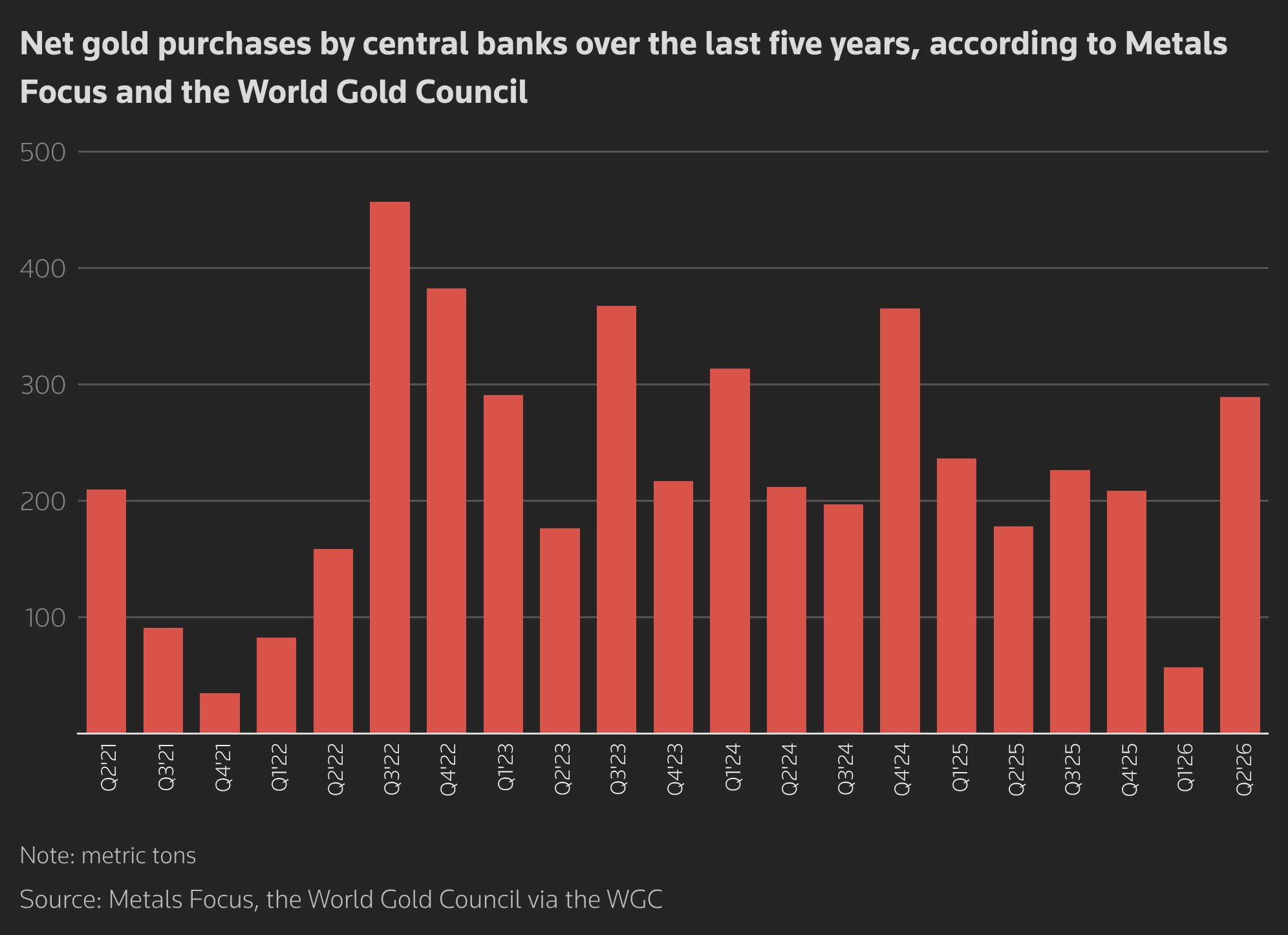
That conviction matters because the headline numbers understate the trend. The H1 total of 345 tonnes looks soft, the lowest since 2022, but almost all the weakness came from forced sellers like Russia, Turkey, and Azerbaijan liquidating reserves. Strip those out and underlying demand is as strong as any stretch in the past three years. The WGC’s latest survey found 74% of reserve managers plan to cut dollar exposure over the next five years, and Goldman Sachs flagged in August that surging demand for bullish gold options could push prices beyond its $4,900 year-end forecast, as dealer hedging around key strike levels mechanically amplifies moves higher.
The structural bid looks durable, but gold still needs actual buyers, not just survey respondents and options positioning. Whether price-insensitive central bank buying holds if gold pushes back toward $5,000 is the question that matters next.
How can investors translate a gold thesis into equity exposure? Our guide to gold stocks explains the differences between producers, developers, explorers, and royalty companies.