

Edition #172
Investing Unlocks: How to Capitalize on the Hot Topics From The Last 7 Days
We analyze recent trends and opportunities, offering strategic insights that help you manage risks and identify growth opportunities for your portfolio.
📈 Nvidia Powers Stocks as Fed Turns Hawkish
Last week, stocks climbed as Nvidia’s blowout earnings and raised revenue outlook reassured investors that AI spending still has room to run. Intel and other semiconductor stocks gave back gains Friday after Fed Chair Kevin Warsh struck a hawkish tone at Jackson Hole, saying inflation trends have not meaningfully improved and raising bets on a rate hike at the Fed’s next meeting.
This week, Broadcom reports quarterly results Wednesday, with investors watching whether its AI chip guidance can match Nvidia’s optimism after last week’s rally. The bigger catalyst is Friday’s jobs report, following July’s surprisingly weak hiring numbers, alongside a manufacturing activity survey earlier in the week. A soft jobs print could ease worries about a near-term rate hike, while a strong one would reinforce Warsh’s hawkish stance and pressure growth stocks like Nvidia and Broadcom.
Hot Topics
Meta to pay up to $18bn to settle children’s social media harm case
The humanoid robot ‘Olympics’ is as ridiculous as it is impressive
Investing Data Story

Gold dominates the list by count, but the three most valuable mining companies all earn their money from something other than gold.
The 20 Largest Mining Stocks by Market Cap
China’s AI Optimism Gap Widens
In China, 85% of people say AI does more good than harm, and 83% feel excited by products that use it, per the 2026 Ipsos AI Monitor. In the United States, those figures are 38% and 33%, both far below the 32-country average of 55% and 51%. Part of this likely comes down to what people actually see day to day. In China, AI is already everywhere, robotaxis on the street, chatbots at the hospital, shopping and mapping apps that quietly handle small decisions. It is easier to embrace a technology when its upside is visible. Beijing has also nudged companies to build useful applications now rather than chase the flashiest model.
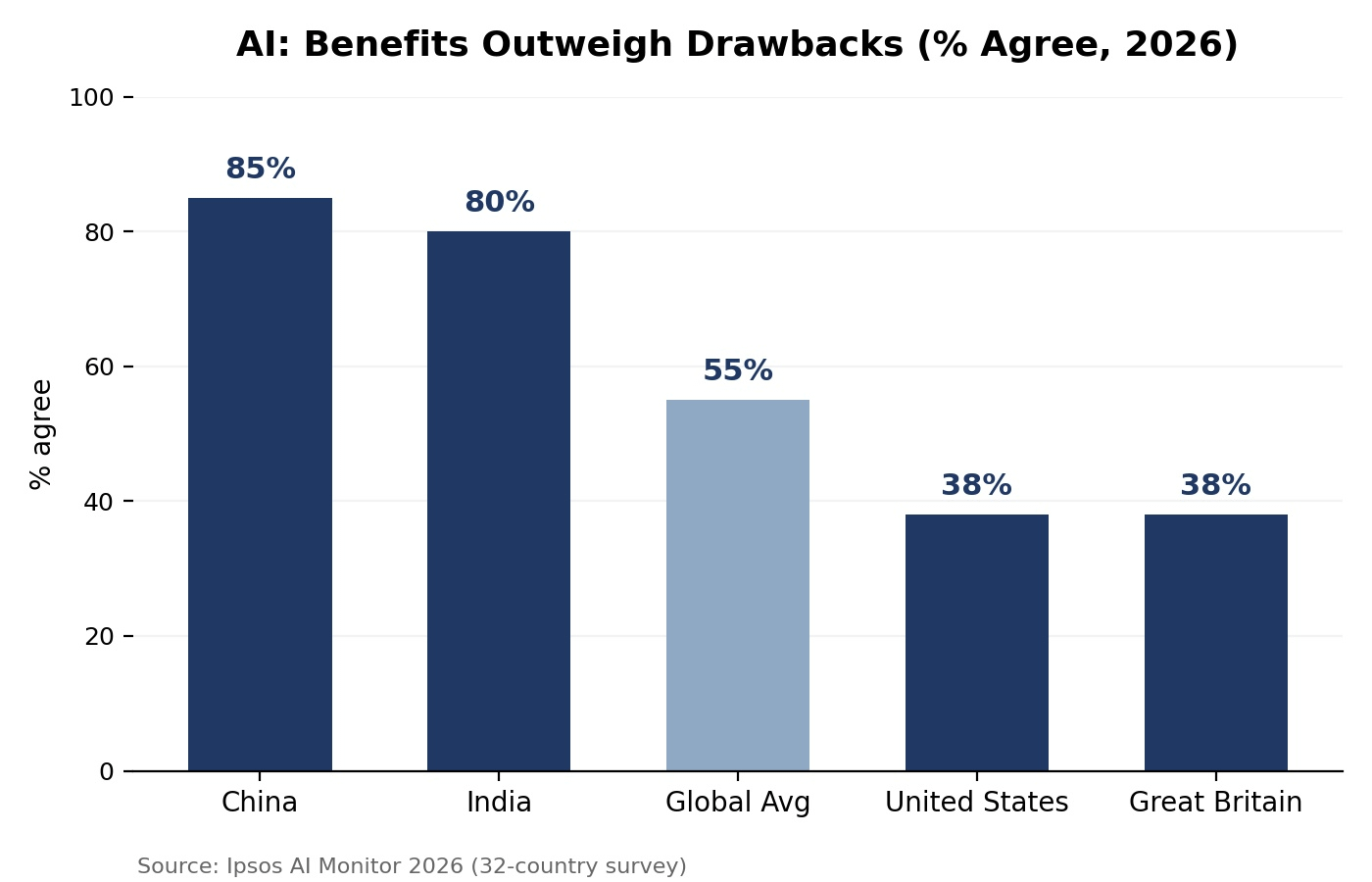
That optimism gap comes with a catch. 52% of Chinese AI users say they trust the tools enough that they do not check the output, more than double the 23% rate in the US. Widespread trust without verification can accelerate adoption, but it also raises the odds that errors or bias go uncaught until they cause real damage, financial, medical, or otherwise. The US policy backdrop adds uncertainty too, the current administration's stance has been not to regulate AI, though the report notes that may now be shifting toward a hands on approach. Watch whether China's trust holds up as AI failures become more visible.
Weekly Series: The Small-Cap Advantage
Exploring why the smallest corners of the public markets can sometimes create the biggest opportunities for individual investors.
#2 You Can Go Where the Big Money Can’t
A fund managing $1 billion cannot take a meaningful position in a stock that trades $200,000 a day. The math simply will not allow it. To build even a small holding without pushing the price against itself, a large fund needs hundreds of thousands of dollars in daily volume just to get through the door. That single constraint removes a huge pool of potential buyers from thousands of publicly traded companies.
You do not have that problem. You can buy 500 shares of a company no fund can touch, hold it for as long as your thesis plays out, and sell whenever you choose.
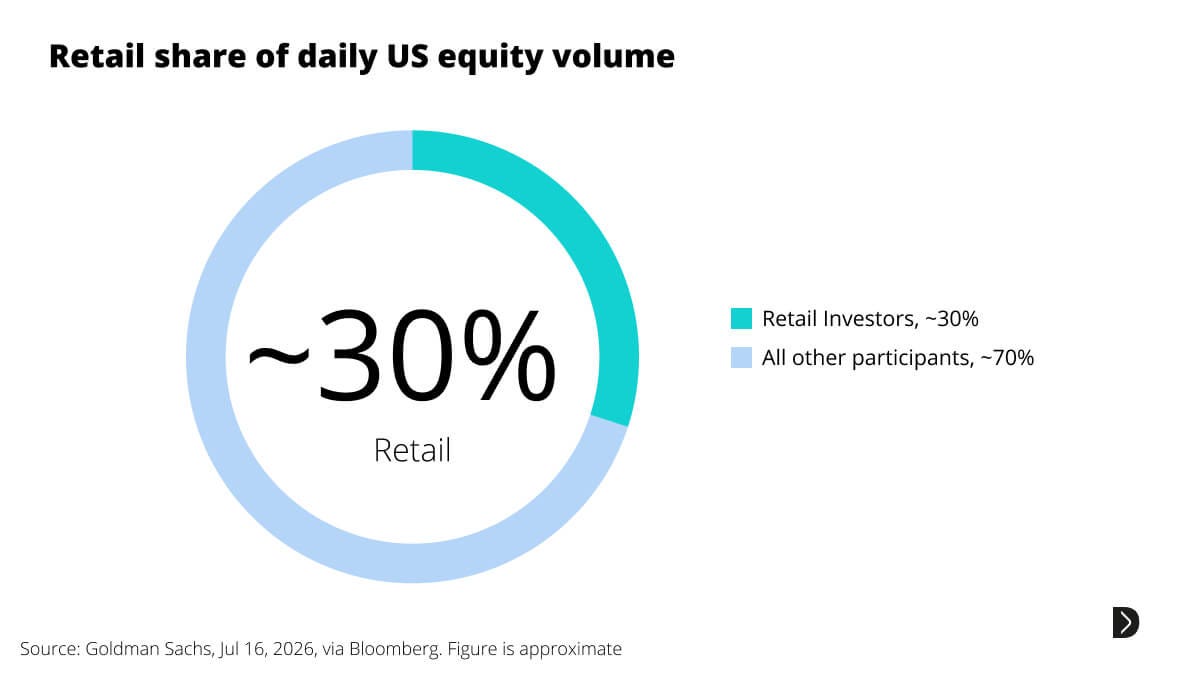
Retail investors now account for roughly 30% of daily US equity volume. That is a structural shift that has made individual investors the single largest discretionary force in many smaller stocks. You are not bound by index rules, ownership caps, or position minimums. In the part of the market where those constraints matter most, your size is not a disadvantage. It is the advantage.
This is #2 in our Small-Cap Advantage series, exploring where individual investors may still have an edge over larger institutions. Read #1 Wall Street Doesn’t Look Everywhere in last week’s edition.
Earnings Performance
Ulta Beauty Inc (NASDAQ: ULTA)

Ulta Beauty Inc’s (NASDAQ: ULTA) category performance is the most revealing read-through from its Q2 earnings results. Fragrance and haircare are taking share of Ulta’s sales mix, while its two largest beauty categories remain softer. Fragrance delivered high-teen comparable growth, and haircare grew high single digits, while makeup was roughly flat and skincare and wellness declined modestly.
Net sales rose 8.9% to $3.04 billion, helped by comparable sales growth, Space NK and new stores. If fragrance and haircare momentum persists and makeup or skincare improves, there is scope for growth to broaden.
Other Earnings Updates
America’s Oil Record, With a Catch
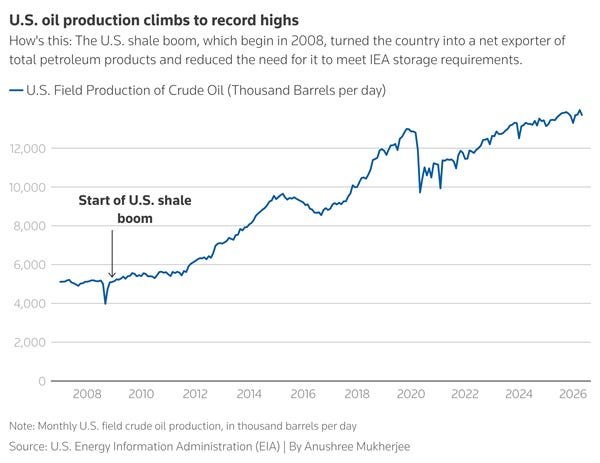
US crude output just hit an all-time high, but this year’s extra barrels are coming from the Gulf of America and a Middle East price spike, not the shale growth that built this chart.
Read why this record may not hold up in US Oil Hits Record Highs, But Can It Last.
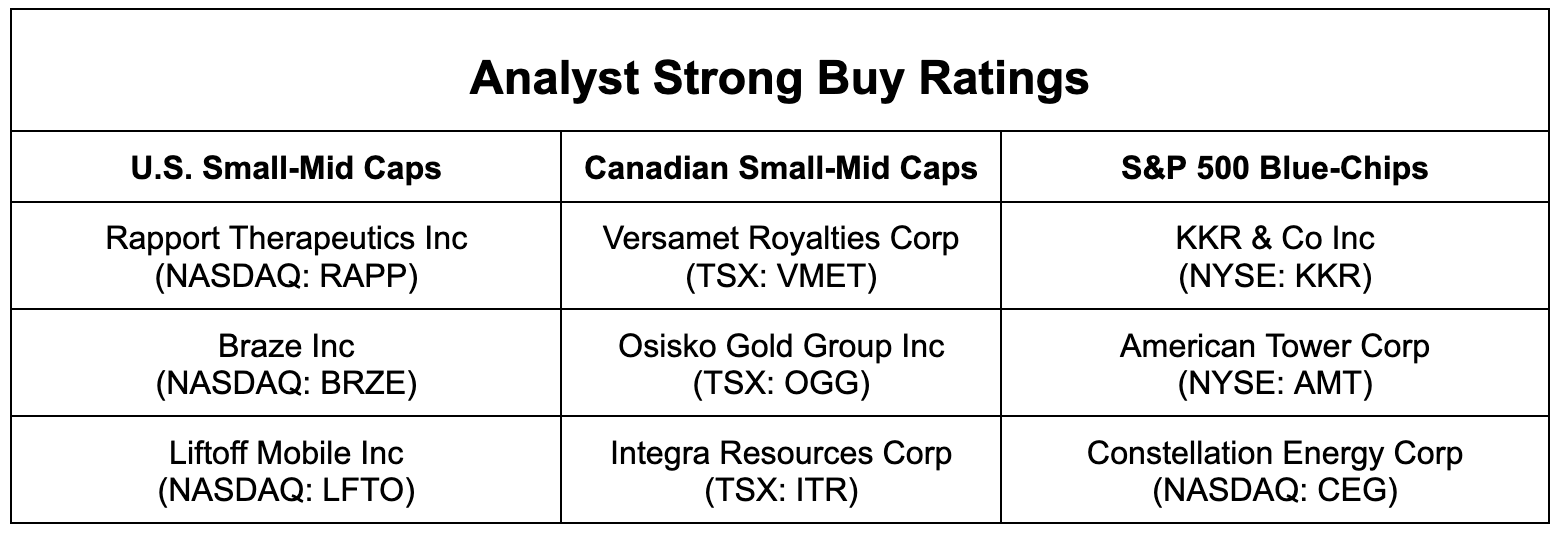
Analyst Strong Buy Ratings This Week! 📈
Looking for stocks with strong analyst backing? These companies have earned top-tier "Strong Buy" ratings from analysts, signaling potential upside for investors.
Whether you’re eyeing small-to-mid cap opportunities in the U.S. and Canada or want to stick with trusted S&P 500 blue-chip picks, this list highlights stocks that experts believe could outperform.
🔍 Do your research and see if any of these fit your portfolio!
Sports Become Wall Street’s Playground
Apollo Sports Capital just gave the Yankees’ parent company $2.6B in credit and equity, with CEO Al Tylis joining the board. The Steinbrenner family stays in charge, and MLB caps outside stakes at 15%, so this is financing, not ownership. Apollo calls sports a $2.5T market that’s still underfunded, and the numbers back the pitch. The Ross-Arctos Sports Franchise Index (RASFI), which tracks Big Four team values, has beaten stocks, bonds, and blended portfolios for two decades straight.

Still, the comparison flatters sports a bit. Franchise values in the index come from a small number of private sales appraised infrequently, unlike stocks that reprice by the second, so the index likely smooths over how a real downturn would feel. It also rests on a thin data set of transactions among a narrow pool of wealthy buyers, not a liquid market. And with ownership capped at 15% of any team, most of this growth story runs through debt, not equity. Watch whether leagues loosen those caps next.