

Edition #173
Investing Unlocks: How to Capitalize on the Hot Topics From The Last 7 Days
We analyze recent trends and opportunities, offering strategic insights that help you manage risks and identify growth opportunities for your portfolio.
😬 Rate Hike Fears Return After Hot Jobs Data
Last week, energy and shipping stocks led early gains as oil prices spiked on renewed Middle East tensions, while broader markets found their footing midweek after a Federal Reserve official signaled a more patient, dovish stance. That calm didn’t last. A much stronger than expected August jobs report on Friday flipped the script, pushing traders to price in higher odds of a rate hike rather than a pause, and pulling technology and consumer shares lower into the close. Major indexes ended the week roughly flat, masking a genuinely volatile five sessions underneath.
This week, investors turn to a heavy run of inflation data, with producer and consumer price reports due in the back half of the week, the final readings before the Federal Reserve’s policy meeting later this month. These numbers carry real weight, a hotter than expected print could firm up bets on a rate hike, while a softer one may ease pressure on stocks and bonds alike. Oil markets stay in focus too, with Middle East tensions still capable of sending energy and transportation shares swinging in either direction.
Hot Topics
Investing Data Story

The 20 largest travel stocks US investors can buy in 2026, ranked by market cap, and why business model beats raw revenue on valuation.
Ranked: The 20 Largest Travel Stocks, and What Drives Their Value
Weekly Series: The Small-Cap Advantage
Exploring why the smallest corners of the public markets can sometimes create the biggest opportunities for individual investors.
#3 The Market Gets It Wrong More Often Here
When 15 analysts cover a stock, new information gets priced in within hours. When nobody covers it, the same information can sit unnoticed for weeks. That is the core of the small-cap opportunity. Less attention means slower price discovery, and slower price discovery means prices can stay wrong for longer. A company can report improving margins, win a major contract, or quietly transform its business, and the stock can sit at the old price because nobody is watching closely enough to update the picture.
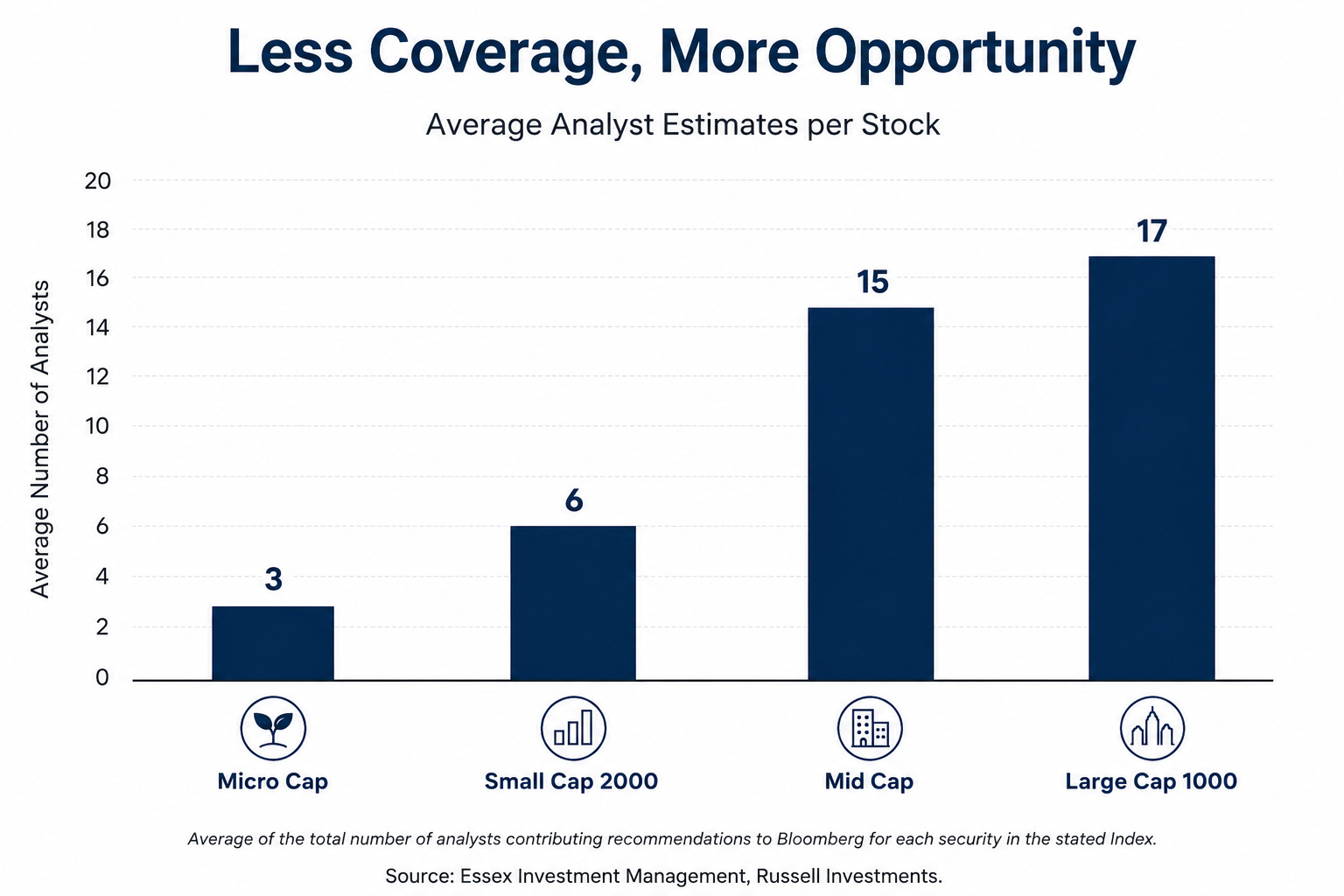
This is not a theory. The data shows it every year. On average, according to Polen Capital, small caps nearly double large caps’ count of stocks that gain 50% or more in a given year. That dispersion vanishes in the heavily covered end of the market, where mispricings correct fast. Of course, the same inattention that creates the opportunity can also leave a stock mispriced for a long stretch, in either direction, and thin trading can squeeze both entry and exit.
In small caps, mispricings have room to develop and time to pay off. The edge isn’t secret information. It’s the straightforward work most of the market skips, because these companies are too small to register with them.
This is #3 in our Small-Cap Advantage series, exploring where individual investors may still hold an edge over larger institutions. Read #2 You Can Go Where the Big Money Can’t, in last week’s edition.
Earnings Performance
Guidewire Software Inc (NYSE: GWRE)
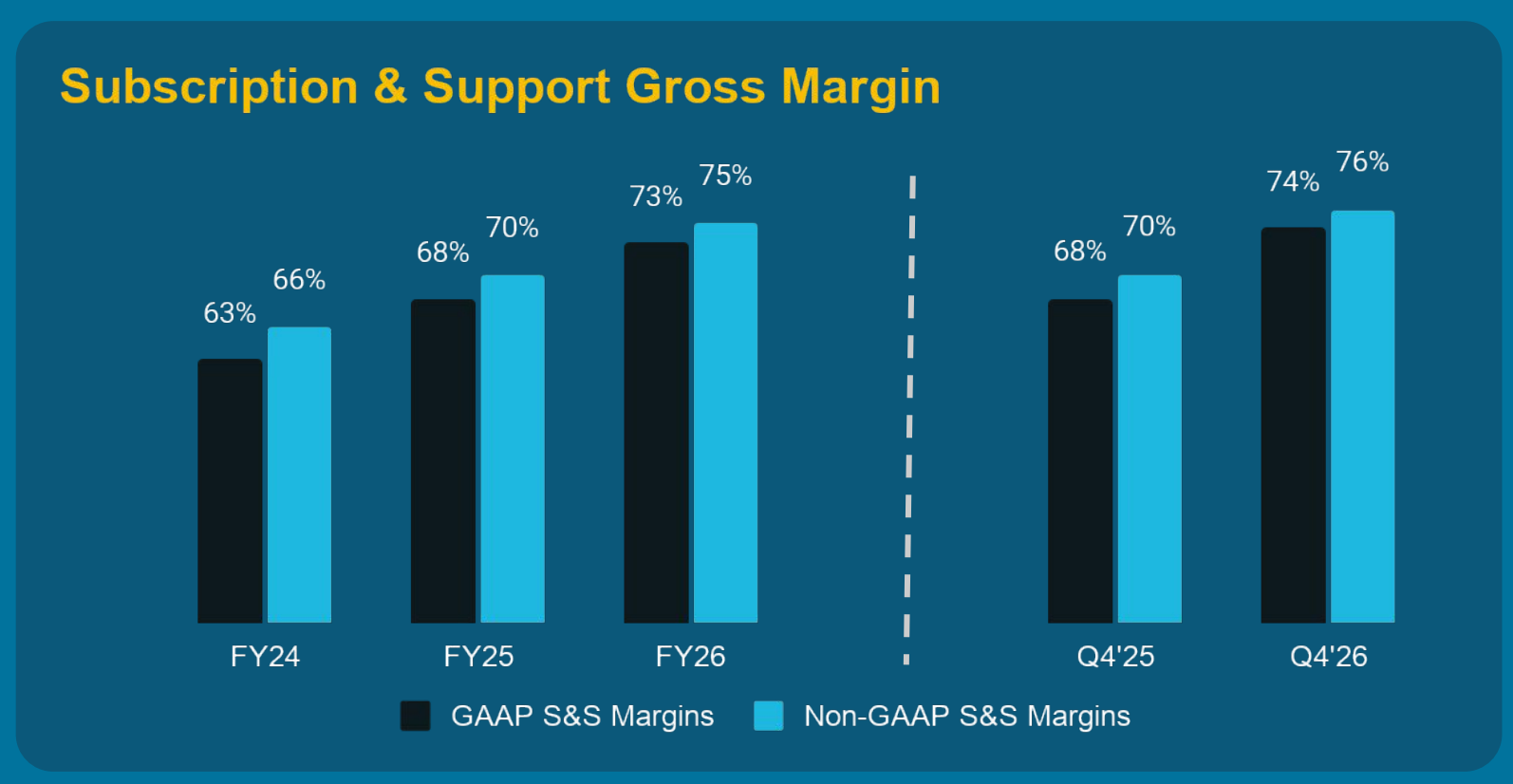
Guidewire Software (NYSE: GWRE) is turning its cloud transition into a more profitable growth engine. Subscription and support revenue grew 32% year over year in Q4, while its GAAP gross margin expanded six points to 74%. That combination matters because Guidewire is not simply adding recurring revenue. The economics of delivering that revenue are improving as the business scales. GAAP operating margin consequently reached 15%, up seven points from a year earlier.
For investors, the widening margins suggest that Guidewire can convert continued cloud adoption into earnings growth faster than revenue growth. ARR still advanced 19% year over year, giving the company a sizable recurring base over which to spread costs, while subscription and support has grown to 65% of quarterly revenue. The key question is whether Guidewire can sustain this operating leverage as cloud migrations continue and newer products expand, rather than sacrificing the margin gains to support growth.
Other Earnings Updates
Samsara (NYSE: IOT): Crosses $2.1 Billion in ARR With Margins Rising
NetApp (NASDAQ: NTAP): Posts Record Q1, Raises Outlook
Campbell’s Co (NASDAQ: CPB): Reports Q4 Results, Cuts Dividend
Nvidia Bets Beyond The Hyperscalers
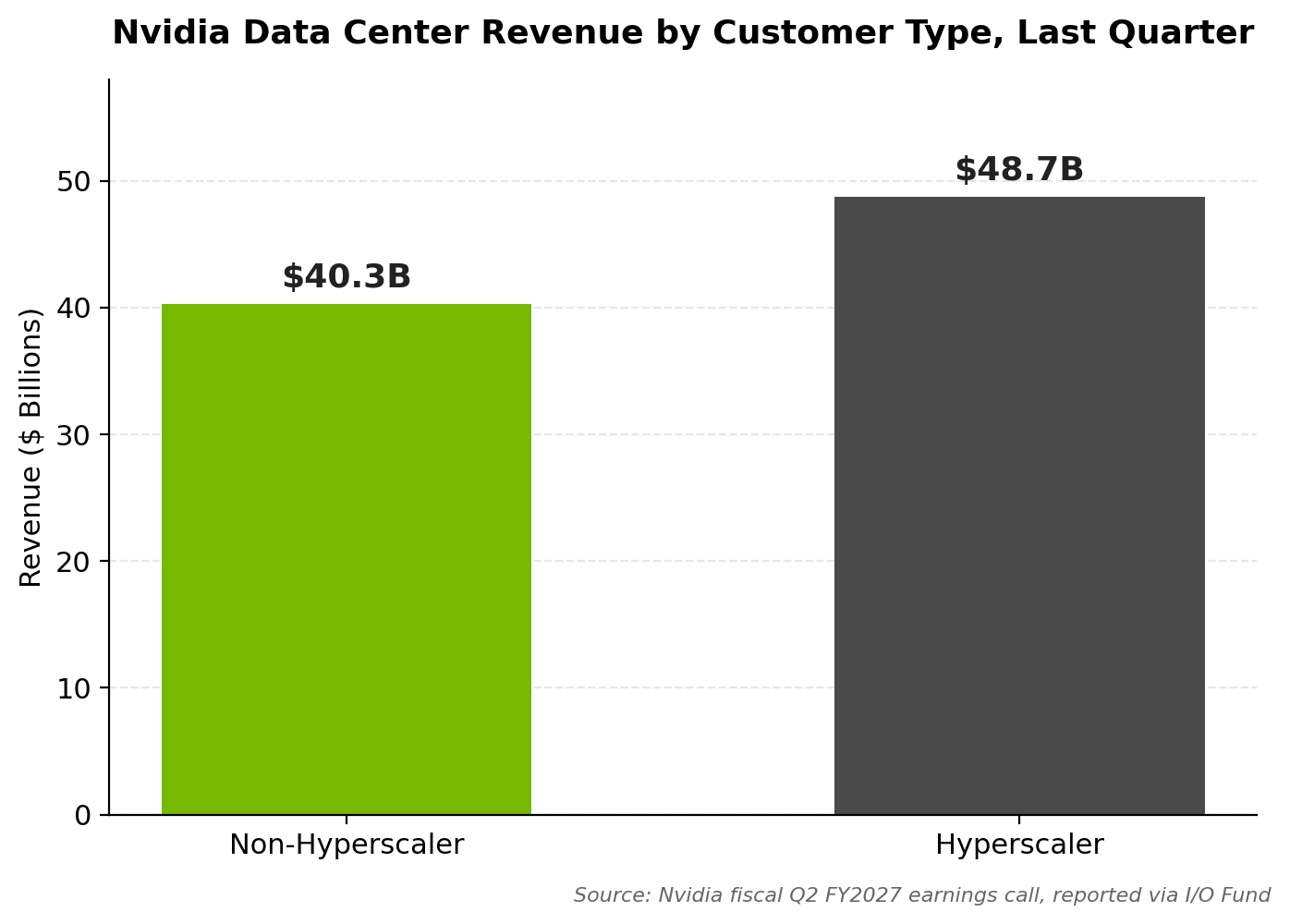
Nvidia’s latest quarter raised a question worth sitting with, and we walked through it in full on valuethemarkets. The short version, Nvidia’s non-hyperscaler data center revenue, sovereign AI, neoclouds and enterprise deployments, hit $40.3B last quarter, up 138% year over year and now nearly matching the $48.7B hyperscalers spent. That group makes up about half of Nvidia’s data center business and is growing 100% a year. Confident in the trend, Nvidia guided to roughly 70% revenue growth in fiscal 2028, implying sales near $700B against the $570B Wall Street expected.
The picture has holes. Some growth leans on financing structures harder to evaluate than a straight sale, including a $105B guarantee behind OpenAI-linked leases. In China, homegrown rivals like Huawei and newly public Enflame have pushed Nvidia’s share down to an estimated 55%, per Reuters Breakingviews. More telling, Nvidia’s own 10-Q now admits the exclusion is letting rivals build developer ecosystems that could challenge it beyond China too. The bull case is real diversification. The bear case is circular demand and a rival ecosystem taking root globally. Watch both.
Analyst Strong Buy Ratings This Week! 📈
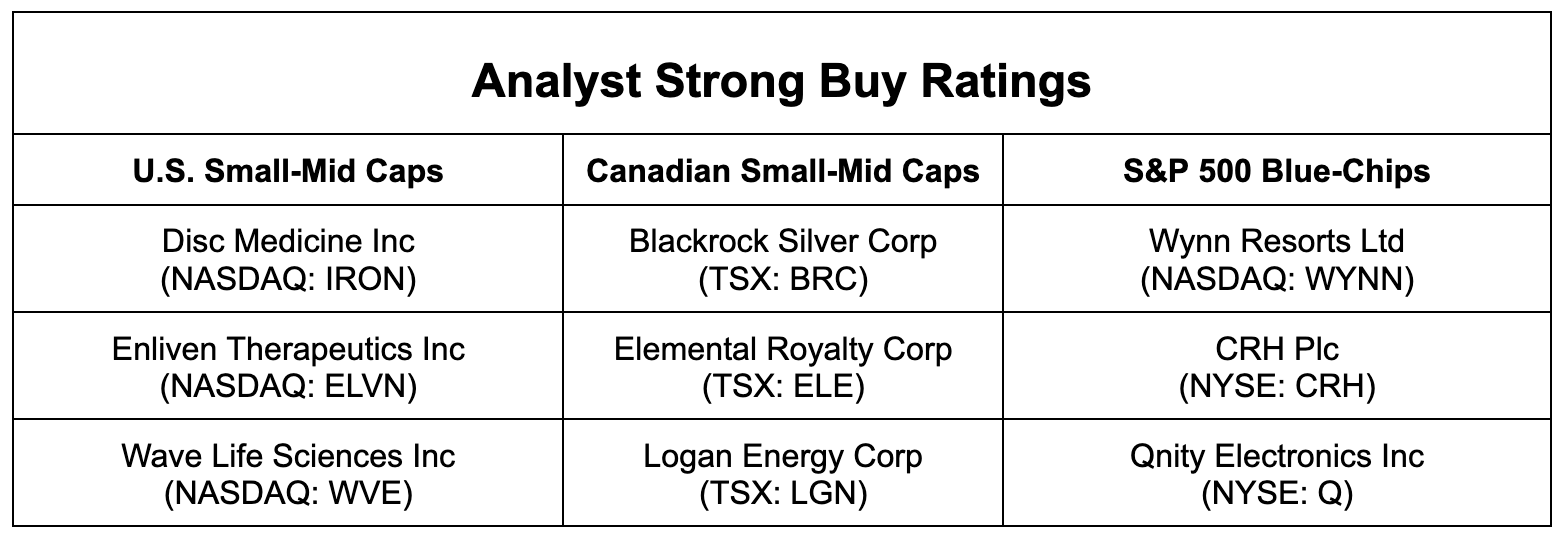
Looking for stocks with strong analyst backing? These companies have earned top-tier "Strong Buy" ratings from analysts, signaling potential upside for investors.
Whether you’re eyeing small-to-mid cap opportunities in the U.S. and Canada or want to stick with trusted S&P 500 blue-chip picks, this list highlights stocks that experts believe could outperform.
🔍 Do your research and see if any of these fit your portfolio!
Oura’s Profitable Ring
Oura filed its S-1 on September 3, moving toward a Nasdaq listing under OURA that bankers reportedly value above $16B, up from the $10.9B mark it fetched last year. Revenue for the nine months through June hit $1.21B, up 74% from $697.6M a year earlier, built on 5 million paid members in a category Oura now shares with Whoop and Samsung. The company is also genuinely profitable, $60.8M in net income for those nine months versus just $1.6M a year prior, on a 55% gross margin. That is unusual for a hardware IPO.

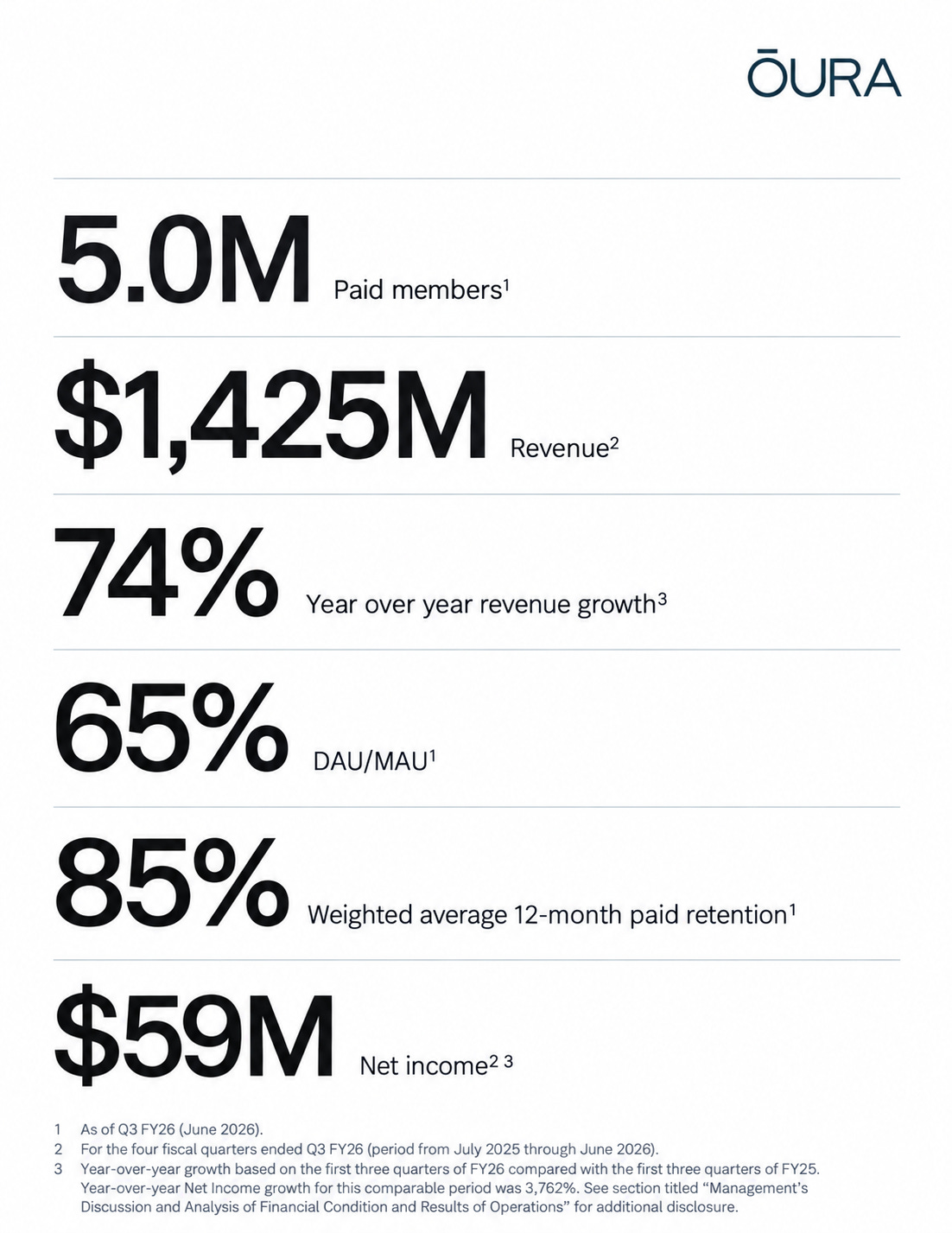
Two retail partners supply 22% of revenue, Oura depends on third-party AI models and data centers it does not control, and the company itself warns it has only recently turned profitable, with no guarantee that holds. Tariffs and trade tensions could also push up hardware costs just as management expects growth to slow from its current pace. Whether the $16B tag survives the roadshow says more about investor appetite for wearables than about Oura’s underlying business.
Rate hike talk and mega IPO chatter often land in the same week for a reason: liquidity narratives move together. The open question is whether Nvidia's next bet still needs easy money, or whether demand is already priced for a tighter regime. Which leg of this briefing do you think markets are underestimating?