Edition #178
Investing Unlocks: How to Read the Hot Topics From The Last 7 Days
News, earnings, analyst moves and one chart worth your time.
🛡️ Safe Havens Lead Stocks to Fresh Highs
Last week, the S&P 500 gained about 1.2% and set its first record high since August, while smaller companies slipped. Consumer staples, utilities, energy and health care led the charge, as tech stalled on fresh worries about AI spending. Benchmark Treasury yields, which shape borrowing costs across the economy, hit their highest level since 2002 before strong bond auctions eased them back. Oil stayed elevated on Middle East shipping risks and a Gulf hurricane, and consumer sentiment fell to its lowest in five months.
This week, September inflation takes center stage, with consumer and producer price reports landing alongside retail sales and the Fed’s Beige Book, a regional snapshot of business conditions. Earnings season also kicks off with the big banks, giving investors an early read on how companies are coping with higher fuel and borrowing costs. With the Fed already raising rates and markets expecting another hike by December, a hot inflation print could push yields higher and test the rally. Last week’s broad gains are a timely reminder that spreading bets beyond tech can help when yields are the market’s biggest swing factor.
Hot Topics
Anthropic lines up a possible $2 trillion IPO
Anthropic could list as soon as mid-October, right before the US midterms, in what would be one of the largest IPOs ever, after Broadcom agreed to lend it up to $42 billion to help it lease Broadcom’s own AI chips. It means retail investors may soon get a shot at buying into one of the AI boom’s biggest private names.AI bubble warnings are spiking, but the data is mixed
Ray Dalio warned the AI boom is nearing bubble territory, and Nvidia-backed AI data center developer Firmus just scrapped its $44 billion Australian IPO after investors balked at the price, but Bank of America says retail clients actually turned net buyers of stocks again for the first time since late July.SpaceX Drives US IPO Boom as September Slows
Paramount closes its $110 billion Warner Bros Discovery deal, forms Skydance
The deal closed October 6, with the combined company trading as Skydance (NYSE: SKYD). It creates one of the largest media and entertainment companies in the US, reshaping the field for anyone invested in streaming or traditional TV.
Weekly Series: The Small-Cap Advantage
Exploring why the smallest corners of the public markets can sometimes create the biggest opportunities for individual investors.
#8 Cheap and Broken Are Not the Same Thing
Small caps have surrendered their earlier lead this year. Through October 9, the Russell 2000 was up 13.1%, slightly behind the S&P 500’s 14.1% gain. But the shift in performance does not change the question investors need to ask. Are they buying a good business at an attractive price, or a struggling business that simply looks cheap?
July data showed that 41.5% of Russell 2000 companies had reported losses over the preceding 12 months. That makes business quality an essential consideration when choosing small caps.
A low stock price is not the same thing as a good deal. A company trading at 8 times earnings may offer value if those earnings are sustainable, supported by cash flow and backed by manageable debt. The same multiple can be misleading if profits are temporarily inflated, cash keeps flowing out, or a refinancing deadline is approaching.
An unprofitable company is not automatically broken. Some are investing for growth, while others are working through a temporary downturn. What matters is a credible path to sustainable profits and enough funding to get there. The small-cap advantage starts with understanding the business behind the valuation. That is how investors separate bargains from value traps.
This is #8 in our Small-Cap Advantage series, exploring where individual investors may still hold an edge over larger institutions. Read #7 The Math of Starting Small in last week’s edition.
Earnings Performance
Levi Strauss & Co. (NYSE: LEVI)
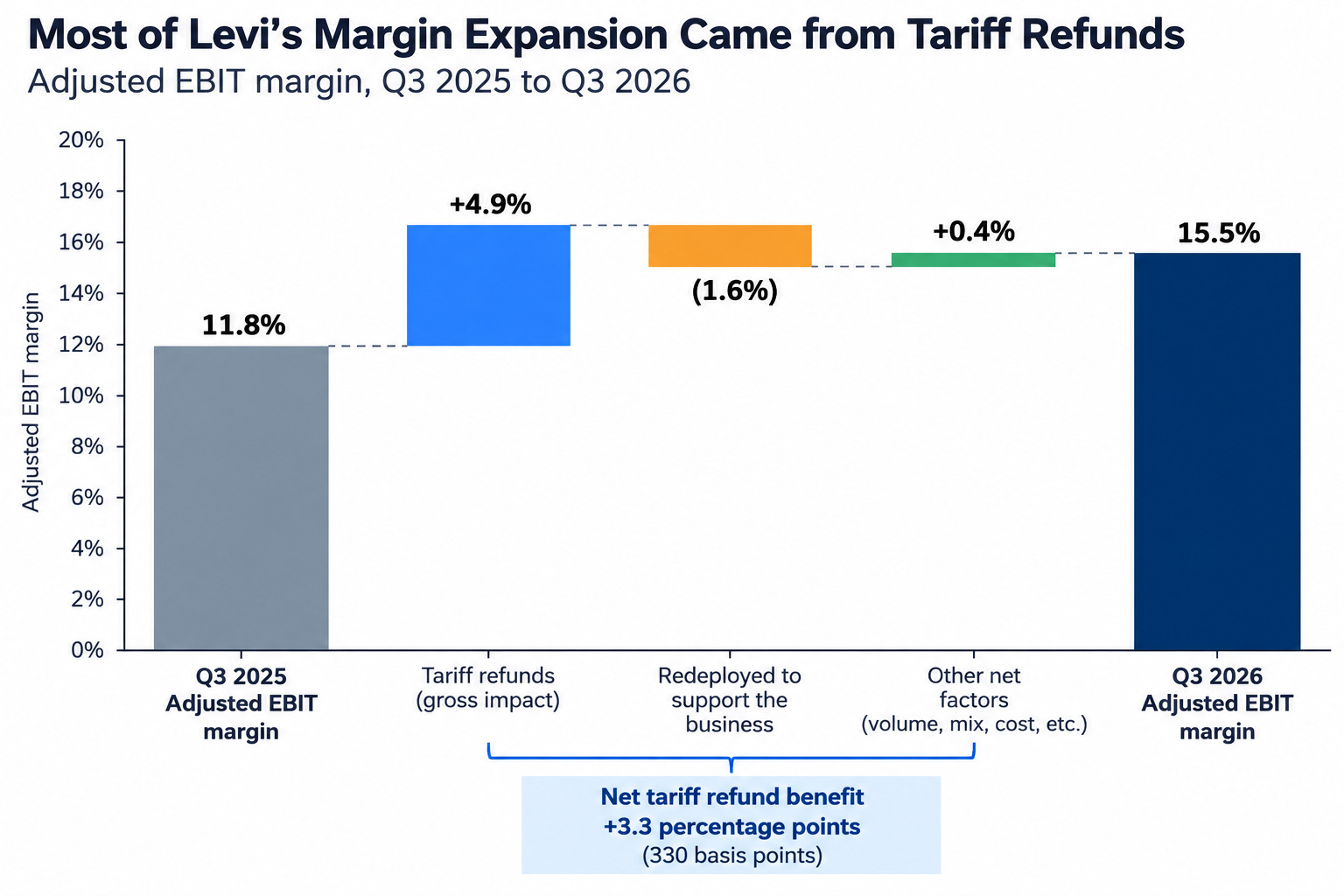
Levi Strauss & Co. (NYSE: LEVI) announced financial results for its third quarter ended August 30, 2026. Adjusted EBIT margin climbed from 11.8% to 15.5%, a 370-basis-point expansion. But the company disclosed that tariff refunds, after reinvestment in the business, contributed 330 basis points.
That implies only about 40 basis points of the improvement came from other net factors. This changes the interpretation of the quarter. Rather than demonstrating a dramatic improvement in underlying operating efficiency, much of the margin expansion reflects a benefit that readers should not automatically extrapolate.
Other Earnings Updates
Reporting this week: JPMorgan, Goldman Sachs, Wells Fargo, Citigroup, Johnson & Johnson, UnitedHealth, Abbott, Bank of America, Morgan Stanley, BlackRock.
Upgrades and Downgrades 📈
The rating changes that caught our eye this week, and why the analysts moved.
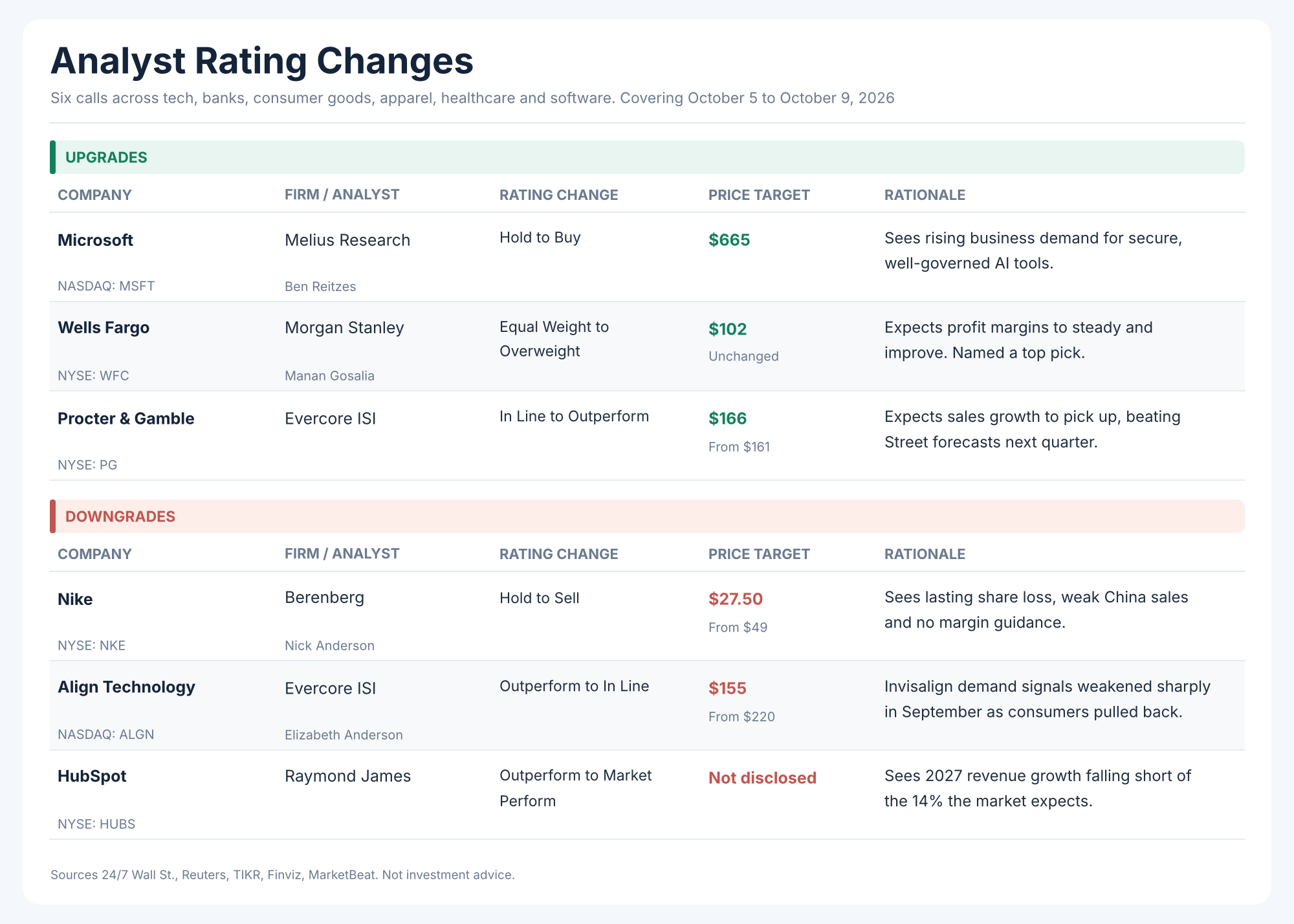
Analyst ratings are opinions, not recommendations. Always do your own research.
AI’s Great Cash Handoff
A striking chart from a16z’s State of Markets report captures a historic handoff. Using BofA data, it tracks expected free cash flow, the cash left after spending, for five tech giants and four chipmakers. Over the next 12 months, the hyperscalers Amazon, Alphabet, Meta, Microsoft and Oracle are forecast to dip below zero for the first time since at least 2007, while Nvidia, Micron, Broadcom and Applied Materials jump past $400B. The money hasn’t vanished. It is flowing into AI chips, power and networking, and a16z argues that strong corporate returns relative to funding costs support the bet, although the payoff from new AI investments remains unproven.
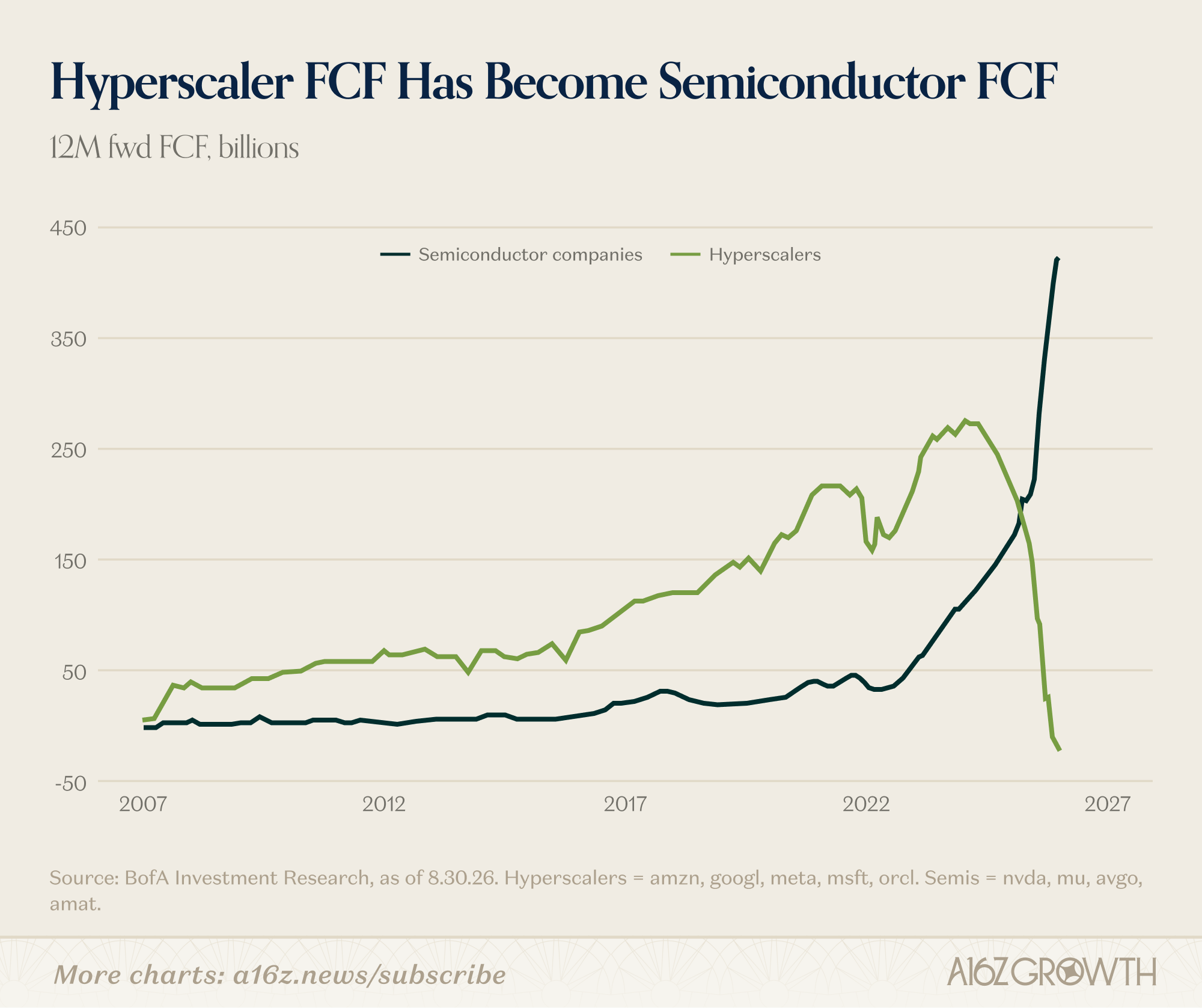
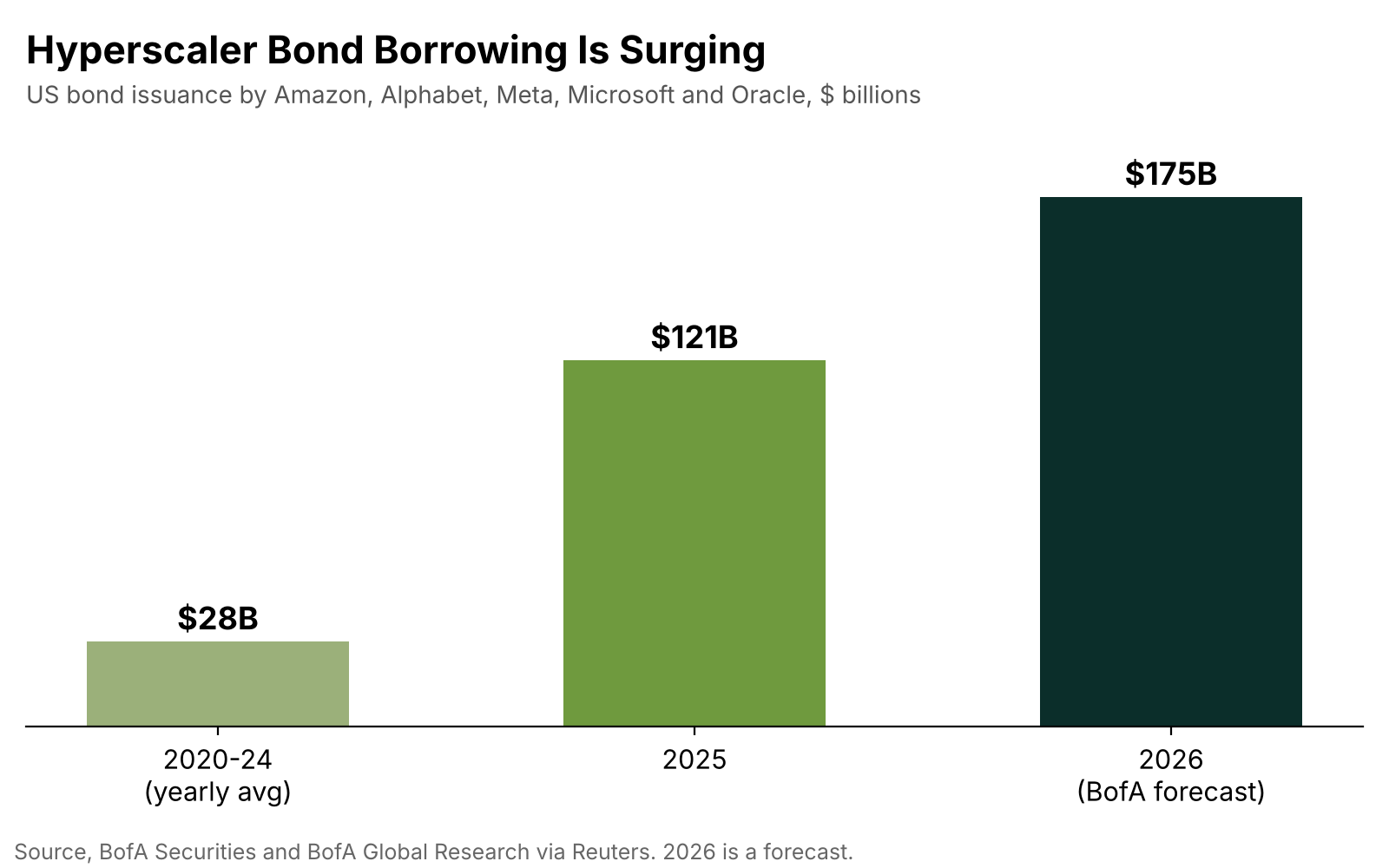
The catch is how the gap gets filled. The hyperscalers sold $121B of bonds in 2025, versus $28B a year from 2020 to 2024, and BofA expects $175B in 2026. That borrowing helps fund AI infrastructure, including chips that could lose value as newer hardware arrives. a16z says older GPUs still rent well, but that holds only while demand outruns supply. The chart is a forecast, not losses already booked. Watch whether AI revenue grows fast enough to lift cash flow back above zero, or whether borrowing keeps climbing to plug the hole.