

Edition #177
Investing Unlocks: How to Read the Hot Topics From The Last 7 Days
News, earnings, analyst moves and one chart worth your time.
🏢 Stocks Hold Steady as Jobs Cool
Last week, Wall Street ended roughly flat as oil prices and rising bond yields kept investors on edge. Fuel costs stayed high, though they eased late in the week after major economies agreed to release emergency crude and diesel stockpiles. A Friday jobs report showed employers added just 29,000 jobs, far below forecasts, while unemployment rose to 4.2%. Tech stocks jumped on the news, since weaker hiring cooled bets that the Federal Reserve would raise interest rates again this month.
This week, investors will watch Fed meeting notes and comments from policymakers for clues on whether another rate hike is still on the table. Oil prices and Treasury yields, which are the interest rates the government pays on its debt, stay front and center, because higher readings can pressure growth and tech shares. For investors, the message is to expect choppy trading.
Hot Topics
Gold Stabilizes Above $4,000
Gold is defying the usual playbook by staying above $4,000 an ounce even as US Treasury yields climb. This matters because it suggests investors still see gold as protection against inflation and uncertainty, not just a bet against yields.Analysts see another 20% upside for the S&P 500
Wall Street analysts polled by FactSet are projecting the index could rise another 20% over the next 12 months after closing near record highs. This matters because it shows how bullish professional forecasts remain even with valuations already stretched.Quantum Stocks Eye a Washington Tailwind
Bitcoin Pushes Back Toward $87,000
Bitcoin briefly approached $87,000 as strong institutional flows into exchange-traded funds boosted demand. The rally capped Bitcoin’s strongest quarter since late 2024, while elevated Treasury yields remain a potential headwind for speculative assets.Small Caps Face a Rates Versus Growth Tug-of-War
The Russell 2000 gained about 0.9% Friday as weaker jobs numbers reduced Fed-hike expectations. Yet small companies tend to be more sensitive to financing costs, meaning 5%+ Treasury yields remain a substantial obstacle.
Investing Data Story

In 2026, US dementia care costs are projected at $409B, versus a $1.67B US Alzheimer’s drug market, a gap of roughly 245 times.
Visualized: $409B Dementia Care Bill Dwarfs US Drug Market


Explore our latest data stories to uncover the trends, shifts, and opportunities shaping the investment landscape.
Explore Investing Data Stories →
Weekly Series: The Small-Cap Advantage
Exploring why the smallest corners of the public markets can sometimes create the biggest opportunities for individual investors.
#7 The Math of Starting Small
A company with a $1 billion market cap needs to create $1 billion in value to double. A company worth $100 billion needs to create one hundred times that. The arithmetic is obvious, but its implications are easy to overlook. A single $50 million contract is transformative for a company doing $200 million in revenue. The same contract is much less meaningful for one doing $50 billion. Growth at a small company moves the needle in a way that is simply not possible at the top of the market.
Smaller companies operate in less saturated markets, grow revenue from a lower base, and can meaningfully change their trajectory with a single product launch or partnership. The math of starting small means that the same quality of execution can produce a larger percentage return for shareholders. For the individual investor, this is the core appeal. You are investing at the stage where growth can still compound visibly rather than getting lost in the sheer scale of the business.
This is #7 in our Small-Cap Advantage series, exploring where individual investors may still hold an edge over larger institutions. Read #6 When the Company Changes Before the Price Does, in last week’s edition.
Earnings Performance
CarMax, Inc. (NYSE: KMX)
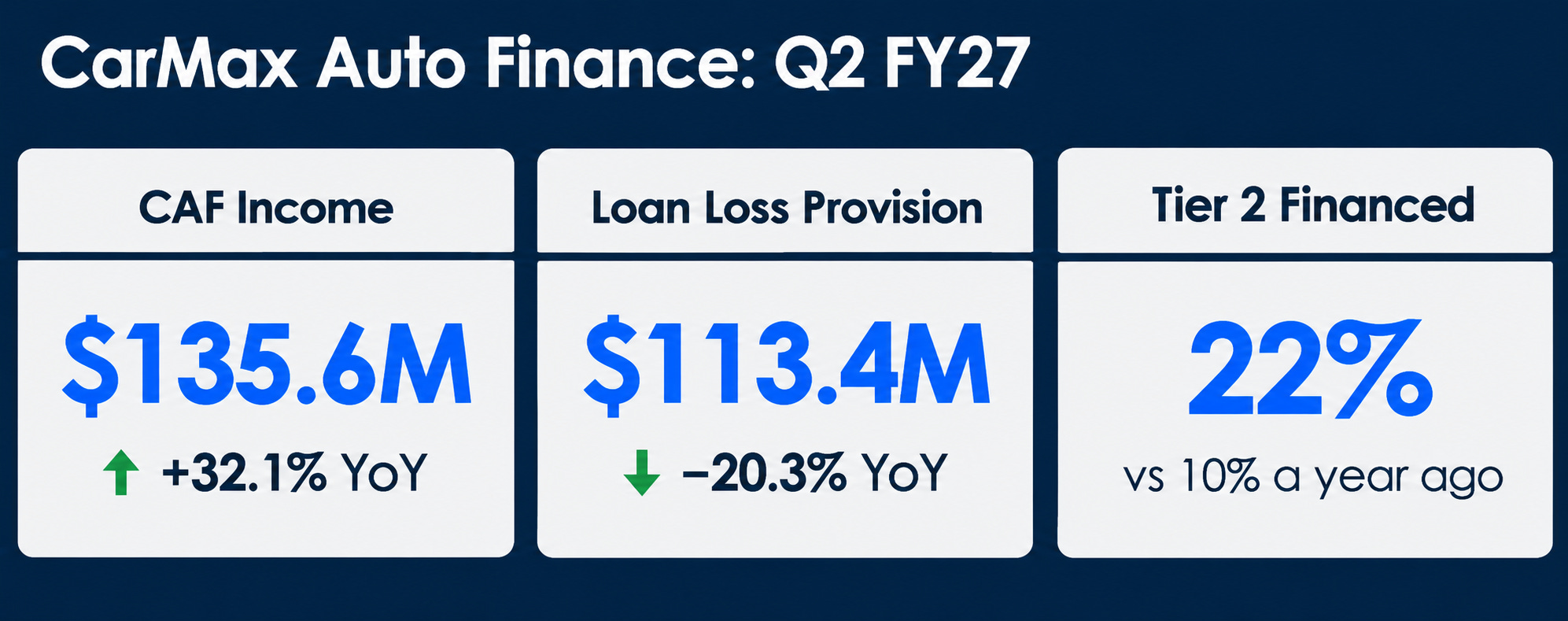
CarMax, Inc. (NYSE: KMX) is pushing its finance arm further down the credit spectrum, with CarMax Auto Finance (CAF) financing 22% of Tier 2 volume in Q2, up from 10% a year ago. CAF income climbed 32.1%, helped by lower loan-loss provisioning and a $16.6 million gain on auto loan sales.
Expanding Tier 2 lending could make each retail sale more profitable, but it also adds credit risk. The key question is whether CarMax can sustain that growth without materially higher losses. Read CarMax (NYSE: KMX) Beats Q2 Estimates, Shares Slide
Other Earnings Updates
Reporting this week: Constellation Brands, Levi Strauss, PepsiCo and Delta Air Lines. These results should provide useful reads on consumer spending, pricing power and travel demand as investors assess whether economic weakness is moving from labor data into corporate earnings.
Upgrades and Downgrades 📈
The rating changes that caught our eye this week, and why the analysts moved.
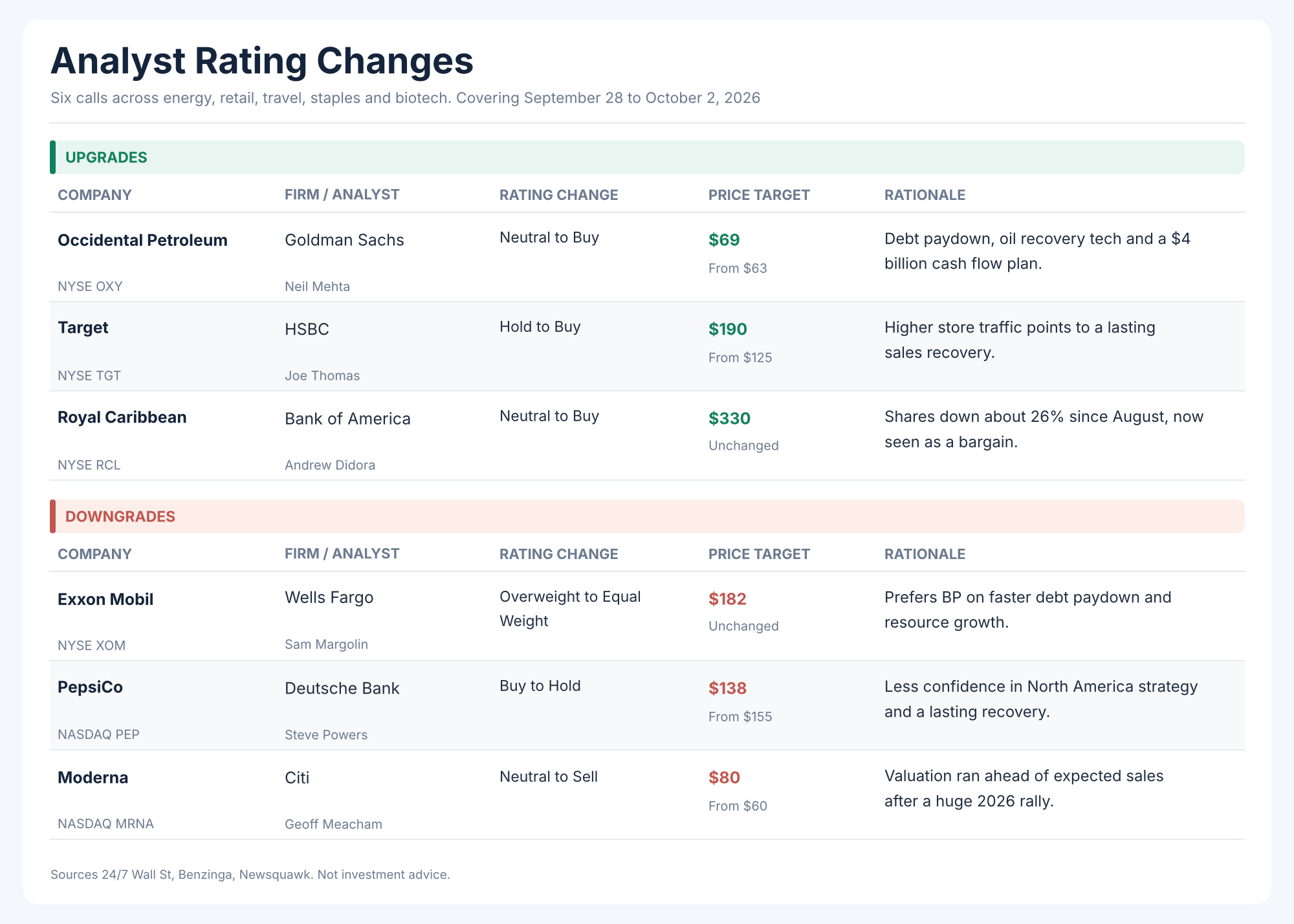
Analyst ratings are opinions, not recommendations. Always do your own research.
AI Talk Spreads Beyond Tech
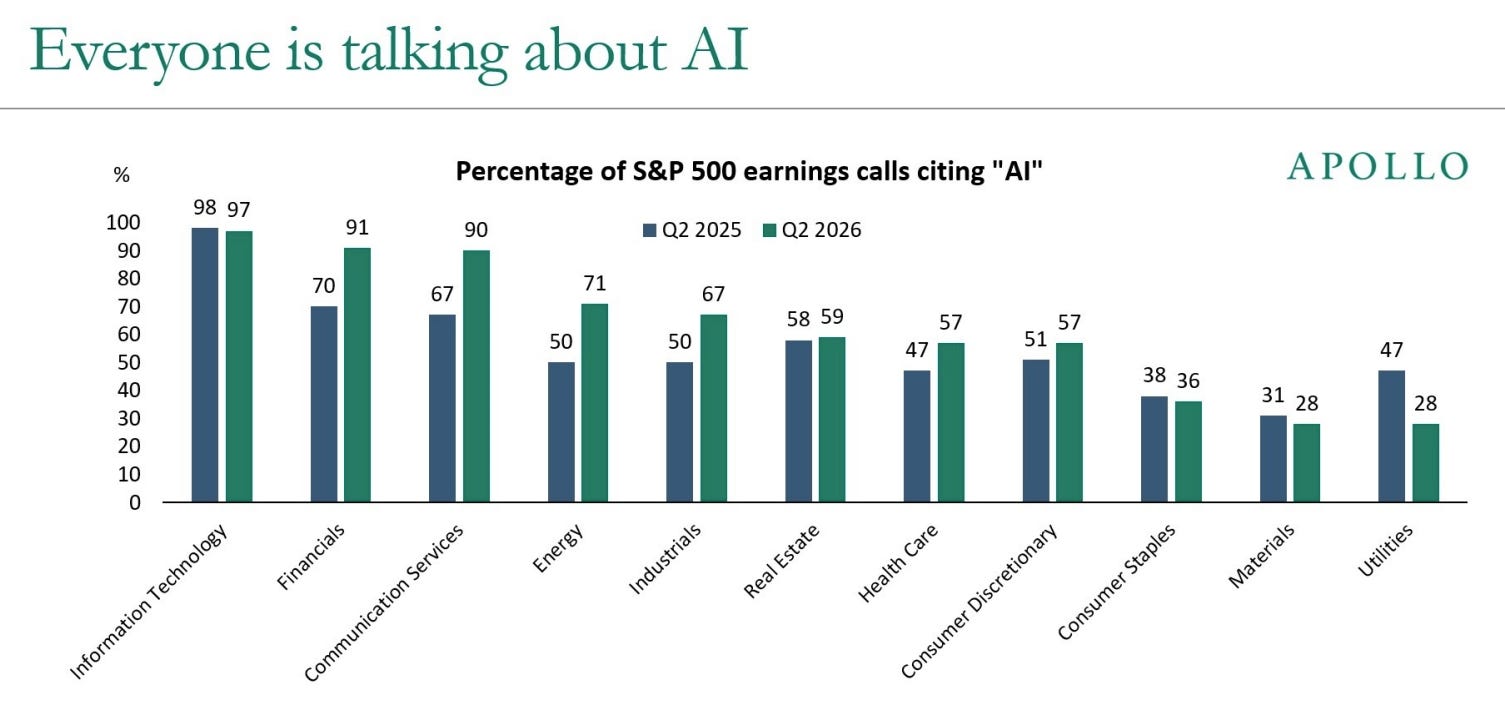
AI has become a standard topic on S&P 500 earnings calls. In the second quarter of 2026, 97% of tech companies mentioned it, but the bigger story is outside tech. Financials jumped from 70% to 91% and communication services from 67% to 90%. Energy rose from 50% to 71% and industrials from 50% to 67%.
Not every sector joined in. Utilities fell from 47% to 28%, and materials and consumer staples also slipped.
Mentions on a call cost nothing, so they say little about real results. What matters is whether the companies now talking about AI start to show it in their margins, spending and output over the next few quarters. This should give us more insight into who is using AI to generate financial gains and who is just talking about it.